

Recurring questions often match the exact keywords readers type into search.
You probably know the frustration. Nap time starts, the editor sits blank, and every idea list you open suggests a morning routine post. Again. The post you finally publish gets three views, and one of them is your mom.
Most topic lists come from trend roundups and Pinterest boards. This approach takes a different route and treats real group and kitchen-table conversations as the source.
The list moves through four groups: support circles, stay-at-home life, the quiet debates inside every house and posts that grow the blog itself. Each of these mom blog topics started as somebody’s question.
TL;DR: The Short Version
- Your readers’ best topics often start in support groups and faith circles.
- Stay-at-home life generates practical, searchable post ideas every day.
- Household debates (mental load, screens, grandparents) invite comments.
- Posts that serve group leaders can get reused and shared.
- Your blog name and recurring series count as topics too.
How These 12 Mom Blog Topics Made the List
Straight From the Support Group Circle
Group conversations make strong mom blog topics because moms say things in a circle of folding chairs that they would never post on social media. Those unfiltered questions often mirror what readers search at 2 a.m. Write the theme, never the person.
1. The First Six Weeks Nobody Puts on Instagram
Visitor rules, split night shifts and feeding choices made without judgment are staples among new mom support group topics. So does the awkward work of asking for help. Those weeks also carry a strange quiet: a newborn, a couch and long hours with no adult voices.
Build a “questions worth asking sooner” post, organized by week or by problem. Who gets to visit in week one? How do two exhausted adults divide the night? What do you say to the relative with strong opinions about bottles? End with a short set of prompts readers can bring to their own group.
Keep paragraphs short. Your reader is probably holding a baby in one arm and scrolling with a thumb.

Share what happened in your home, and fact-check experience-based posts before publishing so nothing reads as medical guidance. Recovery, feeding and postpartum mood belong with an obstetrician (OB), midwife or pediatrician. Say plainly that a low mood that lingers deserves a call to a healthcare provider.
2. Who Am I Now? The Identity Post Every Group Circles Back To
Among recurring moms support group topics, identity is a regular: career pauses, body changes, shelved hobbies and friendships that drifted. It surfaces with first babies and again with teenagers.
A three-part series gives readers room to explore the change without forcing a neat resolution:
- What changed
- What’s worth keeping
- One thing worth reclaiming
The nuance matters here. Some moms grieve the shift, while others welcome it. Plenty feel both on the same afternoon, somewhere between school pickup and dinner.
Skip the “get your old self back” messaging. Not every reader wants a comeback, and toxic positivity tells the moms who are struggling that they’re failing at recovery too.
3. Faith, Doubt and Grace on the Hard Days
Christian mom groups gather around questions of patience, guilt and prayer during exhaustion. Here are Christian moms group discussion topics leaders can pull from any week:
- Anger, patience and the voice you use at 5 p.m.
- Comparison with other families at church
- Praying when you’re too tired to form words
- Passing on faith while wrestling with your own doubt
- Rest and Sabbath with small kids in the house
Build each post around one scripture passage, three open-ended questions and a closing prayer prompt. Make it printable so a leader can hand copies around the table without retyping anything.

Denominations differ on practice and interpretation, so write inclusively and let doubt be a welcome part of the conversation. Keep the tone invitational. Nobody shows up to a moms group hoping for a sermon.
Home All Day, Thinking All Day
Ordinary days hold some of the most searchable stay at home mom blog ideas, because the problems in your house show up in plenty of others. Your Tuesday is still someone else’s question, and more post ideas for writers show how everyday routines become recurring searches.
4. A Day Rhythm That Survives Nap Strikes
Rigid schedules with clock times fall apart the first time a toddler refuses a nap. A post built on flexible anchors holds up: three or four fixed moments, such as breakfast, outside time, quiet time and dinner, with everything between them left loose.

Offer a downloadable anchor template with blank slots so readers fill in their own. Add a “what broke this week” section too. Readers tend to trust the mom who admits Wednesday fell apart by 10 a.m.
Ages and temperaments vary, and one family’s rhythm won’t fit another’s. Note that up front so nobody treats your template as a test they failed.
Which part of your day collapses first?
5. One Income, Real Numbers, Zero Shame
Single-income households face constant small money decisions, and readers want honest, practical posts about them. Strong angles include:
- Grocery planning that survives a picky eater
- Secondhand kid gear and where to find it
- Birthday parties on a budget
- The spending conversation with a partner
Share your category system, and keep your exact income private. Readers can copy your budget categories and meal plan without ever seeing a paycheck amount.
Stay out of tax, investment and legal advice, and suggest a qualified professional for those questions. Skip cost figures you can’t source, since prices shift by region and by month.
The reasons behind a single paycheck vary too: some families chose it, while others landed there after a layoff. Neither deserves judgment.
6. The Loneliness Nobody Warned You About
Daily adult contact can shrink to almost nothing once you’re home with kids, and making new friends as a grown woman feels awkward. Posts with real scripts help readers act on it:
- A first text to a playground mom: “It was great chatting at the park today. There’s usually a group there most Thursday mornings for anyone who wants company.”
- A low-pressure park invite: “Heading to the big playground around 10 on Saturday.” Come by if you’re free, no pressure.”
- Reconnecting with a pre-kid friend: a simple message letting them know they’ve been on your mind. Life got loud on my end. Coffee sometime this month?”
Format them as copy-and-paste posts (readers will still rehearse the text five times before hitting send).

When loneliness comes with a low mood that lingers, gently encourage readers to talk with a doctor or counselor. A blog post can open the door, but it can’t carry that weight alone.
The Quiet Arguments in Every House
Some mom topics of discussion spark disagreement in nearly every family, and those posts tend to invite comments and return visits. Show your reasoning, name the tradeoffs and leave the verdict to the reader.
7. Who Holds the Mental Load (and How to Hand Some Back)
Remembering the dentist appointment, tracking shoe sizes, noticing the soap is almost gone: the mental load is the work nobody sees until it stops getting done.
Publish an invisible task audit readers can fill in with a partner. Frame it as the start of a conversation, because nobody needs another fight after bedtime. A starter audit might look like this:
| Task | Who Notices | Who Does It | Who Could Own It |
|---|---|---|---|
| Restocking diapers and wipes | Me | Me | Partner, start to finish |
| Scheduling well-child visits | Me | Me | Whoever manages the shared calendar |
| Tracking school forms and permission slips | Me | Partner | Partner |
A follow-up post can cover handing off one category completely, noticing included. Taking out the trash is a task. Knowing the bins go out Tuesday is ownership.
Leave out partner-bashing. Single moms, co-parents across two homes and same-sex households all carry the mental load differently, so write the audit to fit them too.
Which task do you wish someone else would simply notice?
8. Screen Time Decisions Without the Guilt Spiral
Posts about screens tend to work best when a mom shares her family’s actual rules and her reasons, and skips handing down a verdict for everyone. Spell out when, where and what kind, along with what changed over time. Maybe shows before dinner worked until they didn’t, and the rule moved to after bath.

Close with a quick poll or comment prompt. What’s your rule for long car rides?
Avoid claims about development or health effects you can’t source. Tell readers to discuss concerns with their pediatrician, and be honest about exceptions too. Travel days, sick days and twin toddlers rewrite every rule, so say so.
9. Grandparents, Boundaries and Unsolicited Advice
Sugar, sleep, discipline and safety: grandparent disagreements come up often in mom groups.
Kind, firm scripts give readers language to borrow:
- Thanking and redirecting: “Thanks for the tip. We’re trying something different right now, and I’ll tell you how it goes.”
- Partner-led conversations: each adult child talks with their own parents, so the message comes from inside the family.
- Holiday expectations set in advance: “We’re keeping bedtime at 7:30 during the visit. Can you help us protect it?”
Format the post as a “say this, skip that” list. Say “we’ve decided.” Skip “you always.”
Multigenerational households and cultural norms change what a boundary looks like. Grandparents who provide daily childcare or share a home hold a different role in the family. The post should respect that without casting them as the problem.
Topics That Grow the Blog Itself
These mom blog topics extend reach beyond your current readers. Guides and series can earn repeat visits, especially when linking related posts together keeps readers moving from one entry to the next.
10. Ready-to-Use Discussion Guides for Group Leaders
Church group hosts, hospital new-parent circles, neighborhood meetups and preschool moms groups need fresh prompts every week. The people running them are often short on writing time. Publish one guide per theme, each with an opener, three core questions, a takeaway and a printable PDF. Entries 1 to 9 double as ready-made session themes:
| Guide Theme | Built From | Session Focus | Leader Note |
|---|---|---|---|
| Early Weeks Survival | Entry 1 | Asking for help and setting visitor rules | Refer medical questions to a provider |
| Who Am I Now? | Entry 2 | What changed, what stays, what returns | Let members land anywhere on the spectrum |
| Grace on Hard Days | Entry 3 | One passage, three reflection questions | Welcome doubt and denominational differences |
| Day Rhythms and Money | Entries 4 and 5 | Anchors that hold and spending systems that work | Keep income details private |
| Making Mom Friends | Entry 6 | Scripts members can try before the next meeting | Point lingering loneliness to a counselor |
| Home Debates | Entries 7 to 9 | Mental load, screens and grandparent boundaries | Share reasoning, skip verdicts |
Every guide should invite leaders to adapt the prompts to their own group. Here’s the card format they’d receive:
Discussion Card: Who Am I Now?
Opener: What’s one thing you did this week just for you?
Core questions:
- What changed most about your days since becoming a mom?
- Which part of your pre-kid self are you glad to keep?
- What’s one small thing you’d like to reclaim this season?
Closing reflection: Write down one step you’ll take before we meet again.
Prompts That Warm Up a Quiet Room
New or shy groups need low-stakes openers before the heavier themes. Keep them light, specific and answerable in one sentence: “best thing you ate this week” or “one tiny win since we last met.” Skip anything that pushes people to overshare in the first five minutes. Trust tends to show up after the coffee does.
Ground Rules That Keep Sharing Safe
Add a short ground-rules block to every guide:
- What’s shared here stays here.
- No unsolicited advice.
- Anyone can pass on any question.

A group is not therapy. Point leaders to local professional resources for members in crisis.
11. The Story Behind Your Blog’s Name
Many readers like knowing why a blog carries its name, and new bloggers often stall on the name before writing a single post. The most useful mom blog name ideas start from three places: your niche (faith, stay-at-home life, new motherhood), your voice and your region.
| Naming Approach | Why It Works | Watch Out For | Good Fit If You |
|---|---|---|---|
| Niche-based (faith, stay-at-home, new motherhood) | Tells readers what to expect | Feels narrow if your focus shifts | Plan to stay in one lane for years |
| Voice-based (humor, warmth, candor) | Memorable and personal | Jokes tied to one age can date quickly | Write with a strong, steady tone |
| Region-based (city, state, area) | Builds local community and reader trust | Limits reach outside your area | Cover local events, groups or resources |
| Kid-based (child’s name or age) | Feels intimate at launch | Privacy concerns and a name that ages out | Rarely the best choice; see the note below |
Write the origin-story post after launch. It doubles as an about page, and browsing personal website examples shows how others weave a name story into that page.
Before you commit, check domain and social handle availability and run a basic trademark search.
Funny Names That Still Work in Five Years
Humor makes funny mom blog names memorable, as long as the joke stays flexible while the kids grow. Aim it at the general chaos of parenting rather than one stage, then say the name out loud and picture it in a podcast intro or a business email.

Brainstorm patterns first and specific names second. Clever names get claimed early, so confirm each one is still free before falling in love.
Names With Room for Your Kids to Grow
Kids grow up and form their own opinions about being on the internet. Keep their real names out of the blog name so a search for your child never leads straight to your archive. Older kids may want a say in what gets published about them, and a name built around you leaves room for that conversation.
12. Reader Question Roundups Built From Your Comments
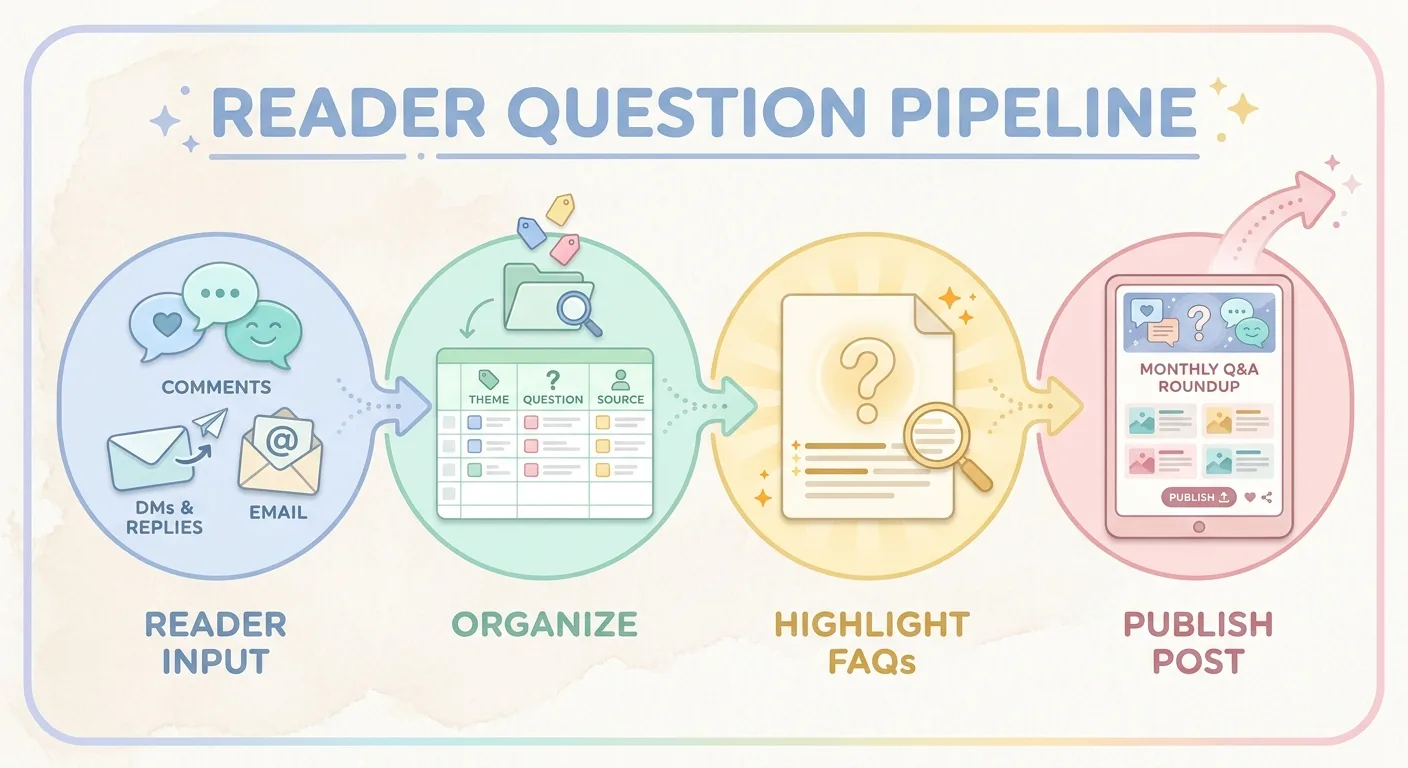
Comments, DMs and email replies keep handing you material. A monthly roundup answering three to five reader questions shows people they’re heard. It also turns your inbox into a running pipeline of new mom blog topics.
Tag incoming questions by theme in a simple spreadsheet, then pick the most frequent ones each month. Some weeks the inbox runs quiet, and a library of fresh blog topic ideas can fill the gap until reader questions pick back up.
Ask permission before quoting anyone. Anonymize details that could identify a family, such as a town name paired with a kid’s school or an unusual job title.
What did someone ask you this week that you couldn’t answer in a comment?
Frequently Asked Questions
What Should I Write About First on a Brand-New Mom Blog?
Start with the question you hear most often in your own circle; it’s the strongest of your first mom blog topics because you already know people want the answer. Write three related posts on it before branching out. A list of blog topics for beginners can then help you plan the next few without starting from scratch.
Can I Blog About What Moms Share in My Support Group?
General themes are fair game, and identifiable stories are off-limits without explicit consent. Anonymize details, ask before quoting anyone and respect any confidentiality rules your group already follows. A useful test: could a fellow member read the post and know who you meant? If so, it needs another rewrite. This is editorial guidance, not legal advice.
How Often Should a Mom Blog Publish New Posts?
Choose a schedule you can keep during your hardest weeks, sick days and school breaks included. A steady pace you can hold through a stomach bug tends to build reader trust; a burst of daily posts followed by two months of silence does not. Batch-write during calmer stretches, and count updates to older posts as part of the schedule.

When Your Topic List Starts Competing With Itself
As an archive grows, a list of mom blog topics can begin to overlap. Three screen time posts split the same readers, while a dozen drafts sit waiting for searches that never come. Meanwhile, hours disappear into copy-paste publishing. That overlap is exactly what keyword clustering tools are built to catch, by grouping searches that mean the same thing.
Vee3.ai brings that planning work into one workspace where you crawl, research, plan, write, fact-check, publish and measure. We built it for SEOs and made it ready for AI search. When you’re ready, plan your topics with Vee3.ai.
Final Thoughts
Choose one entry that matches a question you heard in the past week, and draft it within 48 hours while the details are still fresh. Keep a running note on your phone for new questions as they come up. Write one line each, with no polishing (the question your neighbor asked while the kids fought over a scooter counts).
A half-finished draft still counts as progress.
Listening comes first, and planning protects the time you have to write. So which conversation from this week will you turn into your first draft?