
Why Your Keyword List Keeps Turning Into a Mess (and the Fast Answer)
Thousands of keywords sit in your spreadsheet. Days vanish into dragging rows between tabs, and the finished groups still overlap. That mess is the reason keyword clustering tools exist.
None of this is a new headache. Forum users have asked for years how to automate clustering for very large lists, including a SitePoint forum thread from April 2018 that never got a reply. We build SEO workflow software, so we care most about what happens after a cluster exists. That’s why our tool sits first, and it’s also why we kept it out of the scorecard numbers. Ratings are editorial and evidence-anchored, low-confidence scores carry a flag, and we didn’t run lab tests.
Comparison Table: How the 10 Picks Group Your Keywords
This table shows how these keyword clustering tools group your list, not how we scored them.
| Tool | Best for | How it groups keywords | Free route | Evidence freshness | Source |
|---|---|---|---|---|---|
| Vee3.ai (our product) | Clusters that flow into a roadmap | By meaning, with a Tight, Balanced or Broad dial (first-party claim) | “Start building free” option on the homepage | Retrieved October 2026 | the Vee3.ai homepage |
| Keyword Insights | Topic clusters and content calendars | SERP similarity plus search intent | Check vendor site | June 2026 (Factors.ai) | Factors.ai AI SEO tools guide |
| Keyword Cupid | SERP-driven outline planning | SERP-driven grouping (forum account) | Check vendor site | Older forum discussion; confirm current features with the vendor | Builder Society thread |
| Semrush | All-in-one keyword data | Groups related keywords into topics; grouping called inflexible by one practitioner | Limited free tier | As of March 2026 | GrandRanker comparison, ICO WebTech on LinkedIn Pulse, Anatolii Ulitovskyi on LinkedIn |
| Ahrefs | Deep metrics | Manual top-3-pages workflow; parent-topic grouping called basic | Check vendor site | March 2026 (GrandRanker) | GrandRanker comparison, Anatolii Ulitovskyi on LinkedIn |
| Zenbrief | Readers seeking a free option | Not verified | Not verified | No retrieved source | Verify on vendor site |
| Answer Socrates | Budget, question-led clusters | Question-keyword clustering | Free tier | As of February 2026 | PromptGalaxy AI review |
| SERPWoo Keyword Tool | Fast top-page keyword pulls | Pulls keywords from top-ranking pages | Check vendor site | As of January 2022 forum discussion | Builder Society thread |
| MarketMuse | Topic clusters tied to briefs | Topic-level, article-level keyword dataset | Check vendor site | January 2022 forum discussion; 2026 Veza Digital list | Veza Digital 2026 list, Builder Society thread |
| ChatGPT | DIY clustering of small lists | Prompt-based grouping by meaning; no SERP overlap unless you supply it | Price not stated in sources | March 2026 (HackerNoon) | HackerNoon prompt clustering guide |
Rows marked 2022 rely on a single January 2022 forum thread, and SERPWoo’s evidence is the thinnest of all, so confirm current features with each vendor.
Criteria Breakdown Summary: How We Separated Real Clustering From Fancy Keyword Lists
Six checks separate real keyword clustering tools from apps that simply sort lists.
- C1, clustering method and accuracy. SERP overlap groups keywords whose top results share URLs. Meaning-based grouping relies on language similarity. Find out which method a tool uses before you trust its output.
- C2, intent mapping. Informational, navigational, commercial and transactional intent each map to a content format, as The HQ Digital keyword research guide lays out.
- C3, scale and limits. Batch sizes, credits and list caps decide whether a tool survives your biggest export.
- C4, keyword data depth. Volume, difficulty and SERP data should sit behind every group.
- C5, workflow fit. Briefs, exports and integrations all count. Keep 1 to 2 tools per workflow stage that connect to your CMS and analytics, a stack rule from the Factors.ai AI SEO tools guide.
- C6, pricing value. We only score prices we could verify.
SERP overlap vs meaning-based clustering
| SERP overlap | Meaning-based |
|---|---|
| Groups keywords whose top results share URLs | Groups keywords by language similarity |
| Reflects how Google ranks pages for each query | Runs quickly without pulling live results |
| Needs SERP data for every keyword in the list | Needs a human check on intent splits |
Here’s how intent mapping looks once it’s concrete:
| Intent | Example query | Content format |
|---|---|---|
| Informational | how does keyword clustering work | Guide or blog post |
| Navigational | semrush login | Brand or login page |
| Commercial | keyword insights review | Comparison or review page |
| Transactional | buy keyword research software | Pricing or product page |
| Adapted from The HQ Digital keyword research guide |
Our working rule is short: each keyword lives in one cluster only, and every grouping uses a defined clustering dimension. We borrowed that principle from a HackerNoon guide to prompt-driven clustering. Its own example clusters operations logs, so the principle is the part worth keeping.
Grouping is half the job. A good tool still shows volume, relevance and priority after the clusters form. The HQ Digital guide plots keywords on an SEO TAM Graph by volume and relevance, and it advises new sites to start with low-volume, high-relevance terms (The HQ Digital).
A manual baseline helps you judge any tool’s output. Pull the keywords that the top 3 ranking pages rank for, a method shared on Builder Society (as of January 2022 forum discussion).
A common pattern in keyword clustering examples is a pillar page that covers the broad topic, with linked cluster pages handling each subtopic (ICO WebTech on LinkedIn Pulse). A pillar on keyword research could link out to cluster pages on intent mapping, question keywords and clustering methods. Each of those pages owns its own keyword group, and none of them poach terms from the others.
Key Facts Worth Knowing Before You Pick
The Scorecard: All 10 Picks at a Glance
Ratings use four editorial labels: Strong, Solid, Basic and Pending. “Low” marks a low-confidence rating.
| Pick | C1 | C2 | C3 | C4 | C5 | C6 | Starting price | Source |
|---|---|---|---|---|---|---|---|---|
| Vee3.ai | Not scored (own product) | – | – | – | – | – | See pricing page | First-party |
| Keyword Insights | Strong | Strong | Solid (low) | Solid (low) | Solid | Pending | Check vendor pricing page | Factors.ai |
| Keyword Cupid | Solid (low) | Basic (low) | Basic (low) | Basic | Solid | Pending | Check vendor pricing page | Builder Society |
| Semrush | Basic | Solid | Solid | Strong | Strong | Solid | $129.95/mo (GrandRanker) | GrandRanker |
| Ahrefs | Basic | Basic | Solid | Strong | Solid | Basic | $99+/mo per third-party comparison (PromptGalaxy AI) | GrandRanker |
| Zenbrief | Not rated: insufficient verified evidence | Not rated | Not rated | Not rated | Not rated | Not rated | Check vendor pricing page | None retrieved |
| Answer Socrates | Solid | Solid | Solid | Basic | Basic | Strong | From $0, paid from $15/mo (PromptGalaxy AI) | PromptGalaxy AI |
| SERPWoo Keyword Tool | Solid (low) | Basic (low) | Basic (low) | Basic (low) | Basic (low) | Pending | Check vendor pricing page | Builder Society |
| MarketMuse | Solid | Solid | Basic | Strong | Strong | Pending | Check vendor pricing page | Veza Digital, Builder Society |
| ChatGPT | Basic | Solid | Basic | Basic | Solid | Pending | Check vendor pricing page | HackerNoon |
These scores are editorial. We didn’t run hands-on lab tests on these tools.
1. Vee3.ai: Best for Clusters That Flow Straight Into a Roadmap
We build Vee3.ai, so read this profile with that in mind. It’s the one pick we left unscored.
Best fit: agencies and SEOs who want clusters to end in a prioritized roadmap without re-keying data.
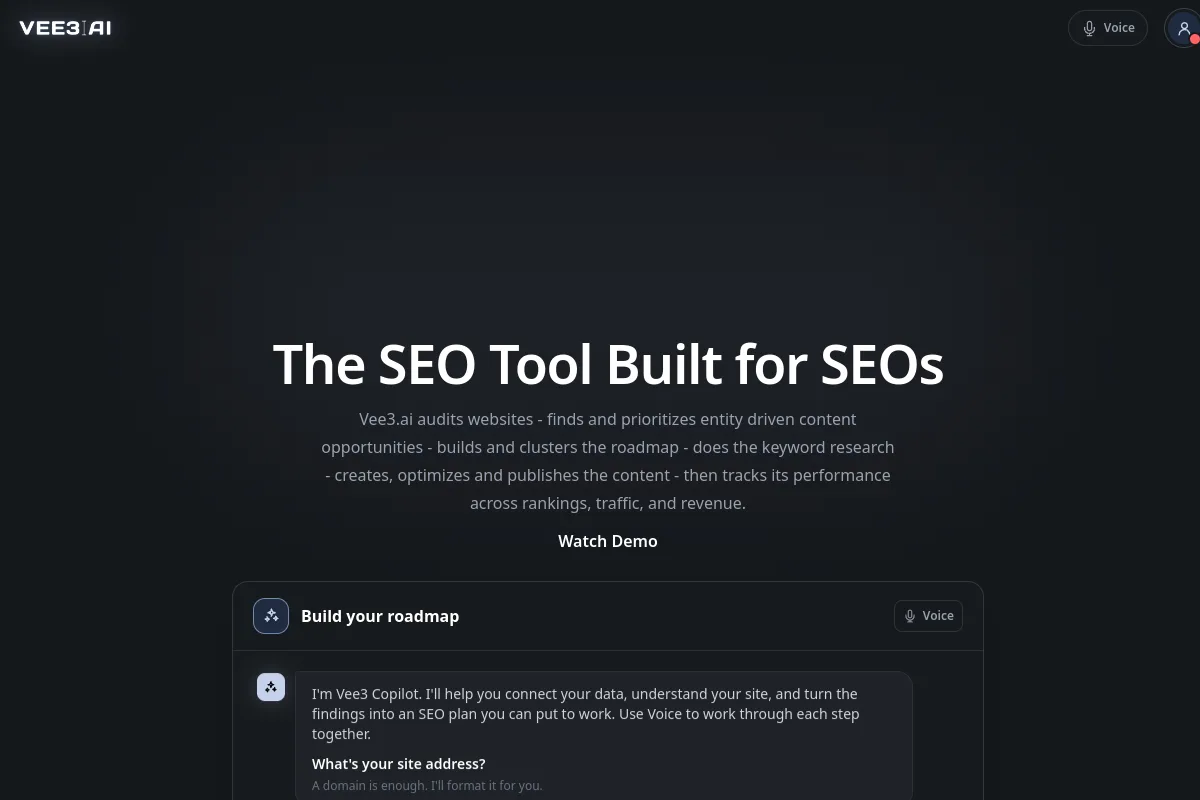
*Vee3.ai groups real searches by meaning and hands clusters to a roadmap.*
Every claim here comes from the Vee3.ai homepage, which makes them first-party:
- Meaning-based grouping (C1). Real searches cluster by meaning, and a Tight, Balanced or Broad dial sets how strict each group gets.
- Cleanup. Zero-demand and duplicate searches drop out before planning starts.
- Priority Score. Results rank by a score you weight yourself.
- Reversible planning. Every planning step is undoable.
- No self-competition. Planning aims for “a roadmap that cannot compete with itself,” backed by a Keyword Cannibalization Checker.
- Handoffs (C5). Each stage hands its work to the next, and drafts or live pages publish to WordPress, Webflow or Shopify.
Scale (C3) needs a careful note. The homepage lists “500 keywords per batch” under its research stage. We haven’t confirmed that the same cap applies to clustering, so treat it as a research-stage figure.
Optional Google Search Console and GA4 connections are read-only and can be disconnected, according to the Vee3 About page.
Now the limits. Grouping is meaning-based, so anyone set on pure SERP-overlap clustering should also look at Keyword Insights. We found no third-party reviews during this research, and every claim above is ours. Plan costs live on the current Vee3.ai plans page; we won’t quote a number here.
2. Keyword Insights: Best for SERP-Based Topic Clusters and Content Calendars
Teams building topic clusters and planning content calendars get the most from this pick. A 2026 roundup from Great Startup Tools names Keyword Insights its top pick for teams that want accurate, SERP-based clustering and intent analysis.
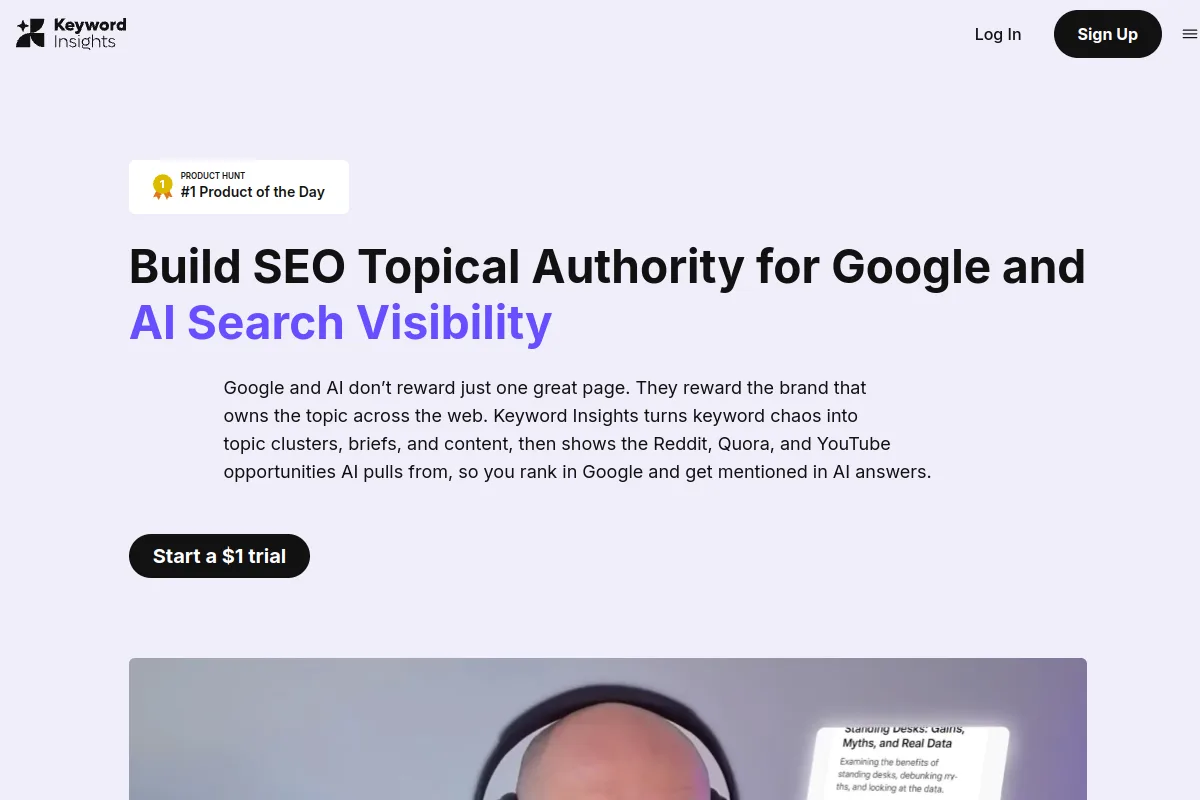
*Keyword Insights clusters by SERP similarity and intent.*
Method is what sets it apart. This keyword clustering tool groups terms by SERP similarity and search intent to build topic clusters, per the Factors.ai AI SEO tools guide. Shared ranking URLs decide which keywords belong together, and the intent label points to the format each page should take. That’s why C1 and C2 are its strongest criteria on our scorecard.
Practitioners agree on its role. Connor Gillivan’s 2026 list names it for “clustering and intent mapping” and recommends it for topic clusters and content calendars (Connor Gillivan on LinkedIn).
What we couldn’t verify matters too. We retrieved no limitation data at all, which is why our scale (C3) and data-depth (C4) ratings carry a low-confidence flag. Run your largest real export through a trial, and check which metrics sit beside each cluster before you trust it with a client list.
Price: check the vendor pricing page. We didn’t retrieve a verified figure, so C6 stays pending.
3. Keyword Cupid: Best for SERP-Driven Outline Planning
Keyword Cupid comes up in forum discussion of the best keyword clustering tools for people who want SERP-based groups that turn into article outlines without extra spreadsheet work.
Best fit: teams that want SERP-driven groups feeding article outlines.
Our evidence comes from a single Builder Society thread, and all of it dates to the January 2022 forum discussion:
- The thread starter said it “seems like this tool does what I’m looking for.”
- The same user liked “the whole picture” the tool presented.
- One member questioned how deep it scrapes into the SERPs, then added that the extra depth may not be necessary.
- The owner, according to the thread, “will take the time to answer any questions.”
Here’s the honest flag: Keyword Cupid’s current features and pricing need confirmation. That evidence is from January 2022. Features may have changed, and the depth question may or may not still apply. Our C1 to C3 ratings are low confidence for that reason.
Price: check the vendor pricing page.
4. Semrush: Best for All-in-One Keyword Data Behind Your Clusters
Semrush keyword clustering covers basic topic grouping, so you may not need another tool if that’s enough.
Best fit: teams that want research, tracking and content tools in one dashboard.
The toolkit, as described by GrandRanker, includes:
- Keyword Magic Tool for generating ideas from a seed keyword
- Content Marketing Toolkit
- On-Page SEO Checker
- Position Tracking
*Semrush supplies the keyword data many clusters start from.*
Teams use the suite to group related keywords into topics, according to ICO WebTech on LinkedIn Pulse. Gillivan credits Semrush and Ahrefs with “the full data picture in one dashboard” (Connor Gillivan on LinkedIn), and that’s where the suite shines.
The weak spot is grouping itself. One practitioner calls Ahrefs, Semrush and similar suites “not flexible with keywords clustering” (Anatolii Ulitovskyi on LinkedIn), though he promotes a free tool of his own, so factor that in. That gap is why Factors.ai recommends layering SERP-similarity clustering on top of suite data. We also couldn’t confirm a dedicated Semrush clustering feature, so we won’t name one.
Price: from $129.95/month with a limited free tier, as of March 2026 (GrandRanker).
5. Ahrefs: Best for Deep Metrics and the Top-3-Pages Method
Ahrefs keyword clustering in practice means letting Keywords Explorer group keywords by Parent Topic, a metric built from the keyword sending the most traffic to the #1 ranking page, according to Ahrefs.
Best fit: SEOs who want deep metrics and don’t mind doing the grouping by hand.
GrandRanker lists these core features:
- Keyword Explorer with volume, difficulty and click data
- Site Audit
- Content Explorer
- Rank Tracker with daily updates
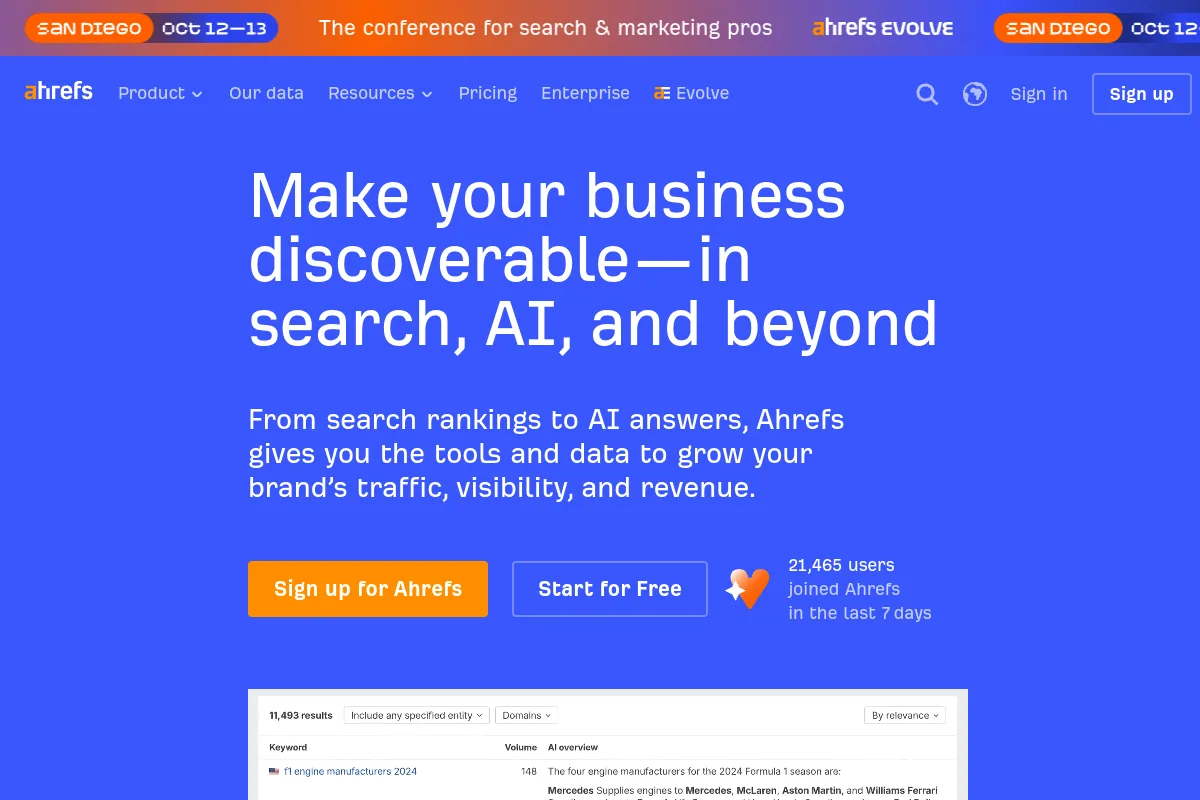
*Ahrefs pairs volume, difficulty and click data.*
GrandRanker credits Ahrefs with a massive keyword database with accurate metrics and excellent backlink analysis tools, according to GrandRanker. The workflow is the manual baseline from our criteria section, run with better data behind every term.
Three drawbacks stand out. GrandRanker flags a higher starting price and a steep learning curve, and Ulitovskyi calls its parent-topic grouping basic (Anatolii Ulitovskyi on LinkedIn).
Price: “$99+/mo” per a third-party comparison from February 2026 (PromptGalaxy AI). Confirm the current figure on the Ahrefs site.
6. Zenbrief: Best for Readers Hunting a Free Option (Verify First)
Searches for a Zenbrief keyword free clustering tool turned up in our keyword research for this topic, so it stays on the list. We also found no retrieved source describing its features.
That leaves Zenbrief not rated: insufficient verified evidence. Check its features and pricing on the vendor site before you upload a client list, and read its data terms while you’re there. We’d rather say “we don’t know” than guess.
7. Answer Socrates: Best Budget Pick for Question-Led Clusters
Looking for a keyword cluster tool free tier worth using? This is the one.
Best fit: budget teams and question-heavy content. It’s one of the few picks with a published keyword clustering tool free tier.
Features listed in PromptGalaxy AI’s Answer Socrates review (February 2026):
- Recursive searches that dig past the first round of questions
- People Also Ask data
- LLM Brand Tracking across ChatGPT, Perplexity, Gemini, Grok and Claude
- CSV export with volume, CPC and competition
- International research
PromptGalaxy reports clustering accuracy of about 80 to 85% for this tool (PromptGalaxy AI). That range belongs to Answer Socrates alone. Read it as a reason to spot-check every cluster before planning.
The review also names drawbacks: a less polished interface, limited integrations and a smaller database. PromptGalaxy calls it the best-value SEO tool with features premium tools don’t offer.
| Plan | Price | Searches | Recursive | Cluster credits |
|---|---|---|---|---|
| Free | $0 | See review | See review | See review |
| Starter | $15/mo | See review | See review | See review |
| Mid | $29/mo | See review | See review | See review |
| Top | $49/mo | See review | See review | See review |
| Source: PromptGalaxy AI Answer Socrates review (February 2026) |
Price note: the free tier makes this a practical first stop. Existing subscribers may be grandfathered into older plans, per the PromptGalaxy AI review.
8. SERPWoo Keyword Tool: Best for Fast Top-Page Keyword Pulls
One moderator in the Builder Society thread said SERPWoo does the top-3-page pull “even faster” than running it manually in Ahrefs (as of the January 2022 forum discussion). That speed is the tool’s whole case here.
That single endorsement is the entire evidence base. It’s the thinnest support on our list, and every SERPWoo score carries a low-confidence flag.
We’d swap in Frase from our Notable Mentions if fresher SERPWoo evidence never shows up.
Price: check the vendor pricing page.
9. MarketMuse: Best for Topic-Level Clusters Tied to Briefs
Best fit: content teams deciding what an article on a topic should cover before they brief writers.
Forum members in the Builder Society thread described MarketMuse as having the “most robust dataset” for article-level keywords. The same discussion called its AI briefing tool “pricey and not as granular.” Both comments date to January 2022.
Fresher context comes from Veza Digital’s 2026 list, which places MarketMuse among content optimization platforms used before publication. That role explains the fit: it helps you decide what a page on a topic should cover.
Bulk grouping is a different job. None of our sources describe bulk SERP-overlap clustering in MarketMuse, so pair it with a dedicated clusterer if you need that.
Price: not retrieved. Check the vendor pricing page.
10. ChatGPT: Best for DIY Clustering on a Shoestring
With strict prompts, ChatGPT works as a DIY alternative to a free online clustering tool for small lists.
Best fit: small lists and tight budgets.
Practitioner Mir Md Sohan prompts ChatGPT to split Keyword Planner exports by intent into spreadsheet format, a workflow shared in the comments of Anatolii Ulitovskyi’s LinkedIn post.
Reliable output depends on rules. The HackerNoon prompt clustering guide recommends a strict output schema. Spell out the schema, the one-cluster rule and the clustering dimension in the prompt itself. Vague prompts produce vague clusters.
The limits are real:
- No SERP overlap unless you paste that data in
- Output quality rises and falls with your prompt rules
- Human editing is required, a point the Factors.ai AI SEO tools guide makes about all AI grouping
Price: not stated in our sources.
Got a small list? Try this first.
Notable Mentions: Handy Helpers Before and After Clustering
These tools sit before or after clustering in the workflow.
- Frase and Content Harmony: forum members recommended both for turning cluster data into briefs and outlines (Builder Society, as of January 2022).
- Google Keyword Planner: a free data source behind many suites, with no native clustering, according to Anatolii Ulitovskyi on LinkedIn.
- AlsoAsked: People Also Ask questions for expanding a cluster, per the Factors.ai AI SEO tools guide.
FAQ
Should I Cluster Keywords by SERP Overlap or by Meaning?
Use SERP overlap when you need groups that reflect how Google ranks pages, and use meaning-based grouping when speed and cost matter. Check the top results behind a term with a keyword analyzer that reads the SERP. The Factors.ai guide recommends adding a SERP layer to suite data, and the top-3-pages baseline from Builder Society (January 2022) works for spot checks.
Can I Cluster Keywords for Free?
Yes, with limits. If you want a free SERP keyword clustering tool, our sources don’t verify one; the free routes we found group by questions or meaning. They are the Answer Socrates free tier, a free grouping tool from Anatolii Ulitovskyi, who built and promotes it, and ChatGPT prompts. The key facts and profiles above cover capacity.
Do I Still Need Semrush or Ahrefs If I Use a Clustering Tool?
Often, yes, because suites supply the keyword data clustering tools work from. Factors.ai recommends layering a clustering tool on top of suite data. Keep a lean stack per workflow stage, and make sure the tools you keep connect your CMS and analytics. Drop the suite only when your clustering tool already supplies the volume and difficulty data covered under C4.
Can I Trust Automated Clusters Without Checking Them?
No; automated clusters still need a human spot-check. AI speeds up grouping but doesn’t make judgment calls, according to Factors.ai. Even published accuracy figures leave room for errors (see Answer Socrates). Spot-review clusters that look like they overlap and any keyword that seems to fit two groups. The one-keyword, one-cluster rule makes a quick review test.
Final Thoughts: Pick the Tool That Fits Your Next Step
Our verdict is simple: the right choice among keyword clustering tools depends on where your clusters go next. Briefs, a roadmap and publishing each need a different handoff, so pick the tool that passes work to that step cleanly. Clusters stuck in a spreadsheet help no one, and one fix is to turn clusters into a roadmap.
Three problems tend to survive any tool choice:
- Rigid grouping that won’t bend to how your site is organized
- Dead-end exports that leave you re-keying data into the next app
- Competing clusters that chase the same searches, which is why we check clusters for cannibalization before either page gets written
Vee3.ai targets all three; see Profile #1 for the details.
Group your next list by meaning and ship a roadmap that can’t compete with itself. Try our keyword clustering tool and adjust the dial until the clusters match your site. Plan costs sit on one page, so see Vee3.ai pricing and weigh them against the verified prices in the Scorecard.