
Maybe your blog sits half-empty. Or maybe it’s packed with quarterly market recaps nobody finishes, plus one simple post that has spent weeks in compliance review.

*Financial advisor at a tidy office desk reading client questions*
Generic subject lists skip the one thing that matters: the moment a reader needs help. Vee3.ai sorts these financial advisor blog ideas by that moment, in a few groups:
- Life events
- Pre-hire research
- Referral partners
- Answer-ready formats
Each of the 13 entries gives you an angle, a first step and an honest caveat. One rule covers all of them: keep legal, tax and regulatory statements general unless you cite a primary source in the same paragraph.
TL;DR: Five Things to Know
Life-Event Topics: Money Moments Nobody Schedules
Nobody schedules a death, a layoff or the day a parent misses three bills in a row. Urgent moments produce narrow searches from people ready to act. Because readers here are grieving, overwhelmed or rushed, the writing has to feel calm and ordered.
1. The First 90 Days After Losing a Spouse: A Paperwork Order of Operations
A surviving spouse faces a pile of paperwork and very little guidance on where to begin. A sequenced checklist shows them what comes first. Try a headline such as “What to Handle First, and What Can Wait, After a Spouse Dies,” then group short numbered steps into three periods: week one, month one, and months two and three.
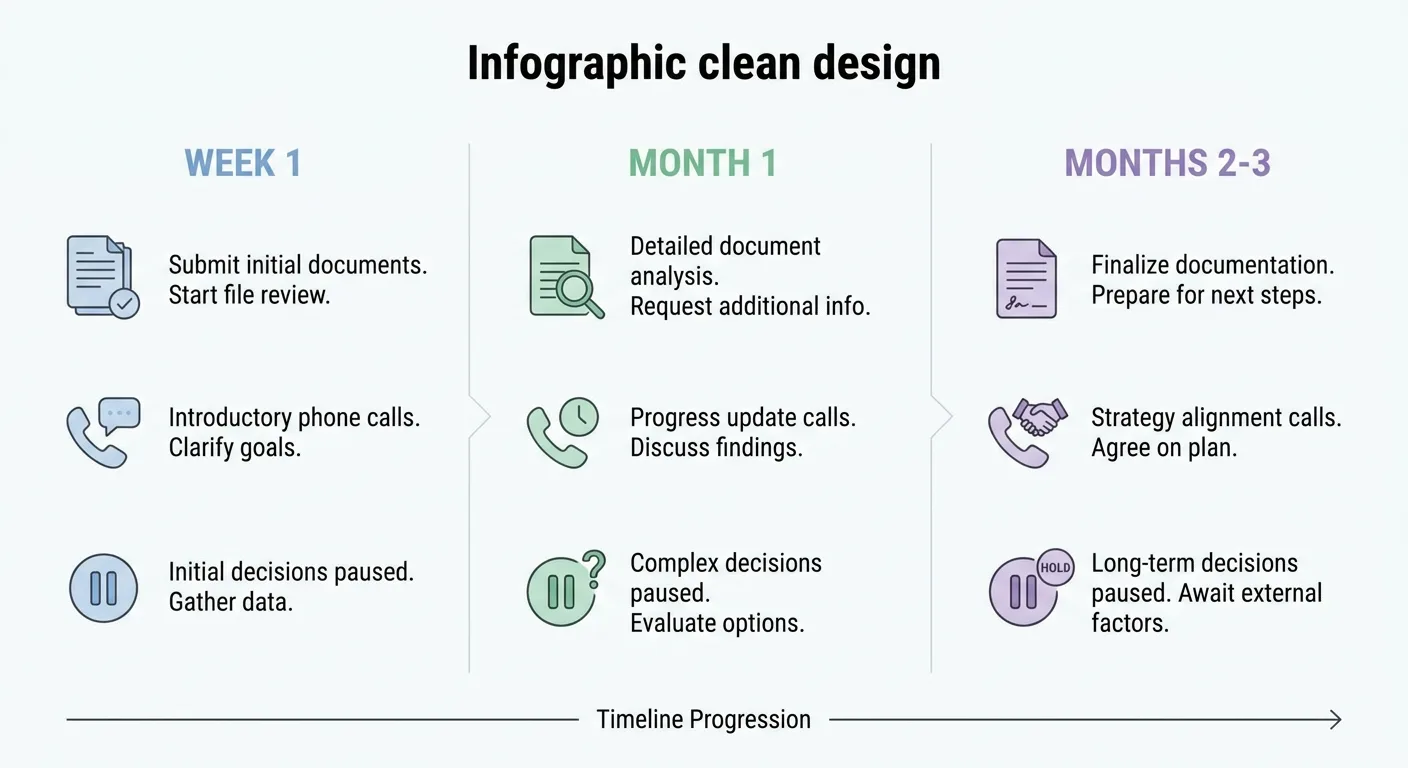
*Three-column timeline: Week 1, Month 1, Months 2 and 3*
Week one centers on gathering documents: death certificates, account statements and insurance policies. Month one covers notifying employers and benefit providers. The final stretch names decisions worth pausing, such as selling a home or making large gifts.
Draft the post from questions surviving-spouse clients have asked you, anonymized and generalized. Skip benefit amounts, deadlines and claiming rules unless you cite current agency guidance. Close with an invitation to talk, not a pitch.
2. “I Just Inherited an Account. Now What?”
Heirs may search before they call anyone, and some have no advisor yet, which makes this a prospecting post as much as a client-service one.
The core message: don’t touch anything yet. Walk readers through four moves:
- Pause before cashing out.
- Identify the account type, such as an inherited IRA or a brokerage account.
- Confirm beneficiary status with the custodian.
- Ask about tax consequences before any withdrawal.
Explain in plain terms that heirs fall into different beneficiary categories and that the category shapes their options. A brief line acknowledging the mixed emotions around inherited money helps.
End with a printable question list readers can bring to a first meeting. Because distribution rules vary with those details, state no timeline or percentage without citing current IRS guidance.
3. Equity Compensation at a Job Change or Acquisition
Questions about stock grants tend to surface around events: a resignation, a layoff, an acquisition announcement. One theme feeds two posts for two different searchers.
The same caveat applies to each: tax treatment differs between restricted stock units (RSUs), incentive stock options (ISOs), nonqualified stock options (NSOs) and employee stock purchase plan (ESPP) shares. Leave tax figures out unless sourced.
The Vesting Calendar Post
This one stays useful year-round. Help employees map vesting dates, cliff periods and post-termination exercise windows before they resign. The deliverable is a fill-in calendar template readers complete with their own grant documents. Your key message: check the exercise windows in your plan documents before giving notice.

*Close-up of an employee marking vesting dates and an exercise window deadline*
Since plan terms differ by employer, the guidance should stay general.
The Acquisition Week Post
Merger news can send employees searching right away. They want to know what happens to unvested shares, what to ask HR and what to avoid deciding in a panic. Give them a list of questions for HR and the plan administrator. Add a reminder that deal terms govern outcomes, so reading the agreement comes before acting. Get the draft pre-approved by compliance now, so you can publish fast when a deal hits your local area.
4. Taking Over a Parent’s Finances Before It’s an Emergency
Adult children often realize all at once that a parent can no longer keep up with bills or accounts. Many feel guilty for not noticing sooner and awkward about raising money at all, so acknowledge both feelings early in the post.
Title it along the lines of “The Money Conversation With Your Parents You Keep Postponing” to set the tone. Cover three things:
- Conversation openers that don’t sound accusatory
- A document inventory: wills, powers of attorney, account lists and securely stored passwords
- Signs a parent may need help with bills
Offer a downloadable family finance inventory sheet as the practical takeaway.

*Adult daughter and elderly father sorting folders at a kitchen table*
This post serves the reader today and opens a relationship with a generation that may inherit assets later. Power of attorney and healthcare directive rules differ from state to state; point readers to an estate attorney and give no legal guidance.
Questions Prospects Research Before They Ever Book
Prospects vet you before they contact you, so answer their doubts on the page, using the keywords prospects actually type during that research phase.
5. What Working With You Looks Like in Year One
Prospects who hold off on booking may not be able to picture what they’d be paying for. A month-by-month walkthrough removes the mystery. Call it something like “Your First 12 Months With Us, Meeting by Meeting,” and cover discovery, data gathering, plan delivery, implementation and the first review. For each meeting, name the meeting itself, what the client brings and what the client leaves with.
Regulators study the advice market closely, too: the UK regulator’s latest survey drew responses from more than 4,100 financial advice firms, alongside data on around 31,000 advisers (Financial Conduct Authority). The UK’s Financial Conduct Authority (FCA) has published a report on a survey of financial advice firms, sharing findings that may offer useful context for advisers. Those findings cover the UK market and say nothing about blogging or bookings. A plain, step-by-step explanation previews how an advisor will communicate once someone becomes a client, so a process post should model that clarity.

*Advisor and a middle-aged couple in a bright meeting room*
Base the post on your firm’s real onboarding process. Ask a recent client which step surprised them, then address that step directly. Describe your process, never results. Imply no returns or outcomes.
6. The Fee Post Most Advisors Avoid Writing
Fees are often the last question standing between a prospect and a booking. Some firms can’t publish exact fees for business or regulatory reasons, and that’s fine, because explaining the structure still helps.
Show the Math With Your Own Schedule
If you can publish your schedule, walk through two or three hypothetical households using your real fee structure. The table shows what each model’s post must explain (AUM = assets under management).
| Fee model | Name plainly in the post | What the hypothetical example should show | Check before publishing |
|---|---|---|---|
| Flat fee | What the fee covers and how often it’s billed | Show what one household might pay each year under your schedule | Matches the amount in your disclosure documents |
| AUM-based | How the percentage applies to the account balance | Cost at two different balances from your own schedule | Any breakpoints mirror your official fee schedule |
| Hourly | What counts as billable time | A typical engagement broken into tasks | Hourly rate and scope match disclosures |
| Retainer | What the ongoing service includes | A year of service for one sample household | Renewal and cancellation terms stated accurately |
Say which costs sit outside your fee, such as fund expenses and custodial fees, where they apply. Label every example as hypothetical and use only your firm’s own numbers, with no industry averages.
Where Fee Posts Trip Over Compliance
Watch for posts that tout the benefits of your services without balancing them against risks or limitations, a deficiency SEC examiners flagged in some advisers’ advertisements (Troutman Pepper). Specific marketing rules depend on registration type, so confirm details with your chief compliance officer (CCO) and cite no rule numbers unless you’ve pulled the primary source.
7. “You Might Not Need an Advisor Yet,” and Who That Applies To
Worried this one costs you clients? An honest post about who isn’t a fit right now builds credibility.
One working headline could build on signs like a straightforward financial life, since someone with a steady job, a 401(k) and an index-fund strategy is probably doing fine on their own (due.com). Cover:
- Who fits your minimums
- Basics readers can handle alone, such as building an emergency fund and enrolling in their employer plan
- The triggers that mean it’s time to call

*Young professional checking emergency fund savings at a small apartment desk*
Link the triggers list to your life-event posts so a reader who hits one has somewhere to go next. Be specific about thresholds and triggers. Vague criteria can lead people with complex needs to rule themselves out, and those are exactly the readers you want calling.
8. How to Switch Advisors Without a Mess
Some people stay with an advisor they’ve outgrown because transferring accounts sounds complicated. “Breaking up” with someone you’ve known for years is awkward, too. Acknowledge that, then make the process concrete:
- Gather recent statements.
- Know that the new firm typically initiates the transfer, and confirm the steps with both firms.
- Ask about any account closing or transfer fees.
- Keep the old account open until the assets arrive.
Add a short “questions to ask before you switch” section at the end. Two caveats matter here: never criticize another firm or advisor, even indirectly, and present transfer timeframes as variable, since they depend on the custodian and account type.
9. A Playbook for the One Profession You Serve Best
Pick one profession you already serve well and write about its specific financial puzzles, using angles like these:
- Physicians balancing training-era debt with late-starting savings
- Teachers weighing pension and supplemental plan choices
- Business owners choosing a retirement plan for a small team

*Physician in scrubs at a hospital break room table*
List the five questions clients in that profession ask most, then turn each into a section. Cover one niche per post; stacking three professions into one article helps none of them. Because pension and plan rules differ by employer and state, cite the plan documents or stay general.
Posts Your Referral Partners Will Forward
CPAs and estate attorneys forward posts that solve their own recurring headaches, and a forwarded post arrives with trust attached.
10. The Tax-Season Handoff Checklist Your Client’s CPA Wants
Tax preparers want client documents complete and in one place. Give clients a checklist of what to collect from their advisor before that meeting, and you save the CPA time while looking organized. Include:
- Year-end account statements
- Tax forms from custodians
- Records of charitable gifts
- Notes on any account changes during the year

*Organized desk with year-end custodian tax forms and charitable gift receipts*
Skim what accounting firms blog about before sending the draft to a CPA partner, so your list complements their client content instead of duplicating it. Then ask one CPA you work with to review it, and credit them by name only with their written permission.
Stick to coordination and document gathering. Tax strategy belongs to the preparer, and any deadline or figure needs a cited primary source.
11. After the Trust Is Signed: The Funding Step People Miss
A signed revocable living trust doesn’t fund itself. Accounts that are never retitled, or beneficiary designations left unchanged, can leave the trust partly unfunded. The gap persists because it belongs to no single professional: the attorney drafted the document, and the advisor may not know it exists.
Frame it with a headline like “You Signed the Trust. Here’s What Still Needs to Happen,” then build a plain list of next steps estate attorneys can forward after signing. It should:
- List accounts that may need retitling
- Explain that some accounts pass by beneficiary designation, so those forms need review too
- Remind readers to recheck everything after major life changes
Send the draft to one estate attorney partner and ask what clients forget most often. Trust and titling rules shift with state and account type. Explain the funding step in general terms, and direct readers to their attorney for specifics.
Formats Built for AI Answers and Featured Snippets
A strong topic still underperforms when its answer hides in paragraph six. The two entries below reshape any post so search engines and AI assistants can lift a clean response. Readers who want the background can see how AI visibility works before making those changes.
12. One Question, One Page: Posts Built to Be Quoted
Posts in this format typically put a single question at the top as the heading, such as “Can a teacher in their late fifties retire comfortably on their savings?”, followed by a brief direct answer and then the supporting depth (The Advisor’s CMO). Good financial advisor content ideas for this format come from material you already have:
- Client emails
- Intake forms
- The questions you answer in nearly every meeting
Several client questions often overlap. Try grouping related questions by intent so each page answers one question instead of competing with its neighbors.
Keep one caveat front and center: a concise answer can’t drop the disclaimers or conditions that make it accurate.
The Answer-First Opening
Put a 40- to 60-word direct answer in the first paragraph, then expand below it. The order runs:
- The direct answer
- The key condition (“it depends on X”)
- A pointer to the detail below
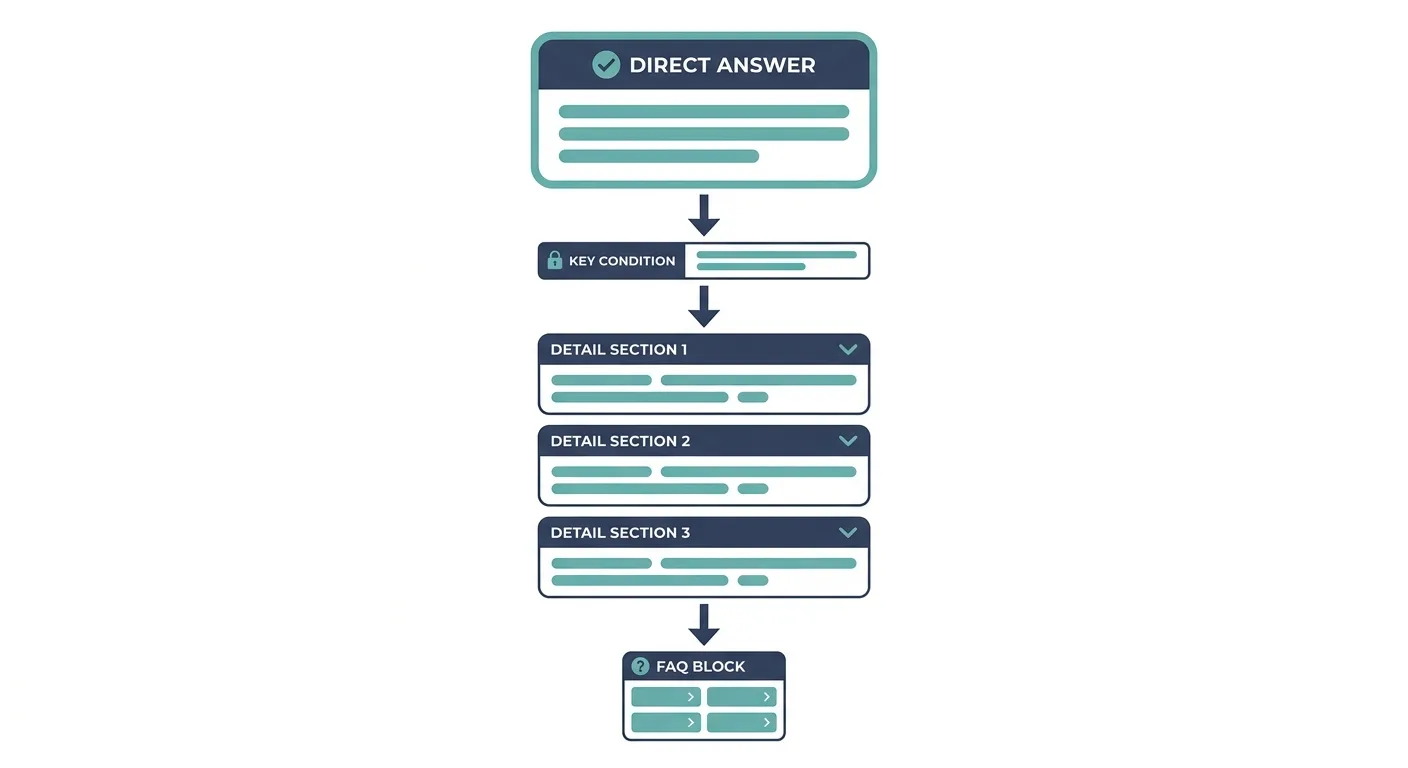
*Flat-style diagram of a single blog post layout*
Rewrite the opening of one existing post this way before writing anything new, then run the page through an on-page SEO checker to confirm the answer block and headings read cleanly. Define terms on first use and leave jargon out of the first sentence.
The FAQ and Structured Data Layer
Close each post with a short FAQ block of three to five closely related questions, each answered in two or three sentences. Does schema matter for a small advisor blog? It helps machines parse the page. Ask your web person or CMS plugin to output FAQ schema in JSON-LD where your site supports it. Confirm the markup matches the visible text exactly. Schema guarantees neither a citation nor a ranking.
13. Refresh the Archive Before You Write Anything New
If you already have older posts, some likely carry outdated figures, stale examples or buried answers. Run a quarterly review that flags:
- Contribution limits, tax brackets and other yearly figures that may have changed
- Dead links and retired products
- Openings that bury the answer
- Topics a newer post now covers well, which you can merge or redirect
A simple spreadsheet works: list each post, its date-sensitive claims and the source behind each one, using columns such as these:
| Post Title | Date-Sensitive Claim | Source URL | Last Verified | Status |
|---|---|---|---|---|
| Inherited account explainer | Distribution timeline for heirs | [Paste current primary source URL] | [Date checked] | Needs update |
| Year-end retirement savings post | Annual contribution limit | [Paste current primary source URL] | [Date checked] | Sent to compliance |
| Fee explainer | Fee schedule figures | [Link to current disclosure document] | [Date checked] | Approved |
| Switching advisors guide | None (process only) | Not applicable to this row | [Date checked] | No change needed |
Verify each row with a repeatable fact-checking process before the batch goes to compliance. Because updated marketing materials usually go back through approval, batch your refreshes and let compliance review them together.

*Financial advisor at a laptop in a calm, well-lit office*
A stale figure on an advisor’s site is a trust problem. A missing post is merely a gap.
Frequently Asked Questions
How often should a financial advisor publish blog posts?
Publish at a pace you and compliance can sustain for a year. Factor in review turnaround before setting a schedule. One useful post a month is a solid rhythm, and refreshing an older post counts as output. Judge whether your pace works by tracking indexation, impressions, and then clicks and position over the following months before drawing conclusions about a cadence change (Ranksector).
Do blog posts need compliance approval?
Yes, assume every blog post needs compliance approval before it goes live. Treat posts as marketing communications; requirements depend on your registration type and firm policy, so your CCO has the final word. Keep a record of each approved version, and pre-approve a few evergreen drafts for time-sensitive posts.
Can I use AI to draft blog posts for my practice?
Yes, AI can produce outlines and first drafts, but never the final version. These tools can state outdated or invented figures with confidence, so trace every number to its original source. This guide to how fact-checkers verify figures shows what that check involves. Then add your firm’s real process and voice before compliance reviews it.
Picking Topics With Proof and Checking Every Figure
Advisors who pick blog topics on instinct often end up with a post nobody searches for, followed by a scramble to recheck each figure while compliance waits. Vee3.ai is built to cut both problems down, with one workspace to crawl, research, plan, write, fact-check, publish and measure. That’s the full SEO automation from crawl to rank, in one place. Vee3.ai supports demand research and accuracy checks; your CCO still approves every post.
Pick your next post from real searches and verify every figure before it reaches compliance. Start building in Vee3.ai.
Final Thoughts
Write down the three questions you answered most this month. Pick the one tied to an urgent moment and draft it this week; one finished post does more for your practice than a calendar full of plans. Adapt the order of these blog topics for financial advisors to your own clients.