
You’ve probably seen this cycle. Compliance review turns a simple post into weeks of edits, the product team wants another promo announcement, and readers often skip both. The calendar fills up with generic “savings tips” posts, even though someone closing an account with a competitor is more likely to be interested in switching than someone researching savings tips (Mint Studios).
Your service queues hold the fix. Agents field the same questions customers type into a search bar, often before they ever pick up the phone.

Customers’ most asked questions and most voiced concerns are the raw material for helpful bank blog articles (Spectrio). The same friction-first approach behind the other industry blog topic lists shapes this one: four groups and twelve numbered entries, each with a practical action and a caveat.
Have the frontline staff who answer these calls review each draft alongside compliance, because they’ll catch wording that reads fine on paper and lands badly on a call.
TL;DR
Money in Limbo: Help Desk Questions Worth a Full Post
People searching these questions are already worried. So they skim. In the first paragraph of each post, answer the question behind the keywords anxious customers type in calm, plain language. Save the background for later in the post.
1. The “Pending” Deposit Explainer Nobody Publishes
A deposit shows up on screen, the customer tries to spend it, and the transaction fails. That gap is a common reason for calls, and few banks explain it clearly.
Plan a post that follows one deposit from submission to available balance across mobile, ATM and branch channels. Show where cutoff times, holds and posting order shift the timeline. Pull exact cutoff times and hold language from your published disclosure. Then have operations staff confirm them, since customer-facing wording tends to drift over the years.
Define each balance state in your institution’s own terms, since a customer’s available balance may not match the actual balance, and an overdraft can occur regardless of the actual balance (cfnb.bank). A simple version: pending means the transaction is still processing, posted means it has settled to the account record, and available means the amount the customer can spend or withdraw right now. (Long-time customers trip over “available balance” too, so write for everyone.)

Generic federal hold timelines belong in the post only if the writer retrieves and cites the regulator page at drafting time. Point readers to your funds availability disclosure, and let that document carry the legal detail.
2. What Really Happens After a Customer Reports Fraud
A lot of fraud content stops at telling customers to call their bank right away. Customers do call, and then they hear nothing for days. Silence frightens people. A clear account of the process, even one with slow or unwelcome steps, can calm them and reduce the “any update?” contacts clogging your queue.
Interview your disputes team about the real sequence: card replacement, provisional credit decisions, the investigation, and the questions customers ask at each stage. Ask whether debit and credit card claims follow different paths at your institution, and if they do, describe each path on its own terms.
Liability rules and resolution timelines are legal claims. Leave the specifics out unless a regulator source is retrieved and cited in the same paragraph, and leave product promotion out of this post.
Present the process as a six-stage visual sequence: report, card lock or reissue, claim intake, documentation, review and resolution notice.
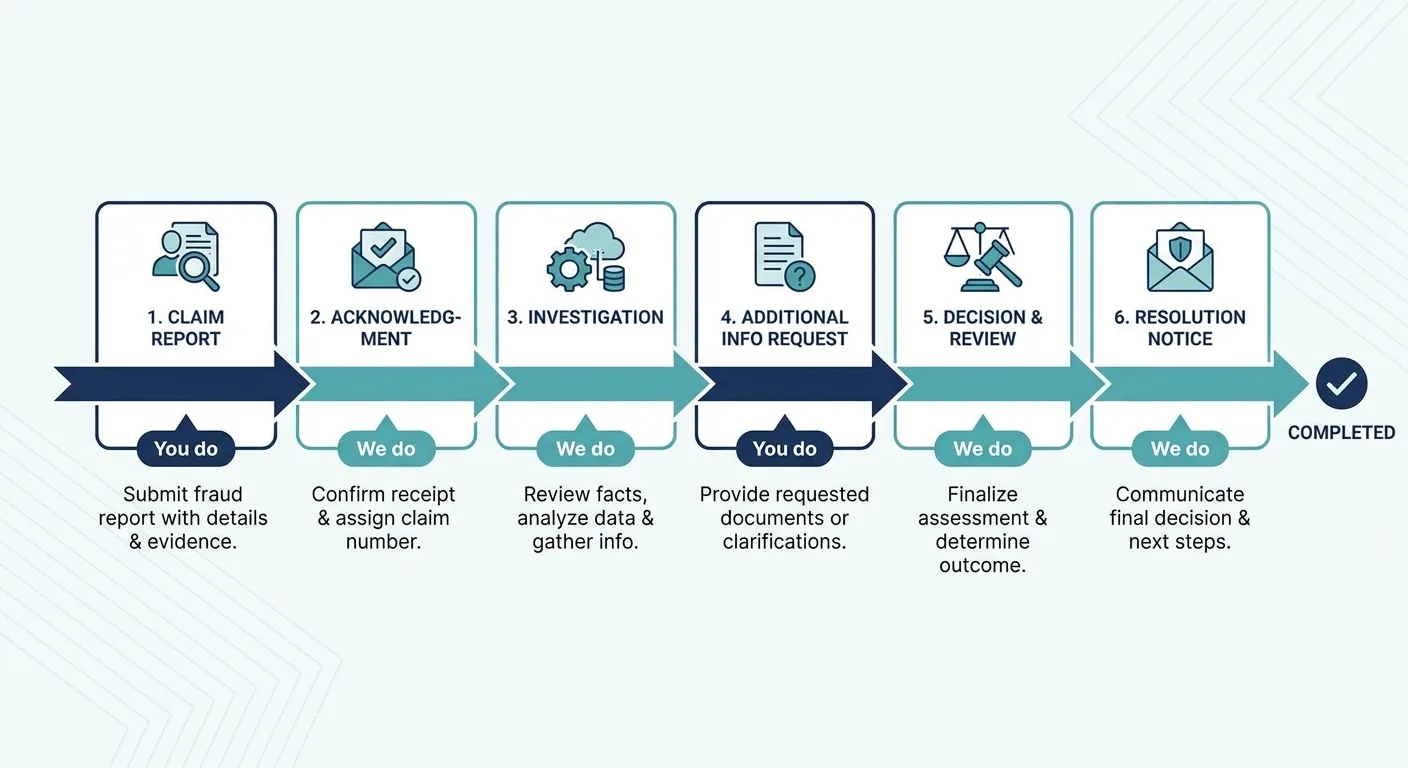
Consider tagging each stage “You do” or “We do” and listing anything the customer may need to provide. A worried reader can then find their stage and see what comes next. Leave out fixed day counts unless policy confirms them, and get operations approval for any “typically” language.
3. Card Declined Abroad: The Pre-Trip Checklist Post
A declined card at a foreign checkout ruins an afternoon, and a few minutes of prep can often prevent it.
Structure the post as a numbered list:
- Travel notices. State clearly whether your bank still requires one or relies on automated detection.
- Foreign transaction settings. Show readers where to review them for each card.
- A backup payment method. One card is a single point of failure.
- The international support number. Have readers save it before departure.
- In-app lock and unlock steps. Walk through them with screenshots.
Turn the finished list into a printable checklist graphic at the end of the post, so travelers can save it before a trip.
Fee figures are where this post goes stale, so quote foreign transaction fees only from your current fee schedule at publication. Refresh and republish the post ahead of peak travel months each year.
Life Admin Your Customers Were Never Taught
Grief, separation and caregiving push people into paperwork nobody ever explained to them, and here tone and pacing matter as much as accuracy. Many banks cover these banking blog topics thinly, and the posts can reach people who aren’t your customers yet.
4. Closing a Loved One’s Accounts Without the Runaround
Estate calls run long, turn emotional and repeat, often because families don’t know what to bring. Ask branch staff which missing document stalls cases most often, and lead the post with that document.
Explain payable-on-death accounts and beneficiary designations conceptually: what a designation does and why families should check whether one exists. Legal conclusions stay out.
Give readers a “bring this to your appointment” list built from your own requirements. Depending on your policy, it might include a death certificate, photo ID for the person handling the accounts and any court or estate documents your team needs to see.

Estate law varies by jurisdiction, so recommend consulting an attorney and avoid stating legal thresholds. Keep this post free of promotional calls to action, too, because a grieving reader does not need a CD offer at the bottom of the page.
5. Untangling Joint Accounts After a Breakup
Separation raises awkward questions fast. Who can withdraw what? How does a name come off an account? Can an ex empty it tonight?
Plan a neutral, step-based post that respects both owners and takes no sides. Cover account ownership basics, the steps to remove an owner or open individual accounts, and how to redirect direct deposits and autopays. (People often forget to redirect autopays until a subscription payment bounces.)
Confirm with operations whether both owners must consent to changes, then state your real policy in plain words. That one sentence can prevent disputes your branch staff would otherwise have to referee.
Dividing assets is legal territory. Point readers to legal counsel for that part and keep the post focused on account mechanics.
6. Helping an Aging Parent Bank Safely
Adult children often want to help a parent with money but don’t know the safe, sanctioned ways to do it. Outline the access options your institution offers, such as view-only access, authorized signers and trusted contact designations. Include only the ones that exist at your bank.

Write to the parent as well as the child. Respectful language about the parent’s autonomy keeps the post from reading as a takeover manual. Mention a few elder-specific fraud warning signs briefly, then send readers to your full scam-spotting guide (entry 9).
Power of Attorney Paperwork, Decoded
Families sometimes arrive with a power of attorney document the bank can’t accept as presented, and the repeat visit wears on everyone. A short explainer can solve much of that. Cover what your institution reviews, what to bring and how long review takes at your bank, using wording approved by your legal or operations team. Claims about document validity rules belong to attorneys and your written policy, so keep them out of the post.
Topics That Earn Trust Before Anyone Applies
Readers already search fees, rates and scams, so the only question is whose answer they find. That now means earning visibility in AI answers as well as in classic search results.
7. The Honest Overdraft Fee Post
Overdraft confusion drives complaints. Explain exactly when a fee triggers, how transaction posting order works at your institution, and which tools help customers avoid the fee altogether.
Spell out the opt-in choices, balance alerts, linked savings transfers and any grace features you offer. Concrete avoidance tactics show respect for the customer’s money.

Pull fee amounts and rules directly from the current fee schedule on publication day. Because those rules change, schedule a quarterly review and show a “last reviewed” date on the page. Skip industry fee averages entirely, since your readers need your numbers.
8. Rate Changes Explained in Plain Words
Customers notice when savings yields drop or loan payments rise, and many don’t know why. An evergreen explainer on how your rates respond to broader rate moves helps them decide what to do next. Distinguish fixed and variable products, but don’t forecast anything. (Variable means different things across product types, so define it for each product you mention.)
Pair the explainer with a reusable update template built on three parts:
- What changed: the rate decision, its date and the publisher you retrieved it from. Aggregators such as LeadStory’s Banking and Loans news feed can help you find current coverage, but cite the original report you rely on.
- Who it affects: customers holding products that respond to rate moves, listed by name.
- Options: the choices your institution offers, linked to current rate pages.
Keep any Federal Reserve figures visibly separate from your own rates so nobody mistakes one for the other.
Build a routine for fact-checking time-sensitive rate claims so no past decision is ever presented as current. Look up the latest Federal Reserve decision when you draft, and complete the template only from a retrieved, cited source. Date every update and skip predictions. Quote product rates only from your current published figures.
9. “Is This Really My Bank?” Scam-Spotting Guides
Impersonation scams borrow your brand’s credibility and turn it against your customers. A guide stating exactly what your bank will and won’t ever ask for by phone, text or email gives readers a firm rule to check every suspicious contact against.
Anchor the guide with a “We will never…” list, the way one bank tells customers its employees will never contact them to ask for a full password, passcode or PIN, or to read back a one-time code (Security Bank Trust Co.). Every line should reflect a practice your institution truly follows. That way, a scammer’s request instantly stands out as wrong.
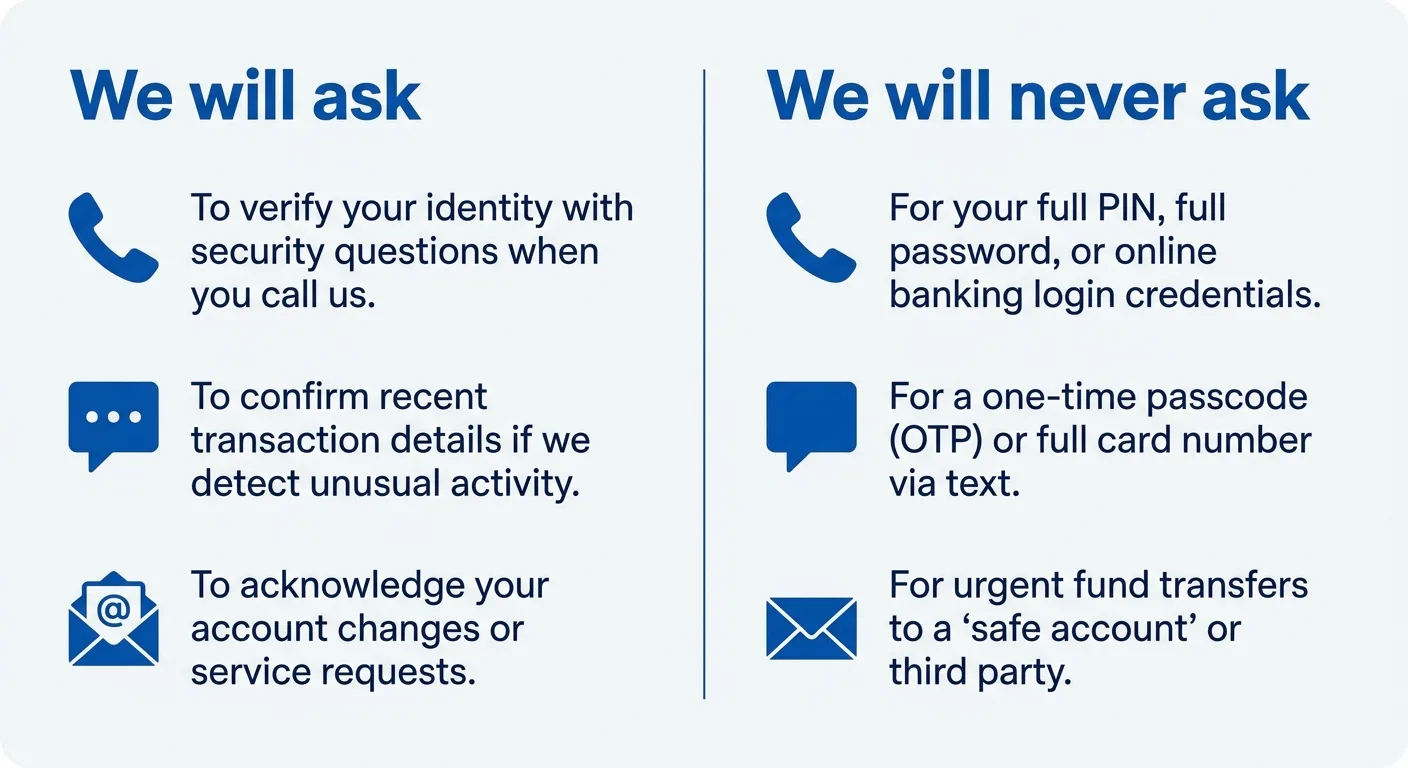
Add the scam patterns your fraud team sees right now, described in general terms. Then give readers one verified contact path and a simple instruction: hang up and call it.
Tactics shift constantly, so put the guide on a regular update schedule. Link to your fraud claim timeline (entry 2) for what happens after a report.
Small Business Owners Want Fewer Surprises
Owners juggle payroll, invoices and customers all day. They want steps, documents and timing, the same appetite behind strong accounting blog topics. Source ideas from relationship managers and your small business support team.
10. Seasonal Cash Gaps and the Credit Line Question
Seasonal revenue leaves owners wondering whether a line of credit or a term loan fits their situation. A decision guide built on three scenarios helps them narrow their options before talking to a banker.
| Scenario | Typical cash need | Financing structure to explore |
|---|---|---|
| Inventory buildup before a peak season | Short-term funds repaid once seasonal sales come in | Revolving line of credit |
| Delayed receivables from slow-paying clients | Bridge cash for payroll and bills while invoices stay open | Revolving line of credit |
| Equipment purchase | A one-time, larger amount repaid over a set schedule | Term loan or equipment financing |
Beneath the table, add a short line inviting readers to reach out, so they know the match is only a starting point for a conversation.
Describe how drawing, repaying and renewal work for your revolving products, and how a term structure differs in practice for your borrowers. Use your own product terms throughout.
Before anything goes live, ask a relationship manager to check the scenarios and the table for realism. Leave out rates, approval odds and terms unless they come straight from current product pages.
11. Inside the Underwriter’s Checklist
Applicants hand over a stack of financials and then wait, with no idea how anyone judges them. Explain the review factors conceptually so owners can prepare:
- Cash flow: whether the business generates enough to cover payments.
- Credit history: how the owner and the business have handled past obligations.
- Collateral: what secures the loan, if anything.
- Business plan: how the funds will be used and repaid.

Your underwriters can name the top three reasons applications go back to the applicant, so build those into the post. Criteria vary by product and institution, so frame every factor as a general consideration and leave approval thresholds out.
The Documents That Stall Applications
Missing or outdated paperwork causes delays that applicants can fix themselves. Create a downloadable checklist from your underwriting team’s input alone, since generic lists copied from elsewhere won’t match your requirements. Mark which items need to be recent, using policy-confirmed wording, and let your team decide whether it is gated or ungated. Close the section with a preview image of the PDF so readers see the next step clearly.
12. Moving Business Accounts Without Missing Payroll
Some owners stay with a bank they dislike because switching feels risky. A step-by-step guide removes that barrier. It also doubles as an acquisition piece without reading like an ad. Lay out the sequence:
- Open the new account.
- Run both accounts in parallel.
- Migrate payroll.
- Update vendors, merchant services and autopays.
- Close the old account last.

If your bank offers switching support, describe it. Remind readers to check annual and quarterly autopays. Insurance premiums, annual software subscriptions and seasonal payments that don’t renew monthly often get overlooked when businesses rely only on monthly reviews (relayfi.com).
Promising zero disruption invites trouble. Recommend a parallel period sized to the business’s payment cycle instead.
Publishing Bank Content You Can Defend Line by Line
Twelve strong ideas still need research, accurate claims and a steady publishing schedule. Every number in a bank post needs a source compliance can check, and hours disappear re-verifying drafts by hand.
Vee3.ai brings crawling, research, planning, writing, fact-checking, publishing and measurement into one workspace. You can fact-check every bank post before it reaches a reviewer and use keyword research to confirm customers search a topic ahead of drafting.

Tools support the process, but compliance review stays with your team.
Click Start building to research, verify and publish your next post with Vee3.ai.
Frequently Asked Questions
How often should a bank publish blog posts?
There’s no single right frequency. Publish at a cadence your compliance review can sustain, because a steady schedule is easier to review and maintain. Batch drafts by category so reviewers see related posts together. Refreshing evergreen fee and rate posts counts as publishing, and tracking how refreshed posts rank helps you decide which refresh to prioritize next.
Can a bank blog cover sensitive topics without slowing compliance to a crawl?
Yes, if compliance joins at the outline stage, because sensitive banking blog topics move faster with pre-approved language. Build a library of approved phrasing, cite sources inline, and borrow from how fact-checkers verify sources so reviewers can confirm each claim against the original page. Assign each post a subject-matter owner and a “last reviewed” date.
Should these posts mention specific bank products and rates?
Yes, sparingly. Educate first, then link to one relevant product where it genuinely helps. Live rates go stale fast, so link to your rate page. If a post states a fee or rate, pull it from the current published schedule on publication day and date it. Keep estate and fraud posts free of promotional calls to action (see entries 2 and 4).
Final Thoughts
Your first move takes an afternoon. Export recent call, chat and complaint themes from your service team. Once that export lands, keyword clustering tools can group similar questions so the three most frequent themes stand out. Circle those three.
Match each one to an entry on this list and draft those posts first. You don’t need a bigger team to start; you need a spreadsheet shared with your service team and the willingness to answer what customers already ask.
Your service queue has been writing banking blog topics for years. So which customer question do your agents hear most often?