
Frameworks take the blame for flat output all the time. The competitor analysis framework usually did its job perfectly, and the trouble sat in what we fed it. So what is a competitor analysis framework, and what should it tell you?
Most guides skip one step. Every model begins after the competitor list exists, and that list usually comes from memory, sales chatter or habit. We think it deserves the hardest scrutiny of anything in the process.
When a competitor spreadsheet changes nothing, the cause is often rival selection that ignored search overlap and AI answer citations.

TL;DR
The Rival List Nobody Audits
You know your market. That expertise is real, and it still comes from one channel of evidence, which means it feeds your framework of competitor analysis from a single direction.
Three separate lists usually hide inside “our competitors”:
- Commercial rivals: names that come up in deals, renewals and lost-opportunity notes.
- Search rivals: domains that rank for the queries your pages target. Expect publishers, review sites and niche blogs nobody in sales has ever mentioned.
- Answer rivals: brands and pages that AI-generated answers cite when buyers ask questions in your category. (Our guide on how AI visibility works explains why some pages get quoted.)
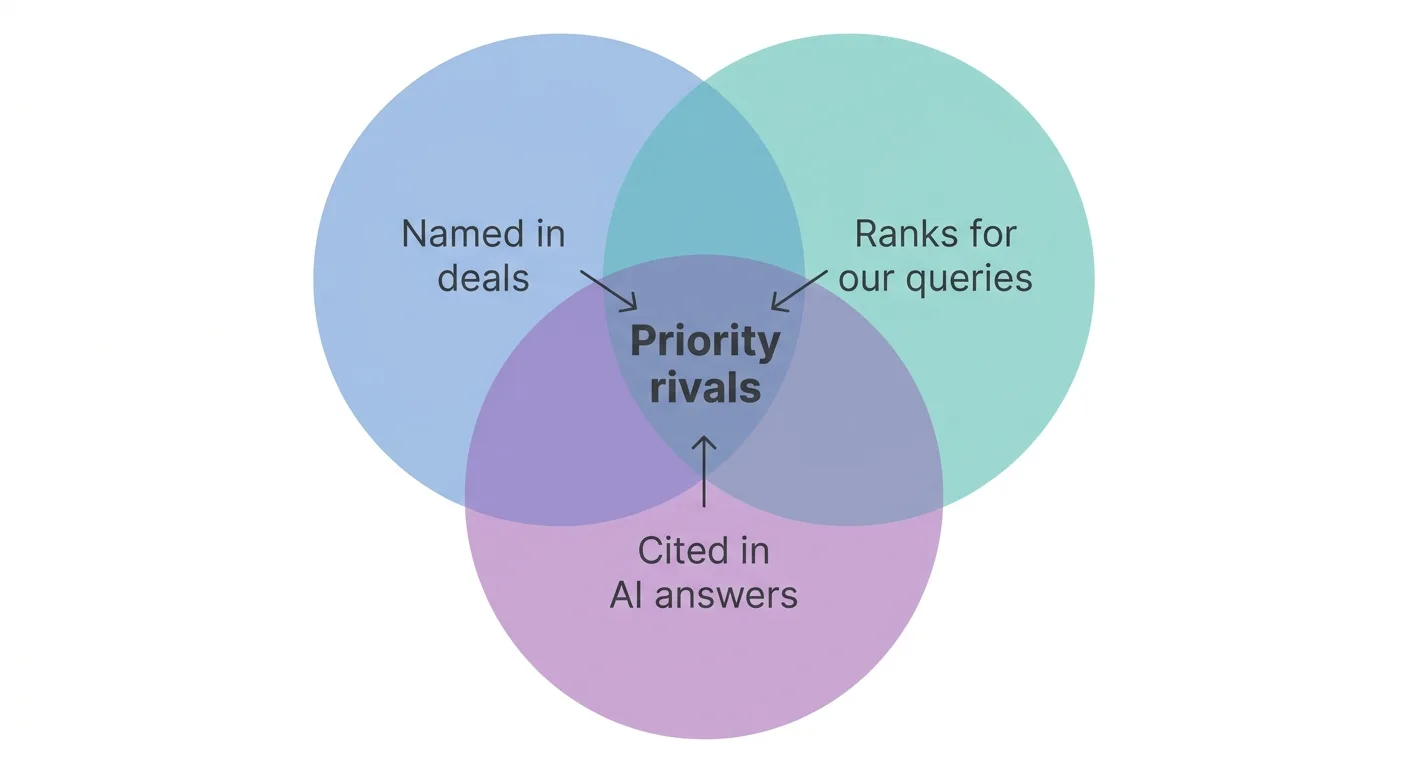
Overlap between the lists is a signal in itself. A name on all three is a priority. A name on one list needs context before it earns a row.
Commercial rivals still matter for pricing and positioning work. The goal is to label each rival by where it competes, and the sales list stays.
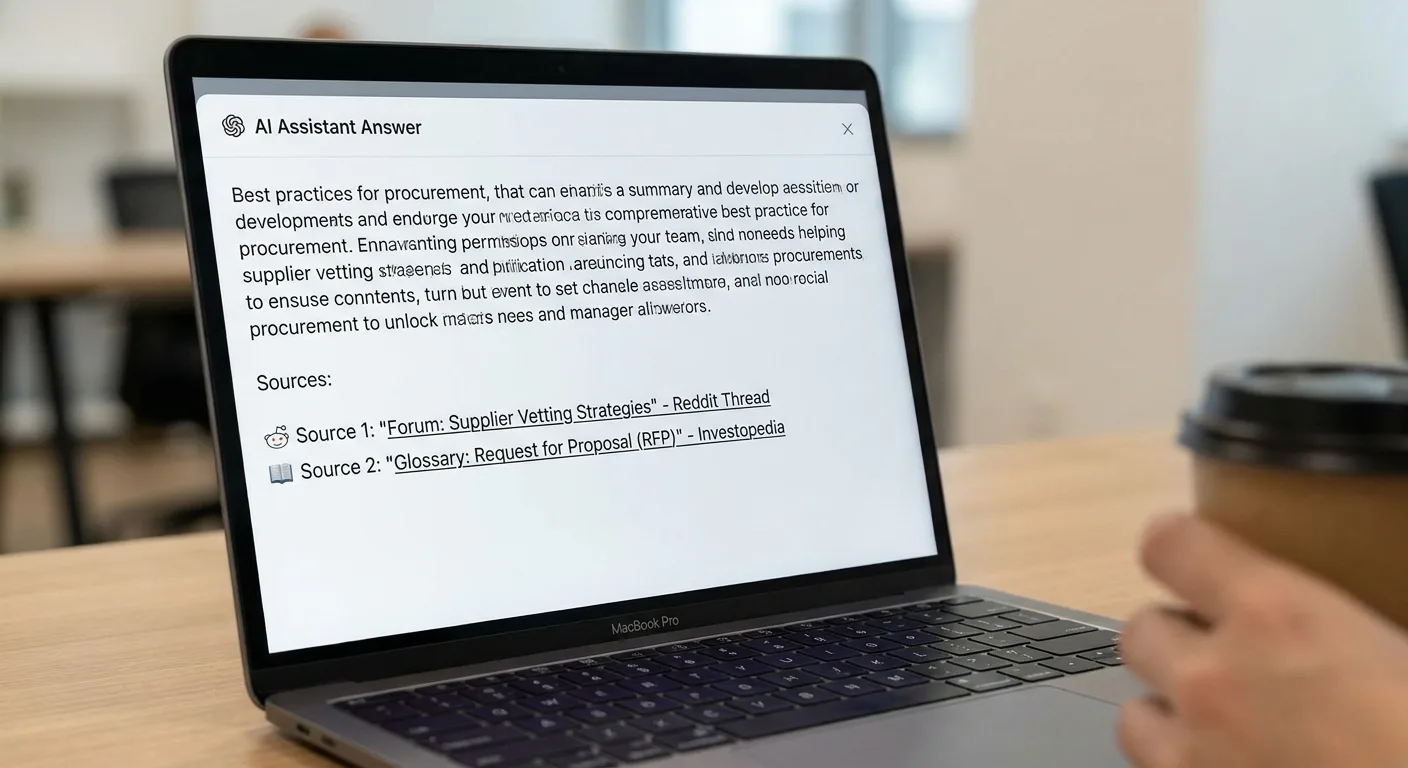
Any competitive analysis framework inherits the blind spots of its rival list, and those blind spots cost something. Teams sink hours into familiar names while an unfamiliar domain quietly takes their clicks or their citations. (The “rival” winning an AI answer might be a forum thread or a glossary page. No company at all.)
Whose page would an AI assistant quote if a buyer asked about your category this morning?
Answering it every quarter takes a repeatable scoring method.
Building a Rival Set You Can Defend in a Meeting
Rival selection is the first stage of any framework for competitor analysis, and it deserves real rigor. Here’s a five-step process, with the judgment call behind each step so you can adapt it to your category.
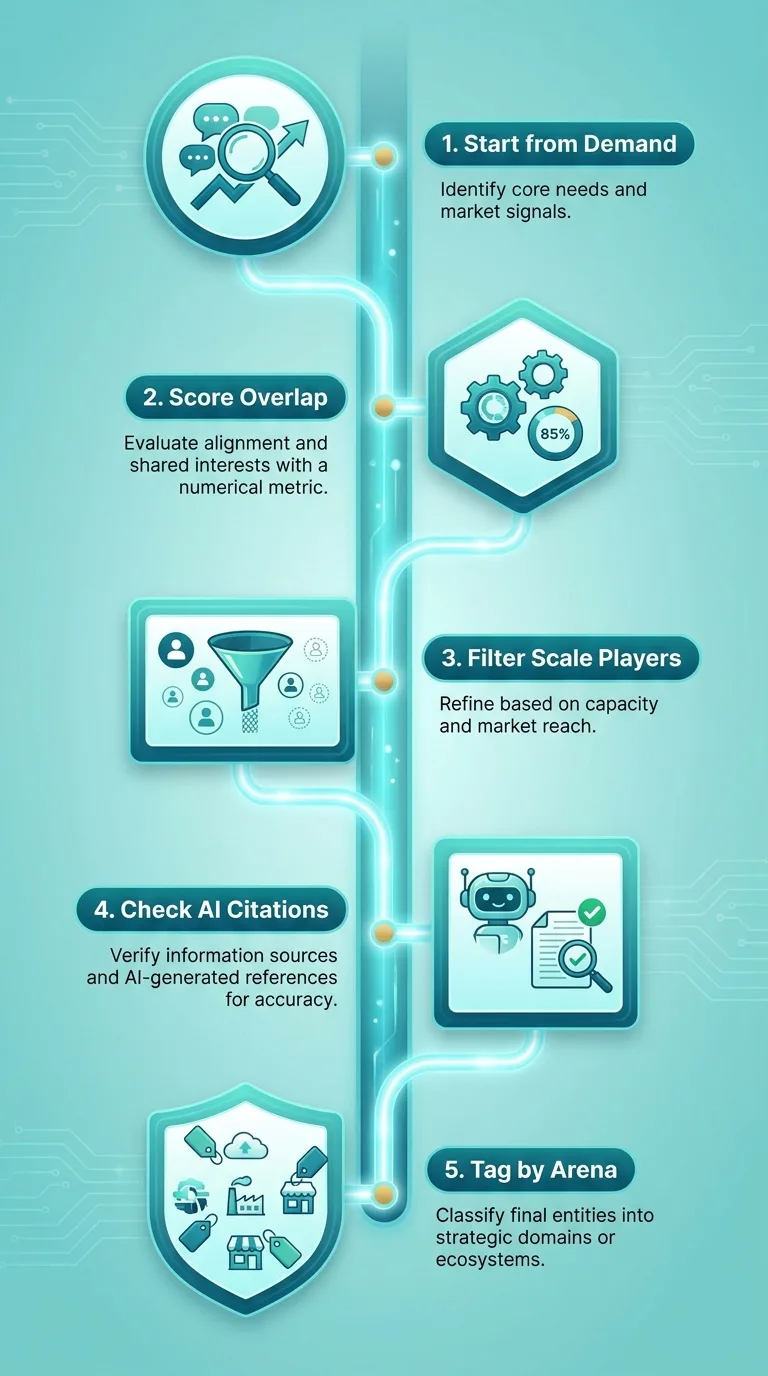
- Start from demand. Pull the queries tied to revenue pages and the topics you plan to build. Leave the full keyword export alone; the judgment call is deciding which queries pay the bills.
- Score footprint overlap. Rank candidate domains by how many of those target queries they also rank for. Measure it as shared target queries out of total target queries, using the same query set and the same pull date for every candidate. Rankings change, so record that date on the scoring sheet. Shared ground counts here, raw traffic doesn’t. A huge site with a handful of shared queries isn’t competing for your buyers.
- Filter scale players. Set marketplaces, directories and giant publishers aside unless they hold positions on your money queries. Some categories are dominated by aggregators, though, and ignoring them there would distort everything downstream. A local home-services business or a boutique travel operator can see booking platforms and directories holding most money queries. Those aggregators stay on the list, tagged as search rivals, because they decide where the buyer clicks first.

- Check answer citations. Run a sample of buyer questions through AI search experiences and note which sources get cited. These answers vary by phrasing, location and over time, so treat a single run as a snapshot. For each run, log the exact question wording, the AI experience used, the date, whether you were signed in and every cited URL. Re-run the same question set each quarter so the logs stay comparable, and compare sets of runs rather than single answers. Manual sampling gets heavy fast; you can compare AI visibility tools that log citations, and still record the date of each run.
- Tag by arena. Label each surviving rival as commercial, search, answer or some mix. These tags let your competitor analysis framework weigh rivals differently later.
Rival scoring sheet
- Rival: ___
- Shared target queries: ___ of ___, date pulled ___
- Holds money-query positions (scale players only): yes / no
- Cited in sampled AI answers: yes / no, date sampled ___
- Arena tag: commercial / search / answer / mix
- Reason it stays on the list: ___
Arena tags also give you a neutral, evidence-based reason to keep or cut a rival leadership watches closely.
Porter, PEST and SOAR Each Answer a Different Question
Model choice follows the decision. Every competitor analysis framework should start from the question the team needs answered, and three come up constantly: anticipating a rival’s reaction, stress-testing plans against outside forces, and setting your own strategic direction.
Marketing teams often default to one marketing competitor analysis framework regardless of the decision. A sharper approach to competitor analysis for marketing starts from the decision itself.
Porter’s four corners
Michael Porter’s framework for competitor analysis, set out in his 1980 book Competitive Strategy, builds a “competitor response profile” to anticipate how a specific rival will react (Umbrex). Porter’s competitor analysis framework examines four dimensions:
- What drives the rival (future goals)
- What it does today (current strategy)
- What it believes (assumptions)
- What it can do (capabilities)
The output is a response profile that predicts the rival’s behavior under specific moves, assigning likelihood, timing and impact (Umbrex).
Search data adds a fresh source of evidence to the competitor analysis framework Porter described. For a search rival, each corner maps to a public signal:
- Goals: the topics the rival has newly started publishing on.
- Current strategy: its topic-cluster structure and update cadence.
- Assumptions: what its content implies about buyer intent, such as whether it writes for early researchers or ready-to-buy visitors.
- Capabilities: its publishing volume and the formats it can produce, from comparison pages to tools.
Visible content gaps complete the picture by showing where the rival hasn’t invested yet. Strategy and capabilities are directly observable, while goals and assumptions are inferences, so record those two as hypotheses.

PEST
In a PEST framework competitor analysis, you map political, economic, social and technological forces at market level. Its overlooked use is running PEST per rival tag, since a shift in how buyers search hits search rivals and answer rivals differently.
Try this scenario. Buyer budgets tighten (an economic force), and category questions drift toward “free,” “template” and “cost” phrasing. Search rivals publishing free resources gain exposure. A commercial rival’s pricing page sees no change in search, yet its sales team faces harder conversations.
A technological force works the same way. If AI answers start summarizing more category questions, exposure can shift toward the pages those answers cite. Answer rivals would feel that change first, while a commercial rival with little content might barely register it in search. Mapping each force against each arena tag shows which rival group gains or loses, and which of your own pages share that exposure.
PEST alone says little about any specific competitor, so pair it with a rival-level model.
SOAR
Strengths, opportunities, aspirations and results: SOAR faces inward and forward. The useful question about the SOAR framework for competitor analysis is where it sits in your sequence: after Porter or PEST, where it converts findings into targets the team owns.
The results step is where search share, citation share or pipeline goals get written down, ideally alongside the SEO KPIs worth tracking each quarter. (SWOT still has its place. It just tends to collapse rival evidence into a single “threats” box.)
| Model | Question it answers | Inputs it needs | What you get | Use it when |
|---|---|---|---|---|
| Porter’s four corners | How will this specific rival respond to our move? | The four corners, plus publishing cadence, topic clusters and content gaps | A response profile for each rival | You’re planning a launch, price change or content push and expect a reaction |
| PEST | Which outside forces hit each rival group, and how unevenly? | Political, economic, social and technological signals, sorted by arena tag | A force map by arena | You’re stress-testing a plan against market shifts |
| SOAR | Where should we aim, and how will we measure progress? | Findings from Porter or PEST, plus your own strengths and opportunities | Owned targets with metrics | Analysis needs to become quarterly goals |
Here is how the choice plays out in one competitor analysis example.
One Worked Example, Start to Finish
This competitor analysis framework example is hypothetical. Picture a fictional mid-sized B2B software company whose sales team names three rivals. The audit reshuffled that list:
| Rival | Original reason on list | Audit finding | Arena tag | Kept, added or moved |
|---|---|---|---|---|
| Sales rival A | Named most often in lost deals | High overlap on target queries; cited in some sampled answers | Commercial + search | Kept |
| Sales rival B | Frequent comparison at renewal | Moderate overlap on target queries | Commercial + search | Kept |
| Sales rival C | Long-standing name in pitch decks | Few shared queries; absent from sampled answers | Commercial | Moved to pricing track |
| Niche publisher | Not on the original list | Appears across target queries and in sampled AI answers | Search + answer | Added |
The team ran four corners on rivals A and B. The publisher got a content-gap and citation review.
A hypothetical response profile for Rival A might read:
- Likely response to our content push: publish competing pages on the shared comparison topics.
- Likely speed: within a quarter, given its steady publishing cadence.
- Likely channel: new comparison pages and refreshed feature pages, backed by sales enablement material.
The publisher’s citation review asked narrower questions. Which buyer questions cite it? Which of its pages get quoted, and in what format? Do any of the team’s own pages appear alongside it, or never?
The decision followed directly: reallocate content effort toward the topics where the publisher wins, an approach covered in SEO for SaaS companies, and stop matching a sales rival’s feature pages.
Templates and PDFs That Don’t Expire on Day One
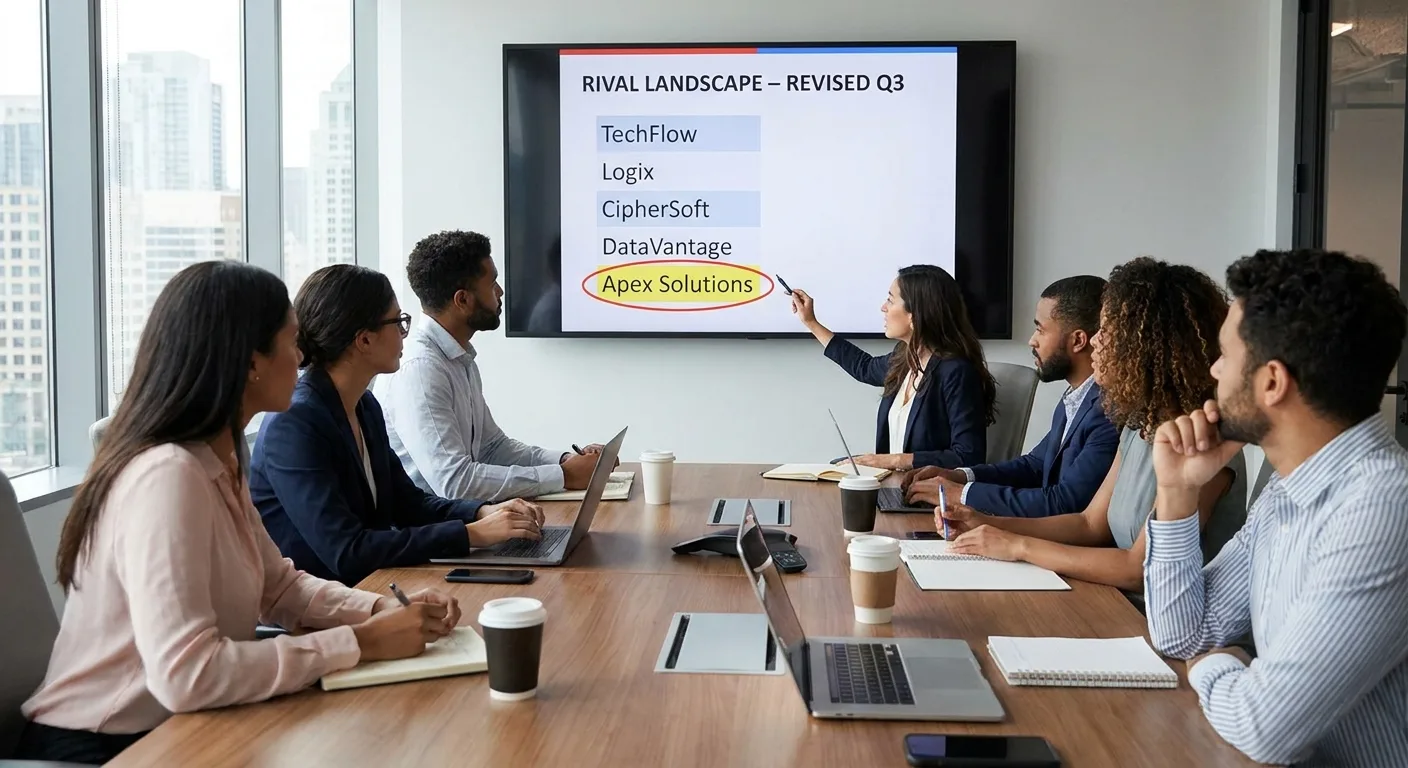
Every insight in that example came from fresh evidence. Most downloadable files lock the rival list on the day someone fills them out.
A competitor analysis template saves setup time. Searching “competitor analysis template free” turns up plenty of options, and we won’t point you to any specific download. Any downloaded template still needs the selection step.
That’s the core weakness. A competitor analysis framework pdf usually shows a finished analysis of rivals the author picked. Even a polished competitor analysis example pdf models the format and skips how anyone chose those names, so it can’t tell you whether its list fits your market.
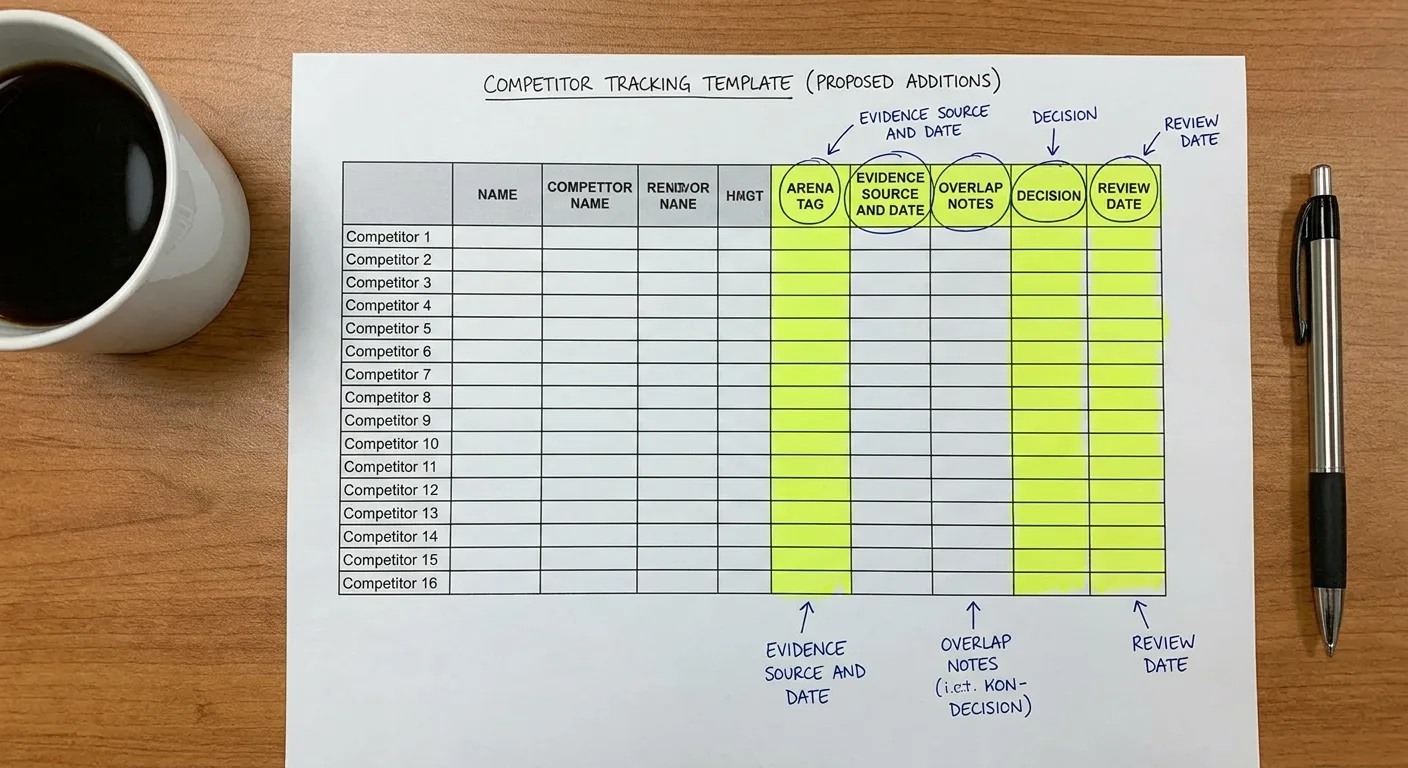
Add these fields to any competitor analysis framework template you download. They extend the scoring sheet above:
- Arena tag per rival (commercial, search, answer, or mix)
- Evidence source for each row, with the date gathered
- Overlap or citation notes for search and answer rivals
- The decision the analysis supports
- Next review date, which keeps the file from going stale
Reopen the file when any of these refresh triggers appear:
- A new domain shows up in your top results
- AI answers start citing different sources
- A rival launches a new content cluster
- A commercial rival makes a pricing or product move
When a trigger fires, skip the full rebuild. Re-run steps 2 and 4 for the affected queries only, update the arena tags for any rival whose position changed, and record the new review date. If a new domain clears the overlap or citation check, give it a scoring-sheet row. If an existing rival no longer clears either check, move it to lighter tracking instead of deleting its history.
Keep the spreadsheet as the working file, since rows and dates update quickly. Treat the competitor analysis template pdf as the shareable output, built around a clear competitor analysis chart that reflects the latest review date.
When Rebuilding the Rival List Eats Your Week
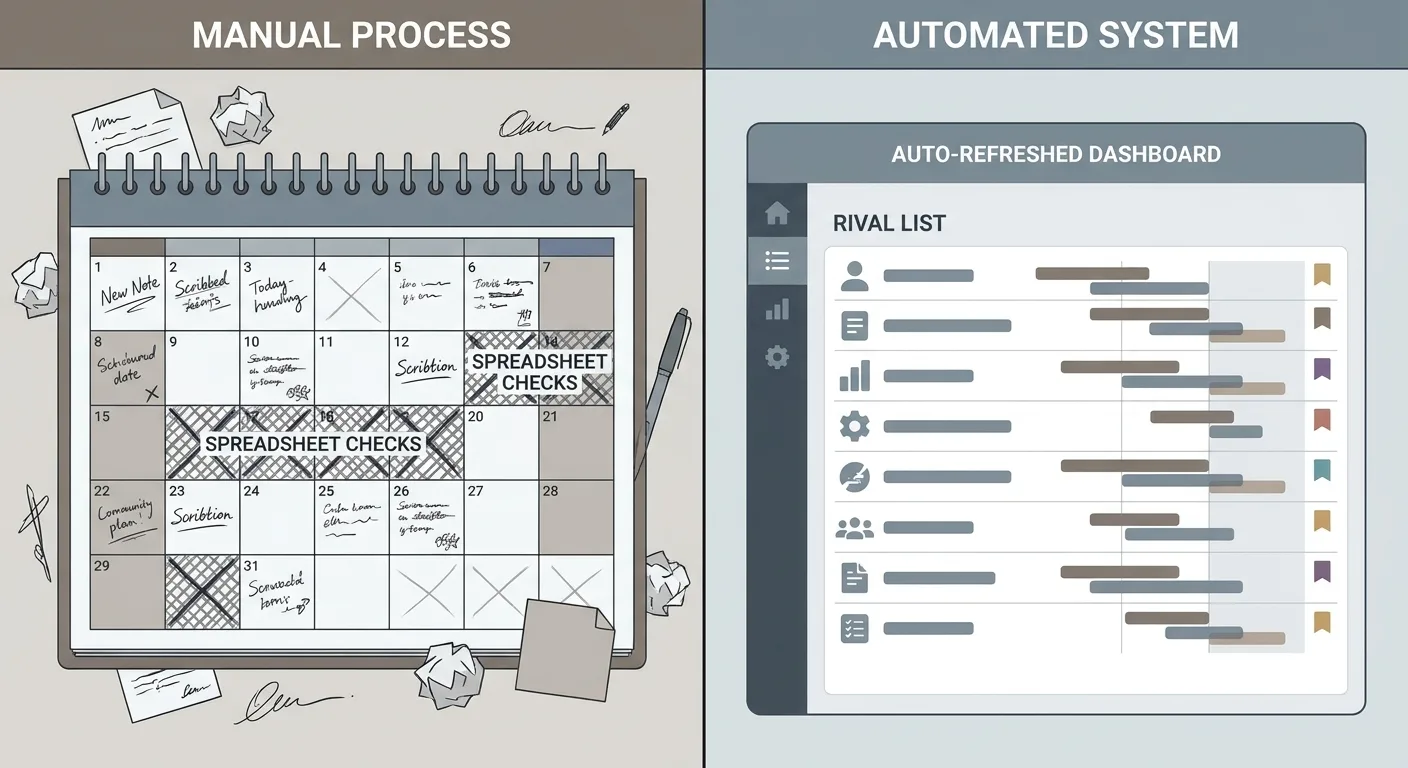
Manual overlap scoring and citation sampling can turn a quarterly refresh into a multi-day project. Keeping the inputs to a competitor analysis framework current by hand is easy to postpone.
We built Vee3.ai for SEO automation from crawl to rank. Vee3.ai’s product overview describes a workspace built for SEOs and ready for AI search, covering crawl, research, planning, writing, fact-checking, publishing and measurement. Use it to keep the search-side inputs of your rival audit in one place.
Commercial rivals and Porter-style judgment calls stay with your team.
When you’re ready, start building in Vee3.ai and map your rivals by overlap using the scoring sheet above as your guide.
Frequently Asked Questions on Rival Selection and Models
Is competitor analysis the same as competitive analysis?
Competitor analysis and competitive analysis are mostly interchangeable terms, though one distinction helps. A competitor analysis framework centers on named rivals and how they behave. Competitive analysis often widens to market forces and your own position, feeding broader competitive strategy work, which is where PEST fits.
How many competitors should a framework include?
No universal number of competitors fits every market. Let evidence set the floor by including each rival that clears the overlap and citation checks. Let team capacity set the ceiling, since a list nobody keeps current misleads. Expand it when a new name keeps surfacing across steps. Rivals spanning several arenas get the deepest analysis; single-arena rivals need light tracking.
Can a small team run Porter’s model without paid market data?
Yes, a small team can run the Michael Porter competitor analysis framework using public signals. Rival websites, pricing pages, job postings and published content all supply evidence, which a competitor website analysis tool helps you review quickly. Porter’s framework for competitor analysis still requires inference about goals and assumptions, so label those as hypotheses and revisit them.
Final Thoughts
Pick five revenue-driving queries this week. Check who ranks for them and who gets cited in AI answers, then set that list beside your current rival list.
That gap is your starting input for any framework of competitor analysis, whichever model you choose next. Turn it into rows: for each name that appears only on the evidence list, add a scoring-sheet row this week. For each name that appears only on the sales list, tag it commercial before deciding whether to cut it.
Bring the query list, show where the names diverge, and let your competitor analysis framework start from the rivals competing for your demand today.