
Another rival report lands in the shared drive, gets a polite round of nods, and changes nothing.
There are several common answers to the question “what is a competitor analysis in marketing?” focus on what to study: backlinks, ad copy, pricing pages. Fewer ask who deserves studying in the first place. The flaw usually sits in the starting list: the obvious names are a fine start, just an incomplete one.

TL;DR
Three Rival Lists Hiding Inside Every Market
Ask your sales lead, your SEO specialist and an AI assistant who your competitors are, and you’ll often hear different answers. Each one is correct.
- Business rivals are the names in lost-deal notes and pricing conversations. Sales calls and customer feedback surface them most directly.
- Search rivals own the results pages for the queries your buyers type. Anyone asking “what is competitor analysis in digital marketing?” can start here: it’s the study of who wins the online attention your buyers give, wherever that attention lands. You spot these rivals through overlap in keyword footprint, and some will be strangers to your sales team. Many search rivals solve the same buyer problem with a different product. Swydo’s Ultimate Guide to PPC Competitor Analysis, last updated May 15, 2026, approaches rival research from the paid-search side, so check ads as well as organic results.
- Answer rivals are the brands and pages AI assistants cite when buyers ask category questions. This is the newest and least-watched corner of competitor analysis in digital marketing, so it’s worth reading up on tracking your AI visibility before you run your first check.
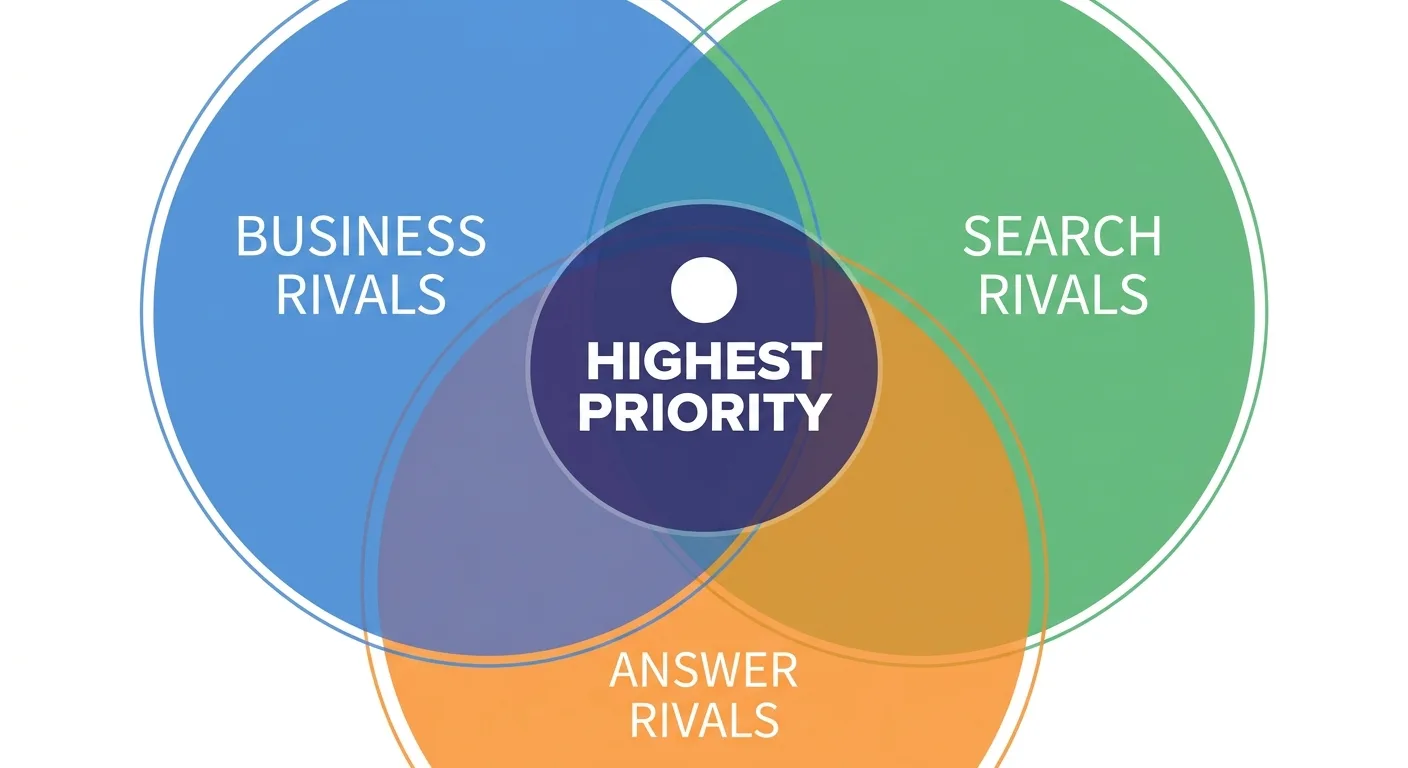
Here the importance of competitor analysis in marketing becomes obvious: with the wrong list, budget goes toward outpacing a company your buyers never encounter when they search.
Picture a hypothetical regional payroll services firm writing all three lists down for the first time. Sales names two local payroll providers. The results pages for its core how-to queries belong to accounting software blogs nobody on the team has ever discussed. AI assistants answering contractor payroll questions cite a bookkeeping newsletter. A general tax-information site ranks for nearly everything. Up to this point, the marketing plan had been built on the sales list alone.
The tax site belongs in a separate bucket. Sites that rank for everything seldom reveal anything useful about positioning, and step 3 below covers how to log them.
Which of your three lists have you never written down?
A Competitor Analysis Framework Built on Shared Demand
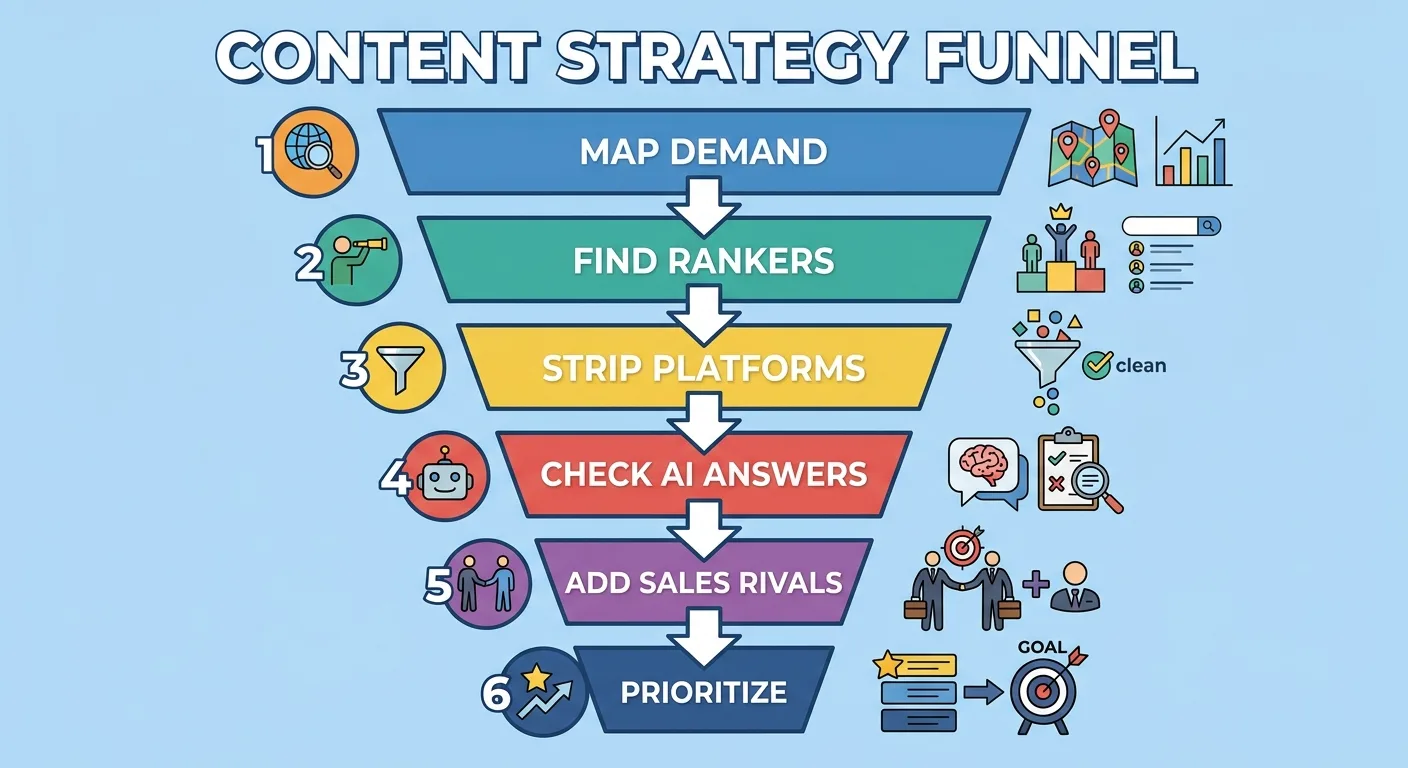
Selecting rivals comes first in competitor analysis for marketing because every later finding inherits its quality from the list. The sequence below shows how to do competitor analysis in digital marketing from your own demand outward, with deep research saved for the end.
-
Map your own demand first. Use clustering to group queries by meaning instead of keeping one flat keyword dump, covering topics you rank for and topics you want. Clusters reveal where demand lives.
-
Find who ranks across those clusters. A domain appearing in many clusters is likely a true search rival; a single appearance is usually noise.
-
Strip out platforms, marketplaces and directories. Log them separately for SERP-feature awareness, because they’ll skew every comparison left in the main list.
-
Check answer engines. Put the questions your buyers ask to answer engines such as ChatGPT or Google AI Overviews, and record which brands get cited.
- Pick a fixed set of buyer questions and reuse the same wording every check.
- Run the set in the same AI assistants each time.
- Record every brand and page cited, in the order cited.
- Log the date and the assistant beside each result.
- Flag any brand cited across several questions as an answer rival.
Keeping the wording identical counts for more than asking lots of questions. Because answers shift between runs, accounts and locations, read each check as a sample rather than a verdict.
-
Layer in business rivals. Pull names from sales notes and flag any that already appeared in steps 2 to 4. Those flags mark your overlap; confirm it with evidence instead of assuming it.
-
Cap the working list and prioritize by overlap depth. Names showing up on several lists earn the deepest research. The FAQ covers how many to keep.
Third-party keyword volumes are modeled estimates, so treat them as directional; your own Search Console data shows measured clicks and impressions for your site. A tiny niche may surface only a handful of search rivals, and that thin field is useful information in itself.
What to Pull From Each Rival (and What to Leave Alone)
Research hours run out fast. The goal of competitor analysis in marketing is decisions, not dossiers.
The Signals Worth Recording
| Signal | Decision It Informs | Rival List Where It Matters Most |
|---|---|---|
| Topic coverage gaps | Whether to build a cluster a rival covers thinly or skips | Search |
| Weakest domain on a target results page | Whether a query is winnable now | Search |
| Multi-year authority and traffic trend | Whether a rival is rising or fading | Search and Business |
| Messaging and positioning claims | Whether to sharpen or differentiate your promise | Business |
| Offer and pricing structure | Whether to adjust trials, tiers or guarantees | Business |
| AI citation presence | Whether to build answer-ready pages | Answer |
Record only the signals that change a decision.
Direction never shows up in one snapshot, which is why the trend row depends on rank tracking over time as part of the workflow.
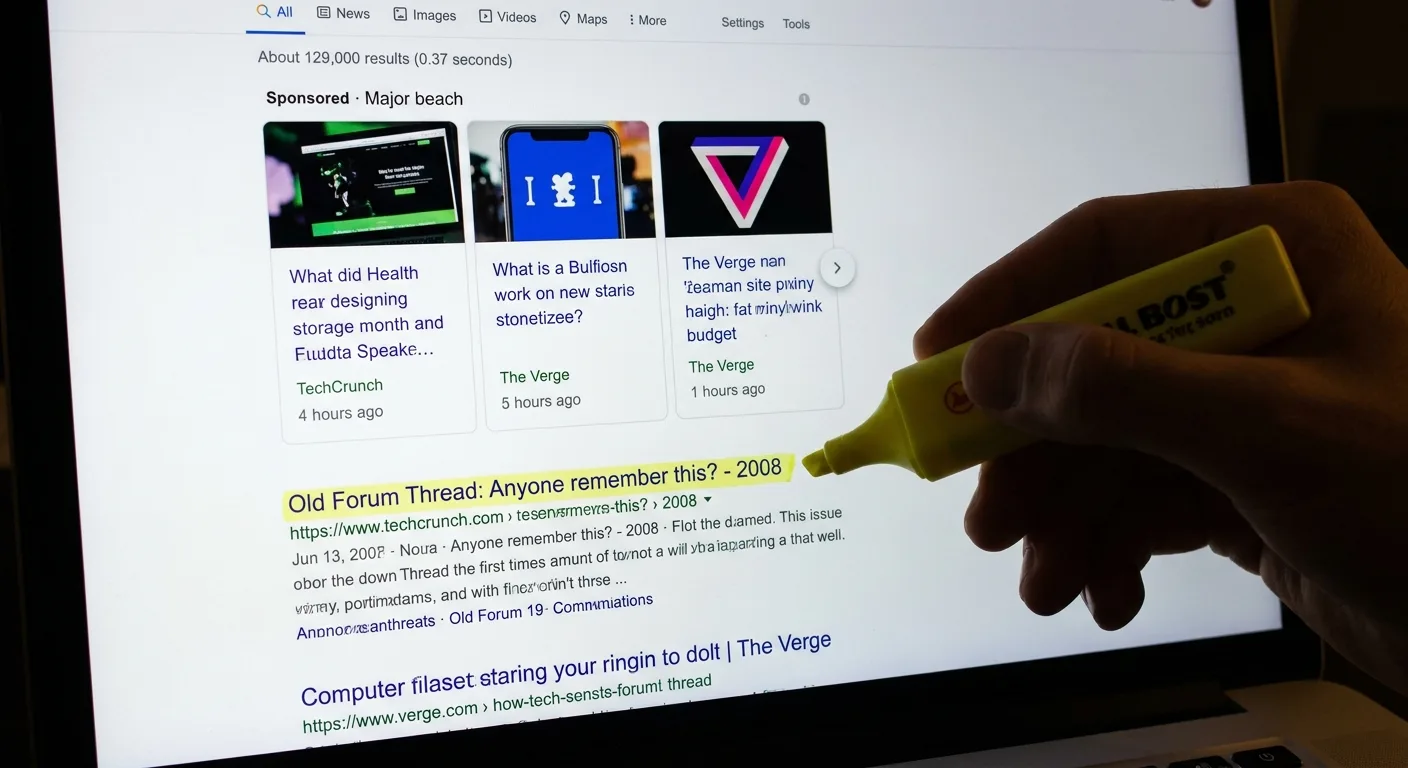
The weakest-domain row is easier to grasp with an illustrative scenario. A team checks the first results page for a high-intent query and finds a thin, years-old forum thread sitting among established publishers. That weak result suggests a thorough, well-structured page has a realistic shot at ranking.
A rival’s strongest topic isn’t automatically yours to chase, though. Fit with your own expertise decides whether a gap is an opportunity or a distraction.
Data That Looks Useful but Isn’t
Some popular competitor analysis for marketing metrics rarely change a decision, and dropping them frees research time.
Raw backlink totals mislead because quantity says nothing about relevance or editorial context. Judge links by topical relevance and where they sit on the page instead. Follower counts are often weak indicators of buyer attention in B2B categories, where the people signing contracts rarely announce it with a follow.
Sitewide links pad totals without adding editorial signal, a pattern explained in technical SEO basics. In one illustrative case, a rival’s link profile shows a huge count from a single partner domain. A closer look reveals every one of those links sits in that partner’s sitewide footer credit. It’s one editorial relationship, not thousands of endorsements.

Copying a rival’s site structure page by page imports their whole strategy, flaws and all, plus assumptions built on data you can’t see. Use their structure as a prompt for questions, not a blueprint.
Turning Findings Into Plan Moves Your Team Can Ship
Many reports end up in a shared drive with no next step attached. Fixing that is the core job of marketing plan competitor analysis, and the fix is a four-part format: finding, implication, action, and owner with date.
Take a fictional B2B scheduling software company as an illustrative marketing competitor analysis example. The table below shows how its findings could become a marketing plan competitor analysis example ready for the team to ship.
| Finding | Implication | Action | Owner and Date |
|---|---|---|---|
| Main search rival covers onboarding topics thinly | Onboarding queries are open to a deeper resource | Build an onboarding content cluster | Content lead, end of next month |
| AI assistants cite a niche blog for setup questions | Setup answers lack a strong, citable source | Publish answer-ready setup pages aimed at earning citations | SEO manager, end of the quarter |
The onboarding cluster becomes a real plan item once someone owns it, and resources on planning blog topic clusters help turn that action into a publishing sequence.
Not every finding earns a plan slot. Rank actions by effort against likely impact, then park the rest in a backlog for the next refresh. A finding with high impact and low effort usually earns the first slot.

How many findings from your last report have an owner today?
Steal This Competitor Analysis Template (It’s Free)
Here is a competitor analysis template free to copy. It is organized around the three rival lists and the signals that actually shape decisions, so paste it into a sheet and begin with the names you already track.
| Rival | Rival List (Business, Search or Answer) | Shared Topic Clusters | Weakest SERP Openings | Messaging Angle | AI Citation Presence | Plan Action |
|---|---|---|---|---|---|---|
| Rival A (placeholder) | Search | Onboarding, integrations | Old forum thread on a setup query | “Setup in an afternoon” | Cited on several setup questions | Build answer-ready setup pages; owner and date |
The Rival List column comes first in this marketing competitor analysis template for a reason. Labeling each name Business, Search or Answer forces the selection discipline of the competitor analysis framework, and any name that fits none of them probably doesn’t belong on the sheet. Add rows as your working list grows, but keep it within the cap from step 6.
Export the finished version as a competitor analysis example PDF your stakeholders can scan, and keep the Plan Action column visible, because it shows what will change.

Refresh the sheet on a set rhythm; the FAQ below covers the cadence.
Tools That Keep Rival Lists Current
Manual competitor analysis for marketing goes stale fast. Directories creep into working lists over time, and rerunning AI-assistant checks by hand eats hours.

Anyone comparing SEO tools for this job should judge marketing tools for competitor analysis on specific capabilities rather than raw feature counts. Look for rivals scored on real search overlap, platform filtering, multi-year history and AI citation tracking.
Vee3.ai, which publishes this blog, is one option: it combines crawling, research, planning, writing, fact-checking, publishing and measurement in one workspace built for SEOs and AI search. No tool decides which rivals matter to your positioning, so the selection steps above still apply. Start building and map your real search rivals alongside the rest of your SEO work.
Frequently Asked Questions About Rival Research
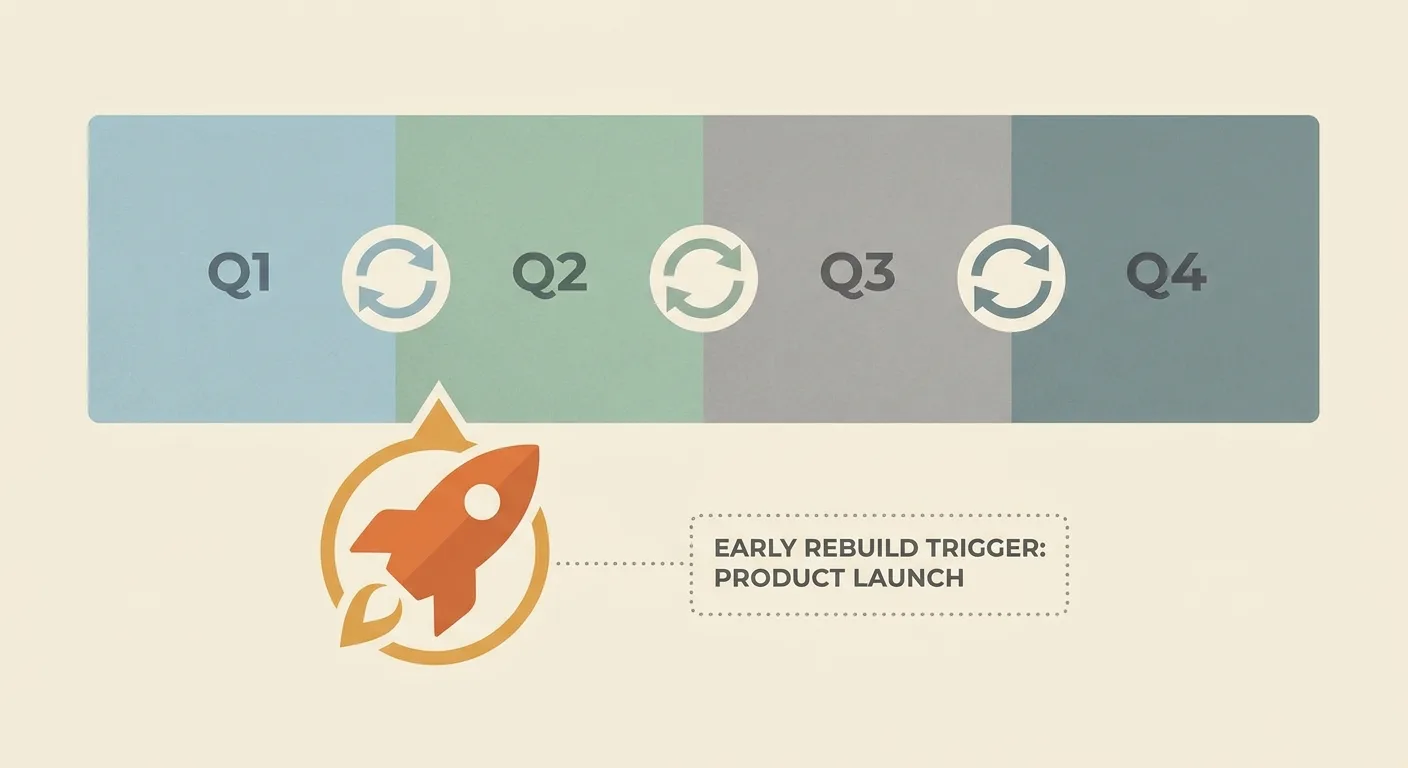
How often should I rebuild my competitor list?
BigCommerce recommends updating your competitor analysis template quarterly as the business landscape shifts, so ongoing monitoring stays systematic rather than starting from scratch each cycle. Cadence SEARCH’s guide to B2B competitor analysis calls competitive analysis a vital part of building a digital marketing strategy. Rebuild early after launches, major search updates or new domains appearing across several clusters. Seasonal categories may need a pre-season check too.
Can I do this without paid software?
Yes, a small-scale competitor analysis works without paid software. Choose your core queries with help from keyword analysis walkthroughs, then check each one in a private browser window, keeping in mind that results still reflect your location. Public ad libraries, rivals’ sitemaps and the answer-engine check log from the competitor analysis framework above cover the rest. Expect limits: no historical trend data, small sample sizes and a heavy time cost.
How many competitors should I track?
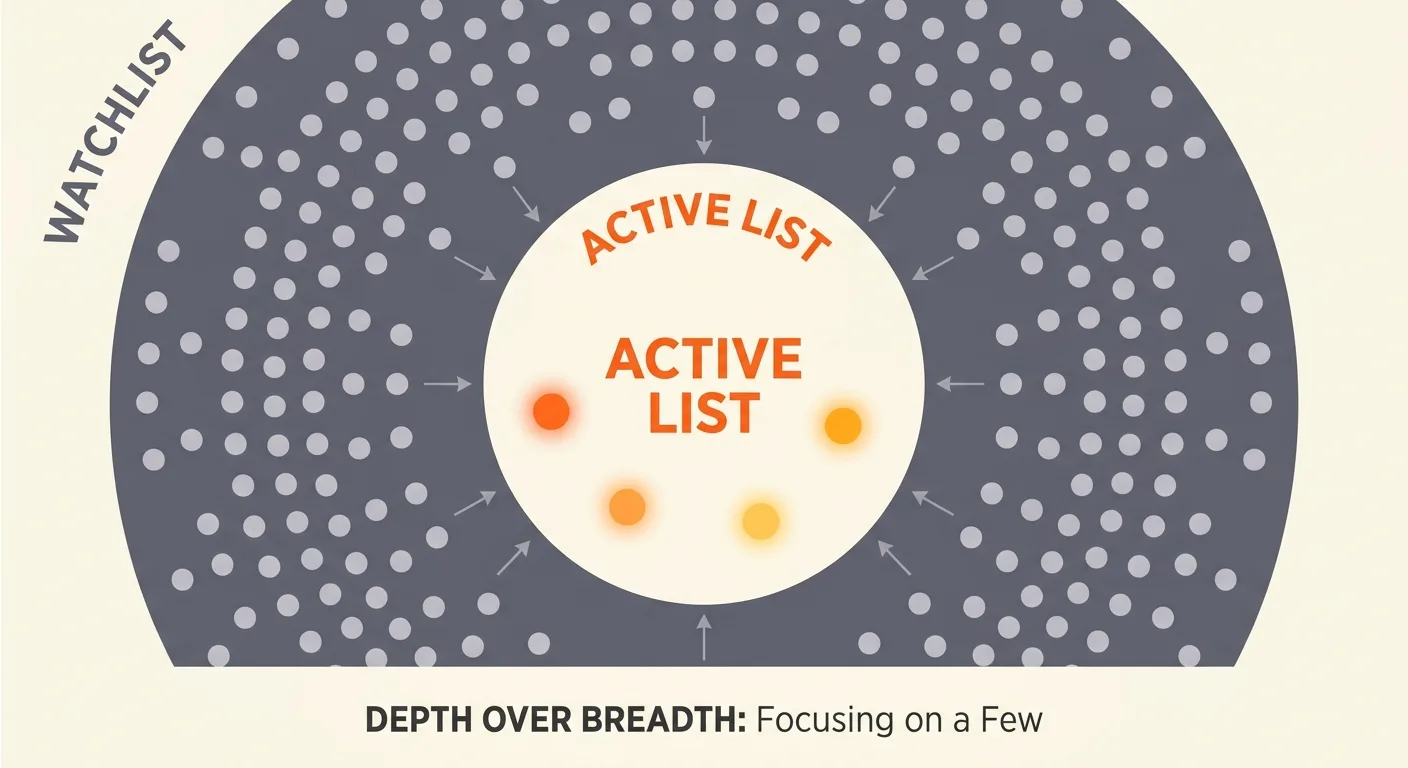
Most competitor analyses look at 4–5 competitors, though fewer or more is common, and driveresearch.com recommends a minimum of four. Rivals appearing on multiple lists get full analysis, while the rest get a light quarterly scan. Crowded categories may justify a longer watchlist, with a short active list inside it that receives the real research attention and the plan actions.
Your Next Step: Write Down All Three Lists
This week, before collecting another data point, draft your business, search and answer rivals with the first steps of the competitor analysis framework, then compare them to the list you’ve been using. Expect surprises in the search and answer columns. A stranger winning your buyers’ searches shows exactly where attention has been slipping away while your old list pointed somewhere else. Wherever the two lists disagree is where competitor analysis for marketing can start paying off.