
You’ve probably built this report at least once. It’s color-coded, sorted by authority and packed with hundreds of outreach targets. The inbox stays quiet for weeks. Half the domains never reply, and the rest turn out to have nothing to do with your niche. Those outreach hours are hard to get back.
What is competitor backlink analysis, and why does it keep producing dead ends?
That definition hides a choice most guides skip: who counts as a rival. Every backlink competitor analysis inherits its numbers from that list, so a weak list distorts each total, gap and target that follows. Rankings are determined by many signals grouped into meaning, relevance, quality, usability and context, and the weight of each one depends on the query (octopusmarketing.agency). They still deserve a sound starting point.

When did you last question how your competitor list was built?
TL;DR: The Six-Step Method
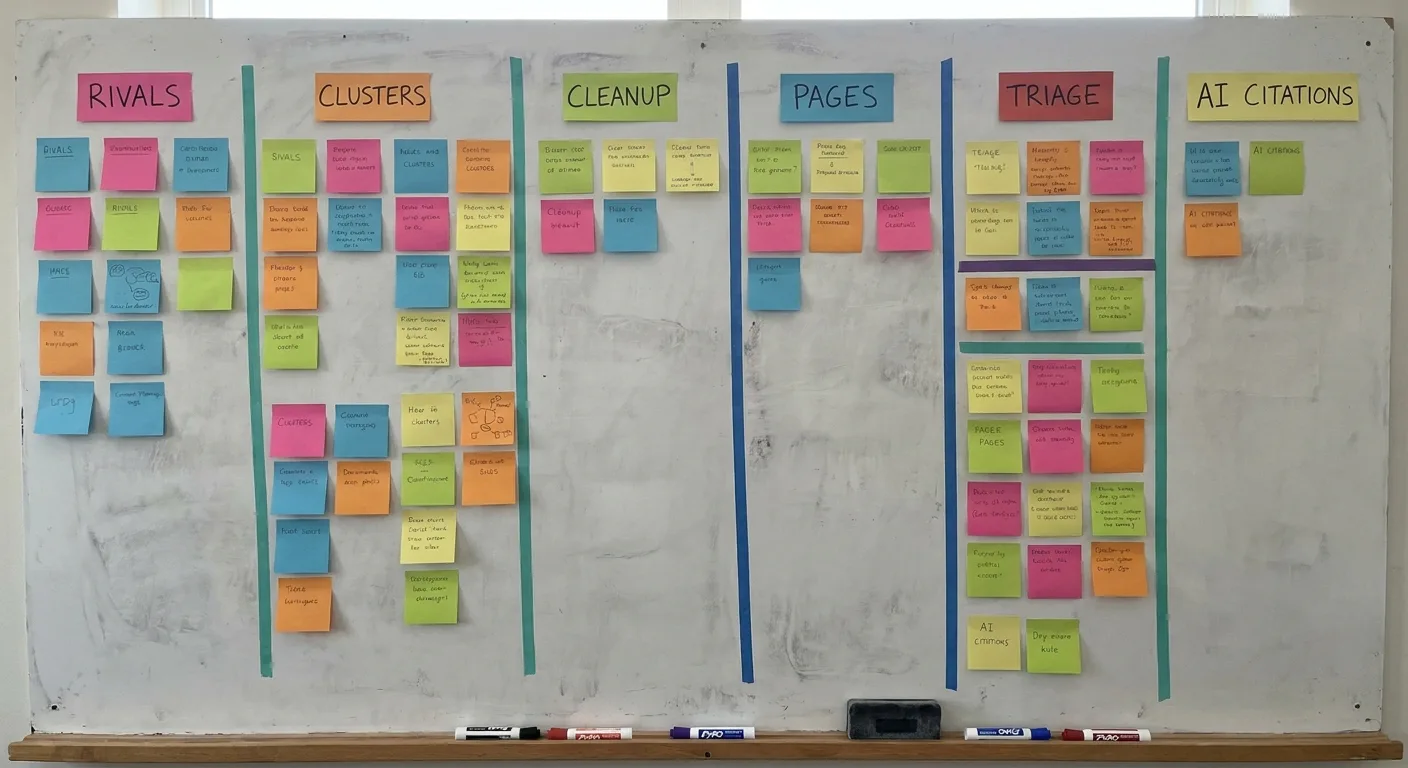
The Rival List You Pick Writes Your Link Gap for You
Most teams follow the same default habit: type a head term, copy the top ten results, export every domain’s links and call it a backlink competitor analysis. It feels efficient. It also imports marketplaces, encyclopedias, forums and directories, which collect links through scale, brand recognition and user-generated pages. A focused site can’t replicate any of that, so those links swell the gap without adding a single realistic target.
Search competitors and business competitors are separate groups. A company you lose deals to may barely rank. A blog you’ve never heard of may own half your keywords. Keep the two lists apart. The companies you lose deals to still matter, but they belong in broader competitor analysis for marketing work, outside the link gap math.
We build the rival list from keyword overlap across core topics, then check two more things: similar content types and comparable site scale. Marketplaces, social platforms, Q&A forums, directories and broad news publishers come off unless one of them truly competes in your niche.
Picture a hypothetical small B2B project management software company. Copying the head term’s top results in a backlink tool fills its list with review marketplaces, a forum thread, an encyclopedia entry and a tech publisher’s roundup, almost none of them reachable. A rebuild based on keyword overlap surfaces two niche productivity blogs and a similar-sized vendor, whose link sources are guest-friendly blogs and resource pages the company can pitch.
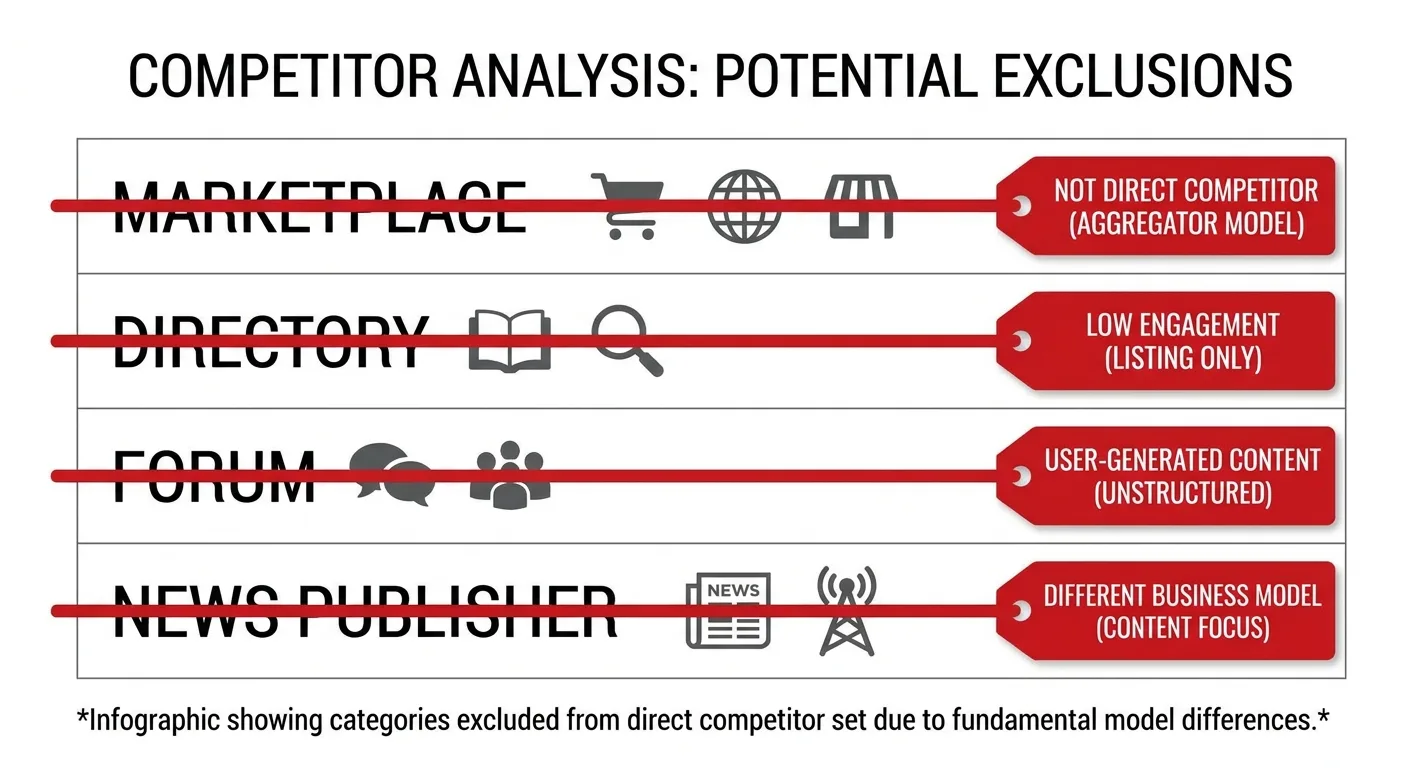
Three to five rivals per list is the working size we recommend. An excluded giant can still reveal a useful source, so glance at its links, but leave them out of your totals. Ask one question ahead of your next backlink competitor analysis: does your current list contain any site whose links you could never plausibly earn?
One Rival Set for Every Topic Cluster
Rival relevance shifts by topic. A site that dominates your pricing pages may never appear in your how-to content, and a single master list blends links that matter to one cluster with links that mean nothing to another.
Build a short list for each cluster. Keyword clustering tools can group target terms first if your clusters aren’t defined yet, so each rival set maps to one clear topic. Flag the two or three rivals that show up across most clusters as a shared core.
Consider a hypothetical payroll software provider. Its pricing and comparison pages compete with other payroll vendors, while its “how to calculate overtime pay” guides compete with HR publications and accounting blogs. One merged list would push HR-blog link sources into outreach for pricing pages, where they don’t fit. Two sets, plus one vendor that ranks in both as the shared core, keep each gap report usable.
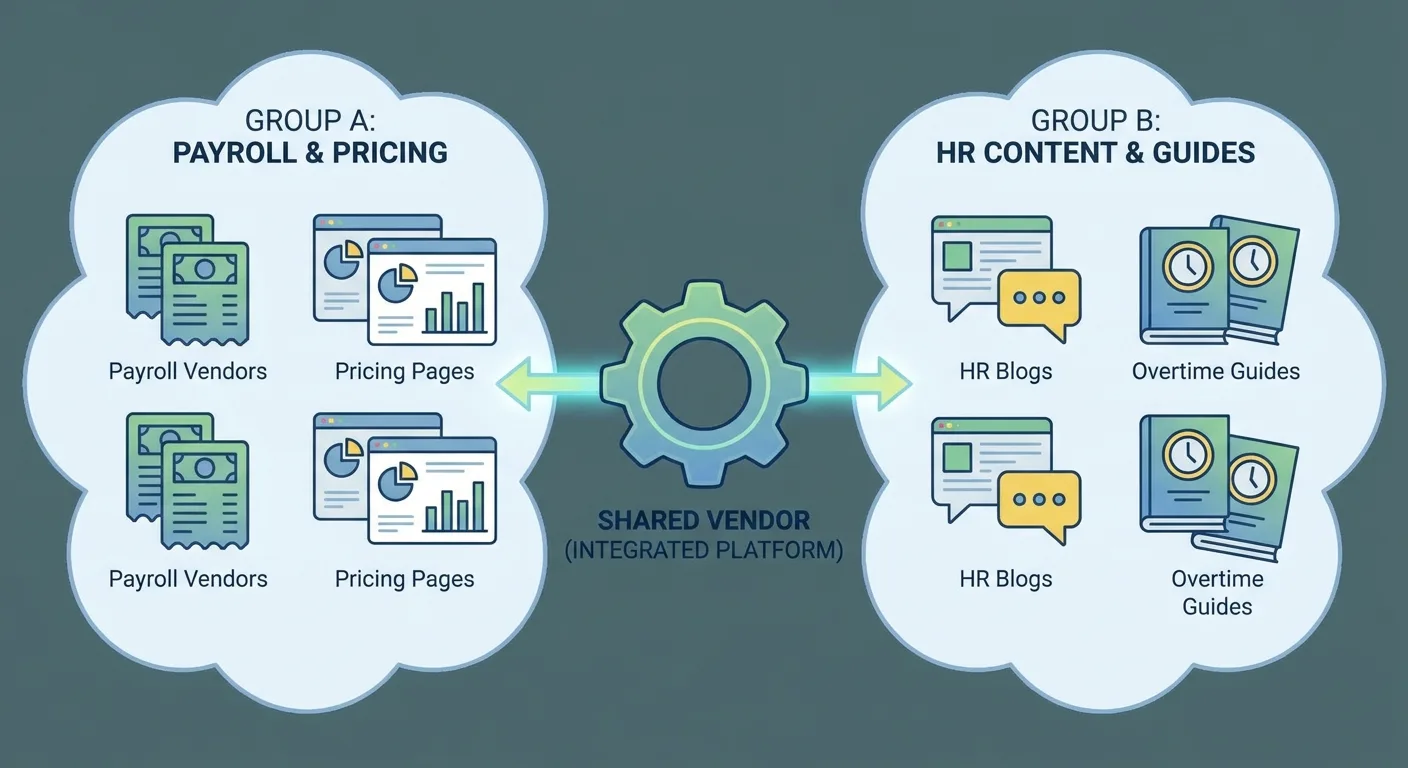
Start narrow: expanding later is cheap, and untangling a blended list is painful. Small sites with one tight topic may need only a single set.
Clean the Export Before You Trust a Single Number
Raw exports inflate totals, so first decide whose data counts.
Pick one competitor backlink analysis tool as your system of record, and expect its totals to disagree with other providers. No index sees every link on the web, and features vary too: Keywords Everywhere’s backlink checker comparison (published Nov 16, 2025) compares backlink checkers side by side. Check how a provider fits your wider stack in our roundup of SEO tools before committing, then stick with it so month-to-month totals stay comparable. A second backlinks checker earns a place only for spot-checking sudden spikes or drops.
Our cleanup pass runs in this order:
- Remove sitewide footer and blogroll links.
- Strip template links repeated across many pages of one domain.
- Delete scraped or auto-generated copies.
- Drop generic directory listings.
- Cut links pointing at dead or redirected rival URLs.
- Tag
rel="nofollow",rel="sponsored"andrel="ugc"links, and keep them in a separate view. - Flag spam patterns as risk markers and exclude them from outreach.
- Spot-check a hand-picked sample of removed rows, because aggressive filters can catch legitimate niche links.
- Recount by referring domain, not raw link total.
Referring domains reflect how many sites chose to link, while raw totals balloon with one generous footer repeated across thousands of pages.
Bulk free backlinks offers, link networks and off-topic foreign-language pages in a rival’s profile are warnings: they hint at what the rival may need to clean up later.
Tagged links stay in their separate view for a reason. A nofollow mention on an active niche forum still tells you where your audience reads.
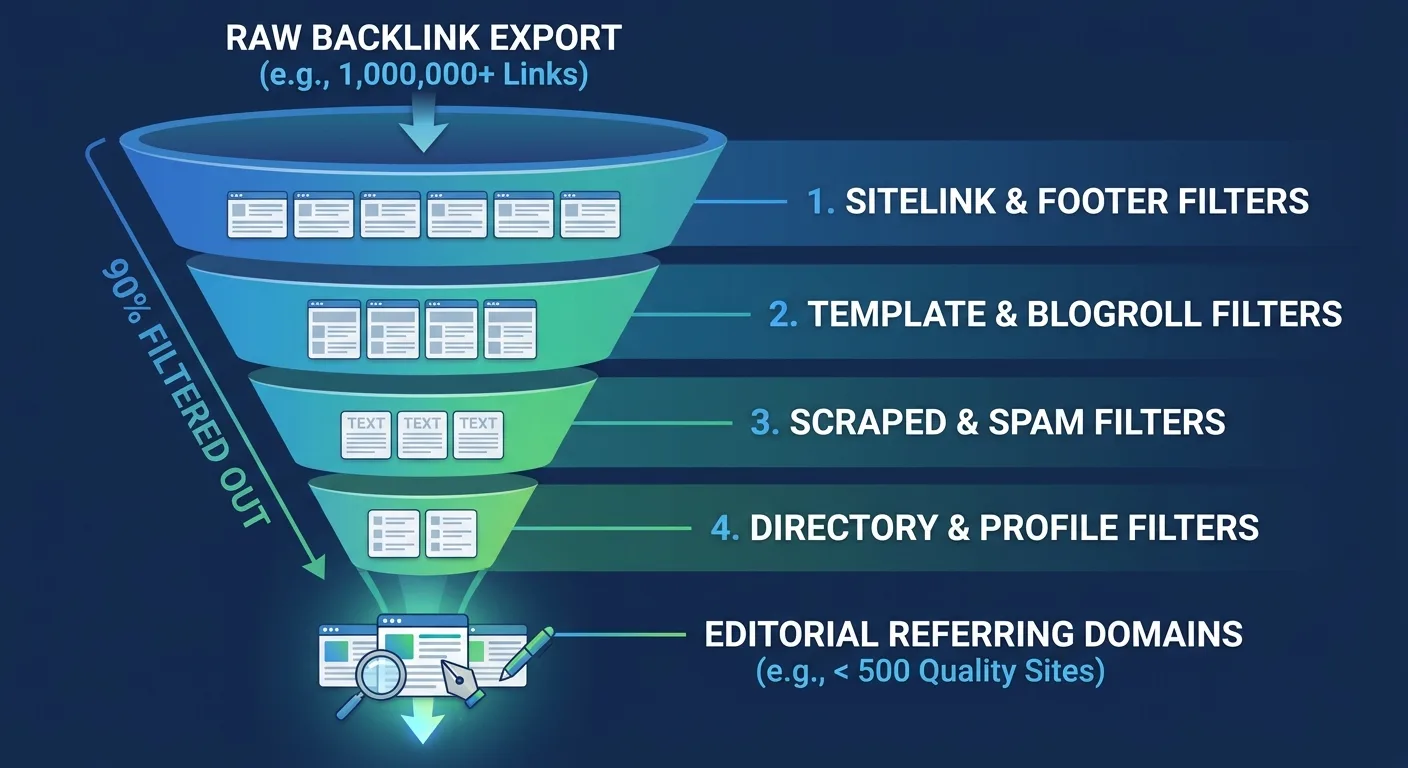
How much of a rival’s impressive total survives this pass?
Follow the Pages That Earn Links, Not the Domain Totals
Domain authority tells you a rival is strong. It doesn’t tell you why. Page-level study is where a backlink competitor analysis turns domain lists into content ideas. Open the top-linked-pages view for each rival, point your backlink finder at individual URLs instead of the root domain, and export each rival’s most-linked pages.

Group those pages by type: original data or research, free tools and calculators, definitive guides, glossary or definition pages, templates and checklists. Tag each one by intent too, whether informational, commercial or navigational. Informational assets often attract links, but confirm that pattern in your own niche’s data.
One rival’s linked calculator is a data point. Three rivals with linked calculators reveal what the niche rewards. Laying each rival’s top-linked pages side by side in a competitor analysis chart makes that pattern visible at a glance. Replace the placeholder rivals with your own:
| Page Type | Rival A | Rival B | Rival C | Your Site |
|---|---|---|---|---|
| Original data or research | Earns links | Earns links | None found | Missing |
| Free tool or calculator | Earns links | Earns links | Earns links | Missing |
| Definitive guide | Earns links | Few links | Earns links | Exists |
| Glossary or definition page | Few links | Earns links | None found | Exists |
| Template or checklist | None found | Earns links | Few links | Missing |
Anchor text reveals the angle each linker cited. Most competitor backlink analysis tools show anchor text per link, and that angle often explains why the link happened better than the topic label does. Backlink Manager’s guide to competitor anchor text makes a related point: grasping the anchor text in competitor backlinks can enhance your own website. A specific figure, a crisp definition or a named framework is often what turns a page into one of the niche’s linkable assets.
Check when a page’s links arrived before treating it as a model. Some spikes rest on a news moment, a launch or a viral post nobody can repeat.
Which page type appears in every rival’s top-linked list but is missing from your site?
Sort the Gap Into Links You Can Win and Links You Can’t
A link gap report lists every domain that links to a rival but not to you. Most entries don’t deserve a single email. Anyone wondering how to do competitor backlink analysis without drowning in exports needs a triage method, and here’s ours.
Run the gap view against your cluster-level rival set and prioritize domains linking to two or more rivals. Repeat linkers signal a source that covers the topic, not a one-off favor. Each candidate then faces three questions:
- Relevance: does the linking page cover your topic, and would its readers care about your page?
- Replicability: how did the rival earn the link? Editorial mentions, resource-page listings, guest contributions and unlinked mentions can be earned. Paid placements, partner perks and founder relationships usually can’t.
- Page fit: do you already own a page that deserves this link, and does it beat what the rival offers?
Every domain lands in one of three outcomes: pitch now, build or improve a page first, or skip. Common gap types map out this way:
| Gap Domain Type | Relevance Check | Replicable? | Action |
|---|---|---|---|
| Resource pages | Lists tools or guides on your exact topic | Yes, through a listing request | Pitch now if you own a fitting page |
| Editorial roundups | Covers your topic for your audience | Yes, with a stronger or fresher page | Build first if your page falls short |
| Sponsored listings | Often on topic | No, paid placement | Skip |
| Partner pages | Tied to a business relationship | Rarely | Skip unless a real partnership exists |
| Directories | Generic, rarely topical | Yes, though low value | Skip |
Build first can be the most valuable result. A gap that keeps pointing at one page type you lack turns your backlink competitor analysis into a content brief, not an outreach list.
Take a hypothetical personal finance blog. Its gap view shows a dozen linking domains pointing to rivals’ loan repayment calculators. The blog has articles on the topic but no calculator, so pitching would ask those sites to swap a working tool for an article. The team logs every one as build first, ships a calculator and only then starts outreach.
Domain authority scores such as DA and DR are third-party estimates built by Moz and Ahrefs (outrank.so). Use them to break ties, never as the first filter, and judge outreach results against the SEO KPIs worth tracking instead of a single third-party number.
Skipping feels like leaving links on the table. It also frees hours for the handful of targets that might say yes.

How many entries on your current list would pass all three questions?
Track AI Citations Alongside Backlinks
Google AI Overviews and ChatGPT can cite sources in their answers, and those AI citations don’t always line up with the domains holding the strongest link profiles. A rival can surface in AI answers through pages the link gap ranked low, which is why understanding how AI visibility works now belongs in rival research.
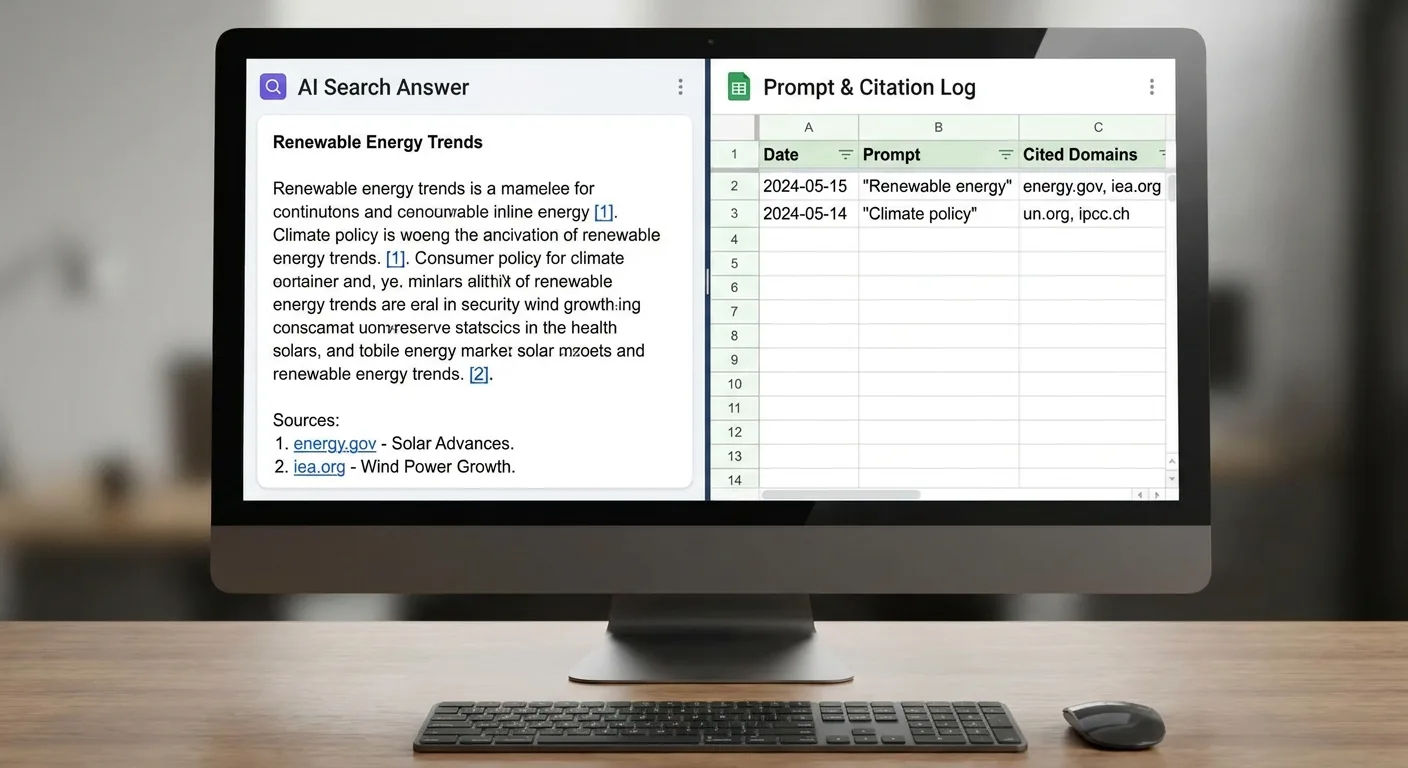
Build a prompt set from the questions each cluster targets. Mix definitional, comparison-style and how-to phrasings. For each prompt, log the cited domains, cited URLs and their page type, whether your site appears, and the check date.
| Prompt | Date Checked | Cited Domains | Cited URL Type | Your Site Cited? (Y/N) |
|---|---|---|---|---|
| What is [topic term]? | [YYYY-MM-DD] | [domain list] | Definition page | N |
| [Option A] vs [Option B] for [use case] | [YYYY-MM-DD] | [domain list] | Comparison guide | N |
| How to [task] step by step | [YYYY-MM-DD] | [domain list] | Structured FAQ | Y |
Cross-reference cited rival URLs with your page-type grid. Repeated formats, such as concise definitions, structured FAQs or original data, hint at what these systems favor in your niche.
Identical prompts can produce different results in Google AI Mode, ChatGPT and Perplexity when run with different persona and location contexts (iPullRank). Treat each check as a snapshot and rerun the set on a schedule instead of chasing any single result. We also can’t point to a proven causal link between backlinks and being cited. The overlap varies, so watch how it plays out in your own niche.
Which of your target questions currently surface a rival’s page and not yours?
Frequently Asked Questions
Can I Run This With a Free Competitor Backlink Analysis Tool?
A free tool can handle a first look, within clear limits. Free competitor backlink analysis works for spotting a rival’s top-linked pages and obvious repeat linkers. Free tiers may cap rows, refresh less often and hide historical data. Ongoing gap triage across several clusters usually outgrows those caps.
How Often Should I Rerun the Analysis?
Review the rival list quarterly or after a ranking shift, and check new rival links monthly for active clusters. Catch shifts early with consistent rank tracking on each cluster’s core terms, and rerun AI citation prompts on a set schedule. A new top-result rival, a Google core update or a sudden link spike justifies an off-cycle check.
What Should a Brand-New Site Do With Rival Link Data?
A backlink competitor analysis still helps a new site once you narrow the rival set. Pick rivals close to your size within one cluster and study which early pages earned their first editorial links. One cluster and a few small rivals usually fit inside free-tier limits. Build one linkable asset before any outreach. A thin profile is a starting point, not a verdict.

When Your Rival List and Citation Data Live in Five Different Tabs
Manual competitor backlink analysis spreads fast: a spreadsheet of hand-filtered rivals, exports from more than one tool and citation checks logged by date. Dated snapshots that already eat an afternoon each month signal it’s time to automate your SEO reporting instead of adding another tab.

The Vee3.ai SEO workspace brings crawling, research, planning, writing, fact-checking, publishing and measurement into one place, so rival research and reporting stop living in separate tabs. The triage calls stay with you, which is where we think judgment belongs. Clean up your rival list, keep the work in one workspace, and start building with Vee3.ai.
Final Thoughts
Every backlink competitor analysis succeeds or fails at the selection stage.
Pick one revenue-critical cluster this week. Rebuild its rival set from keyword overlap, rerun the gap against that set and put the new outreach list beside the old one. Watch which domains disappear, which new targets appear and how many survivors pass all three triage questions.
Rebuilding a list feels unproductive at first. It shortens the tasks that follow.
Which cluster are you starting with?