
How do I write a blog post that people trust and search engines surface?
The step this guide leans on hardest comes first: deciding what you’ll have to prove before any outline exists. Readers skim and hop between headings, and AI tools can quote single passages. That turns every paragraph into a possible first impression.

TL;DR
The method in six steps:
Your Post Begins as a List of Things You’ll Have to Prove
How do you write a blog post when you don’t know what goes in it yet? You start with the reader’s question.
Write that question in one sentence. A topic that needs two sentences is probably two posts. If you’re still choosing what to cover, start from a short list of blog topics for beginners and narrow it to one question you can state in a single sentence.
Next comes the claims inventory. This is every statement the post has to make that someone could push back on. Steps count. So do recommendations, warnings, numbers and any line that crowns a “best way.”
Each claim gets one of three tags. The table spells out what each tag demands.
| Tag | Claims it fits | What satisfies it | If you can’t supply it |
|---|---|---|---|
| Needs a source | Numbers, dates, “most people” statements, results or outcomes | A link to the original publisher in the same paragraph | Cut it, or reword it as a labeled opinion |
| Needs a demonstration | Steps, settings, “here’s what it looks like” moments | A screenshot, an example or a walkthrough | Drop the step or describe it as your own approach |
| Owned opinion | Recommendations, preferences, “best way” calls | First-person framing plus the reason behind it | Soften it to a suggestion the reader can test |
The inventory gives research a finish line: research ends when every claim has support or has been cut.
That finish line is the most useful part of how to write a blog post for beginners. A list of 8 to 15 claims (a working range, not a rule) has an end point, and a blank document doesn’t.

Not every sentence needs a citation, and marked opinions are fine. Unsourced facts are the problem.
Which claims on your list could you defend if a reader replied “says who?”
Read the Results Page Before It Costs You a Draft
A short audit of the search results can spare you a full rewrite. The routine takes three moves:
- Search the exact phrase your reader would type.
- Open the top results.
- Note the dominant format: step-by-step guide, list, tool page or opinion piece.
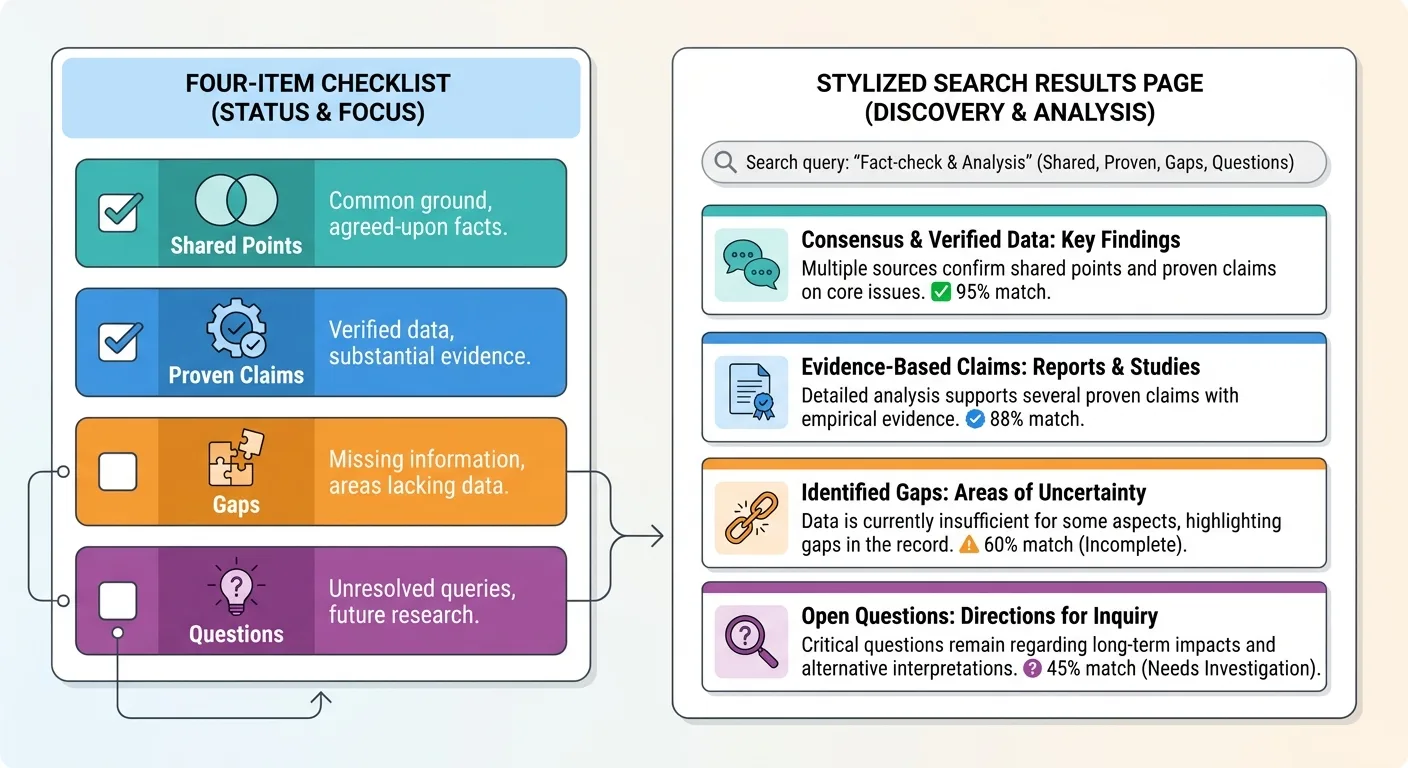
Keep those results open in another tab and run the coverage audit:
- List the points every ranking page covers (the minimum for entry)
- Mark which claims from your inventory the ranking pages already prove
- Write down questions none of them answer (your opening)
- Collect the related questions Google’s “People also ask” box shows for your keyword and turn the relevant ones into subheadings with direct answers (PromoPilot).
The ranking pages also double as blog post examples worth studying for structure, heading depth and where each page puts its answer. Borrow the shape. Never lift the wording.
Before drafting, set the basics of how to write SEO friendly blog post copy for this query:
- Use the primary phrase in the title, the intro and one heading where it fits.
- Write a short descriptive slug, such as
how-to-write-a-blog-post. - Write a meta description that answers the question.
- Add internal links to related posts, and run an on-page SEO check after drafting the title, slug and meta description to confirm the primary phrase landed where it fits.
Ranking pages show what search engines rewarded in the past, which can trail what readers need now. Gaps are an opportunity. A format mismatch usually isn’t. Someone expecting a step-by-step guide is unlikely to wait around for your essay.
An Outline Where Every Heading Owes the Reader Something
Working out how to write a blog post outline gets simpler with the inventory and audit in hand. Every heading carries one claim or one task.
A heading that answers a question or completes a task stays. A heading that only labels a topic (“Background”) gets rewritten as a promise (“Pick a pace your readers can keep”) or removed.
Order sections by the sequence the reader acts in, starting with what they need first. The tangent you find fascinating can wait, or go.
Subheadings earn a spot only when a task splits into distinct steps. A key point doesn’t need its own heading. When reader questions overlap, group related questions together under one heading instead of giving each its own section.

Expect the outline to shift once drafting starts, often because a claim turns out to need a demonstration. That’s the outline doing its job.
The Fill-in-the-Blanks Template We Start From
If you searched for a “how to write a blog post template,” copy the columns below. These rows come from one sample post on repotting a root-bound houseplant.
| Section | Reader question it answers | Claim it carries | Proof needed | Draft opening sentence |
|---|---|---|---|---|
| Signs a plant is root-bound | How do I know my plant needs a bigger pot? | Roots circling the soil or poking out of drainage holes signal a root-bound plant | Photo demonstration | Slide the plant out of its pot, and a tight mat of circling roots tells you it’s time to repot. |
| Choosing pot size | How much bigger should the new pot be? | Pick a pot only slightly wider than the current one | Source needed | Choose a new pot just a little wider than the old one. |
| Loosening the roots | Should I break up the roots before repotting? | Gently teasing out circling roots helps them spread into fresh soil | Owned opinion | We tease out the outer roots by hand before setting the plant in fresh soil. |
How to write a blog post example: three template rows for one sample post.
Notice the middle row: that claim stays flagged until the writer traces it.
Opinion pieces can drop the proof column, and anyone figuring out how to write a how to blog post may need a “tools” column. Copy the column headers into your own doc and fill one row per heading.
Write Sections That Still Make Sense on Their Own
Drafting is where knowing how to write a good blog post shifts from planning to sentences.
AI answer engines evaluate content at the passage level rather than assessing the entire page at once, scoring individual sections to find the one that best answers a query (Wellows). Vee3.ai’s SEO automation homepage describes its workspace as “Ready for AI search.” That’s the core of how AI visibility works: a passage has to stand on its own before an answer engine can quote it.
The fix starts with an answer-first opening. The first sentence under each heading answers that heading directly. Context and nuance follow.
Then name the subject inside every section. Repeat the noun, cut “as mentioned above,” and drop any “this” that points back to an earlier section.
Picture a book club blog post with a section headed “How many books should a book club read each month?” The weak draft opens: “Book clubs come in all shapes and sizes, and every group has its own rhythm. As mentioned above, pacing matters.” A reader landing there learns nothing, and an answer engine has nothing to quote.
The rewrite: “A book club should read one book a month. We recommend that pace because members have busy schedules, and one title gives everyone a fair shot at finishing before the meeting.” Sentence one answers the heading, and “book club” appears again. The pick is also labeled as a recommendation with its reason attached. The marked-up version below shows the pattern.
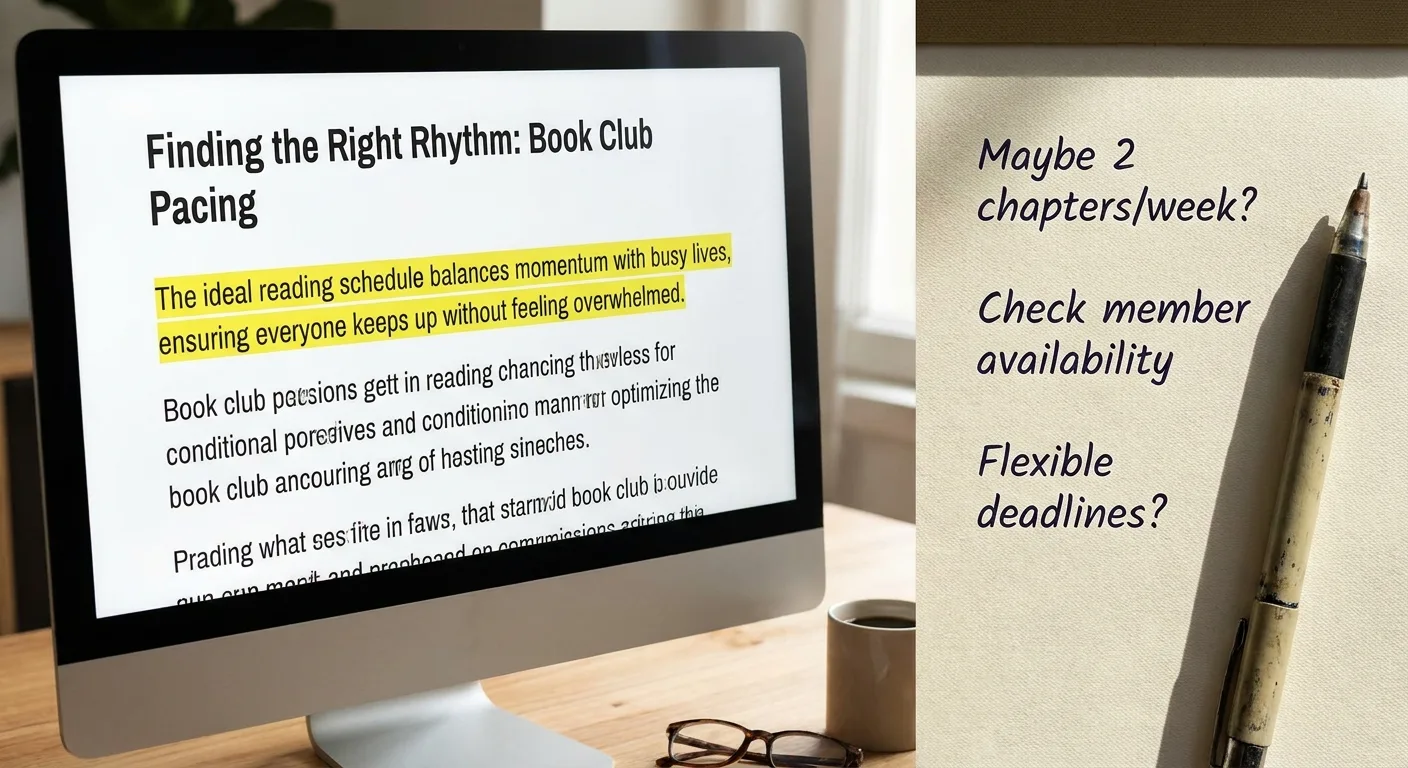
Define jargon once, at first use, in plain words. And keep the nuance straight: self-contained doesn’t mean repetitive. Restate the subject when a passage needs it, but leave the argument where it first appeared.
A few tips to write a blog post that reads cleanly at the sentence level:
- Keep one idea per paragraph.
- Pick specific verbs: “trim,” “trace,” “cut.”
- Ask the reader a question when it earns its place.
- Read the draft aloud, since your ear catches rhythm problems your eyes skip.
- Delete the warm-up sentence at the top of each section.
The answer-first rule won’t make a first draft perfect, but it gives the edit a clear target.
Every Number Gets Traced, or It Gets Cut
Those “needs a source” tags come due here, in the part of learning how to write a blog post that’s tempting to rush.
- Trace to the origin. Treat this as a basic fact-checking routine. Follow each figure past the blog that quoted it to the page that first published it, whether that’s a study, a regulator, a standards body or a first-party page.
- Match it exactly. The figure should appear as written, in the same units, for the same population or sample and the same timeframe.
Say a remote-work post repeats a figure from another blog. That blog cites a news article, and the article links to the original survey. The survey asked only hiring managers in a single country, yet both blogs presented the figure as true of all workers. The writer has two honest options: reword the claim to match the surveyed group and link the survey, or cut it. Secondary sources quoting each other can make a wrong figure look widely confirmed. Three links in a chain still lead to one source.
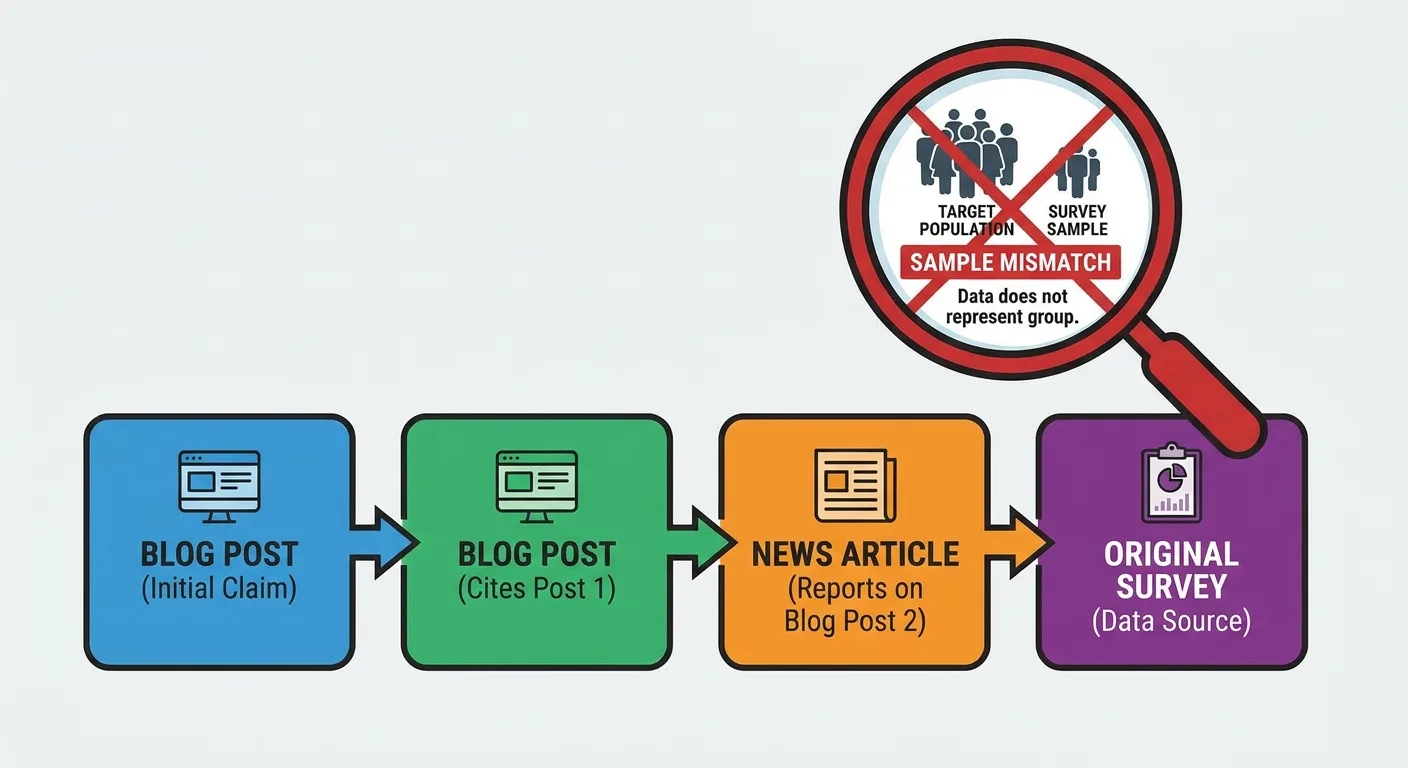
Date-sensitive claims get an “as of” with the month and year, or they stay out. Run two different searches before calling a claim unsupported, because one failed search proves nothing.
Cutting an untraceable claim is a correct outcome, not a defeat. That’s how to write a professional blog post: every claim survives a reader clicking the source.
Publish, Then Measure Clicks and Queries
The last stretch of how to write and post a blog is a short check before you hit publish:
- Title and meta description answer the reader’s question
- Slug is short and descriptive
- Every image has alt text
- Internal links point to related posts
- An FAQ block is included where the results page showed related questions
- The post is saved as a draft and previewed on mobile
Give it a few weeks, then open Google Search Console. Check clicks, impressions and the queries the post shows up for. Check on-page engagement in your analytics tool. Before you revisit the post, pick which of the SEO KPIs worth tracking matter for it. No fixed benchmark applies here, since every query has its own ceiling.

And how to write a viral blog post? This guide offers no formula, because shares are hard to predict. In our view, specific, quotable claims give a post better odds of being shared, and steady search demand outlasts a spike.
Posts drift as new questions appear. When that happens, update the existing URL rather than publishing a near-duplicate that splits attention. A post on setting up a home Wi-Fi printer, say, starts earning impressions for queries about printing from a phone, a topic it never covers. The writer adds a short phone-printing section to the same URL and updates the FAQ.
Where Vee3.ai Fits in Research and Fact-Checking
The claims inventory, the results-page audit and the tracing routine are the steps easiest to skip when you need to write a blog post fast. Skipping them is how weak posts get published.

Vee3.ai puts crawling, research, planning, writing, fact-checking, publishing and measurement in one workspace. The results-page audit and source tracing can happen beside the draft instead of in a dozen tabs. Use fact-checked briefs in Vee3.ai when you reach the tracing step.
Start building with Vee3.ai and try the research-to-publish workflow on one post you’re planning now.
Frequently Asked Questions
How do I write my first blog post without stalling?
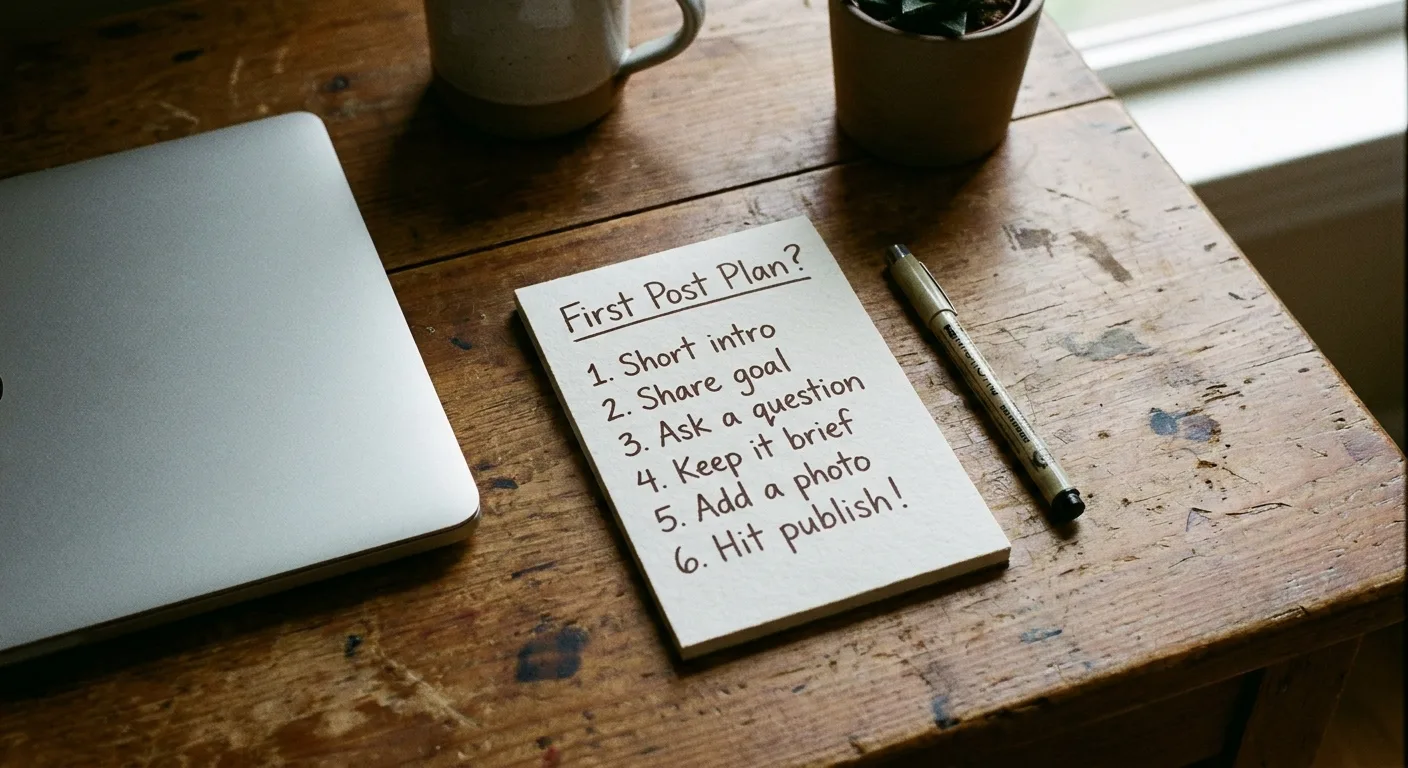
If you’re asking “how to write my first blog post,” pick a question you’ve already answered for someone in person, and keep the post to one task. Otherwise, browse blog post ideas for writers for one you’ve explained out loud. A list of 5 to 8 claims is plenty for a first post. Publish something narrow and accurate, then revise after it’s live.
What changes when I write a blog post for SEO?
Learning how to write a blog post for SEO changes the starting point, not the process. Begin from a query people actually search instead of a topic you happen to like. Start by choosing the right keywords, then match the intent behind the phrase: learn, compare or buy. Keep one primary phrase per post so your posts don’t compete, and use it only where it reads naturally.
How can I write a blog post in English if it isn’t my first language?
When English isn’t your first language, learning how to write a blog post in English comes down to short sentences and plain verbs, not advanced vocabulary. Habits that help:
- Keep one idea per sentence.
- Choose common words over formal ones.
- Read the draft aloud to catch dropped words, such as “how write blog post.”
- Let a grammar checker flag errors, then decide on each fix yourself.

Final Thoughts
Knowing how to write a great blog post comes down to one standard: each claim stands up when someone checks it.
Pick the post you’ve been putting off. Today, write only its one-sentence reader question and its claims list. That list is the first move in learning how to write a blog post you’ll be glad to publish.