
A common frustration among HVAC owners and marketers is that they publish every month and the phone stays quiet, yet the cause usually sits in the planning, not the effort.
Many HVAC blogs follow the calendar: a tune-up post in spring, a cooling tips post in summer, then the same pair again next year. Posts on the same theme can compete with each other for one search. The same search-moment approach drives our accounting blog topics guide. Here it’s applied to cooling calls.

Each of the HVAC blog ideas below targets one of those search situations.
TL;DR
- Symptom posts sit closest to the phone call, so they get the clearest call-to-action placement.
- Money-decision posts earn trust through transparency about cost drivers and honest repair calls.
- Climate and housing-stock posts turn generic advice into local relevance.
- Plain-answer definition pages give AI answer engines something clean to quote.
- One strong page per question keeps posts from competing with each other.
How we chose these 13: every one of these air conditioning blog topics passed four tests.
Topics That Start With a Warm House and a Worried Homeowner
Symptom searches are the air conditioning blog topics closest to a phone call, since the person typing is often one step away from booking help. Many also arrive with a diagnosis already in mind. The Air Conditioning Contractors of America’s ACCA HVAC Blog is a useful place to follow how contractors handle those conversations. Your symptom post should be the answer they find first.
Strong AC troubleshooting blog posts share one structure: symptom, safe checks, stop point, call button. Because stressed readers skim, use short paragraphs and plain words.
1. “My AC Is Running but the House Won’t Cool Down”
Borrow the homeowner’s own words for the headline. The title works best when it echoes the keywords homeowners actually type in a panic, not the technical name for the fault.
Use the body to retire the “it just needs more Freon” myth. Major refrigerant leaks rarely develop in properly installed and regularly maintained units, so if your system is low, ask a technician to locate and repair the leak instead of “topping it off,” according to US EPA. A low charge therefore typically points to a leak, and according to Pearce Home Services, technicians need to locate and fix it before recharging. The post should never coach anyone into electrical components or refrigerant lines, and it should link to your ice and puddle posts.
Safe homeowner checks (minutes each, no tools):
- Thermostat set to Cool, with a setpoint below the current room temperature.
- Fresh batteries, if the thermostat uses them.
- Air filter condition (a clogged filter is easy to overlook).
- Breaker reset once, never repeatedly.
- Outdoor unit running and clear of leaves, grass clippings and debris.
- Condensate float switch, which may have cut power to the system.
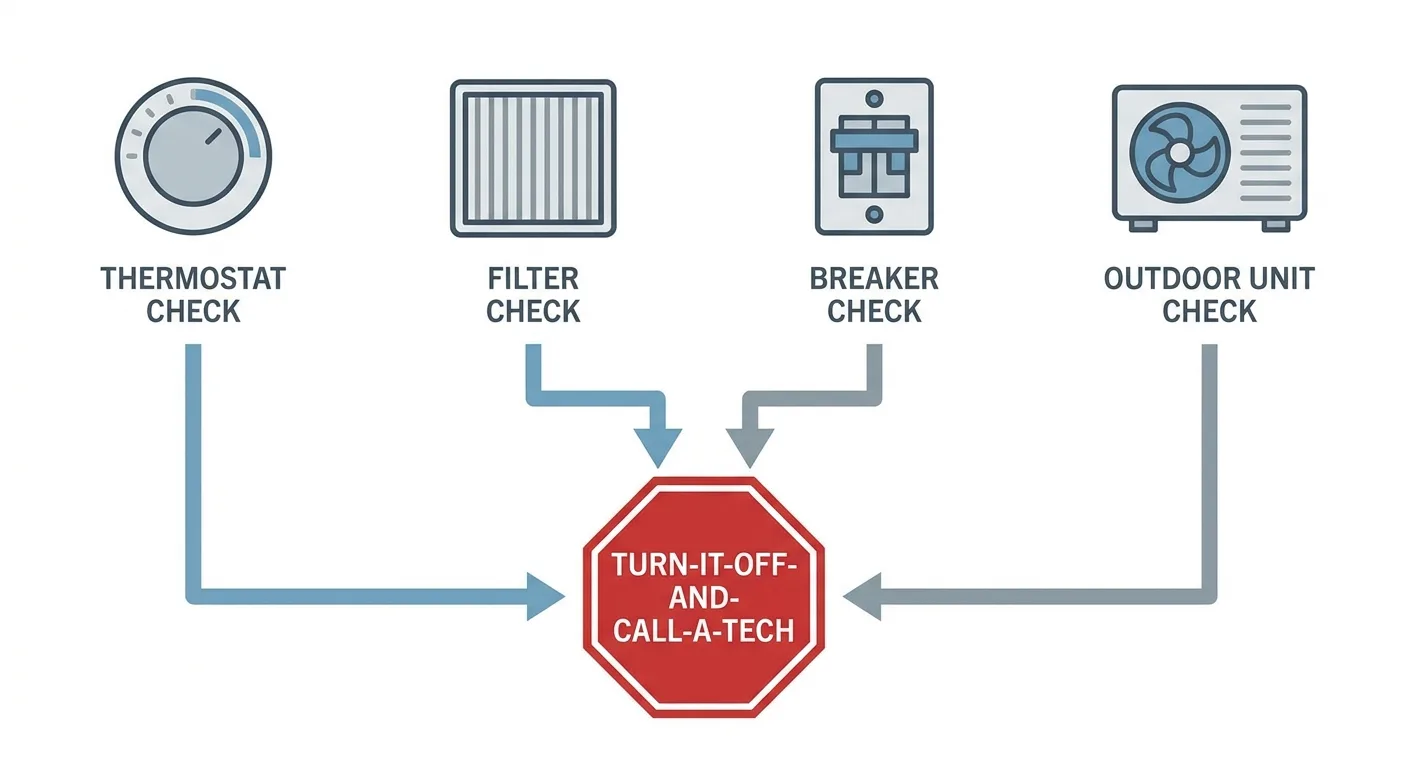
Hand-off point. Troubleshooting ends the moment any of these appears:
- Outdoor fan not spinning
- Humming with no start
- Warm air even after a filter change
- Visible ice
- A breaker that trips again after one reset
Put a click-to-call or booking button immediately after this list, not at the bottom of the page.
Set a reassuring tone. “Time to bring in a technician” calms people, while red capital letters don’t.
2. Ice on the Refrigerant Lines and What It’s Telling Them
A frosted line set or iced-over coil looks alarming. Right after your opening paragraph, add a real photo of a frosted suction line from your own service calls, because stock images feel generic.
The first instruction is simple: switch the system off, or set it to fan-only, so the coil can thaw. Have the reader check the filter and make sure return vents aren’t blocked by furniture or boxes.
Explain the common causes in plain terms:
- Restricted airflow from a dirty filter or blocked returns
- A refrigerant leak lowering pressure in the coil
- A blower problem that keeps enough warm air from crossing the coil
State one caveat clearly: never chip or scrape ice off the coil or lines. The metal components are incredibly delicate, and according to coolwichita.com plunging a tool into the ice can easily puncture a refrigerant line, turning a minor repair into a major replacement project. A freeze that returns after a full thaw needs a technician, so place the booking button there.
3. The Puddle Under the Air Handler
Water on the floor near the indoor unit sets off a very specific fear. Homeowners picture damage to flooring, drywall or the ceiling below, so name that worry early.
Walk through the usual causes:
- A clogged condensate drain line
- A cracked drain pan
- A failed condensate pump
- A frozen coil that’s now thawing (link this one to your ice post)
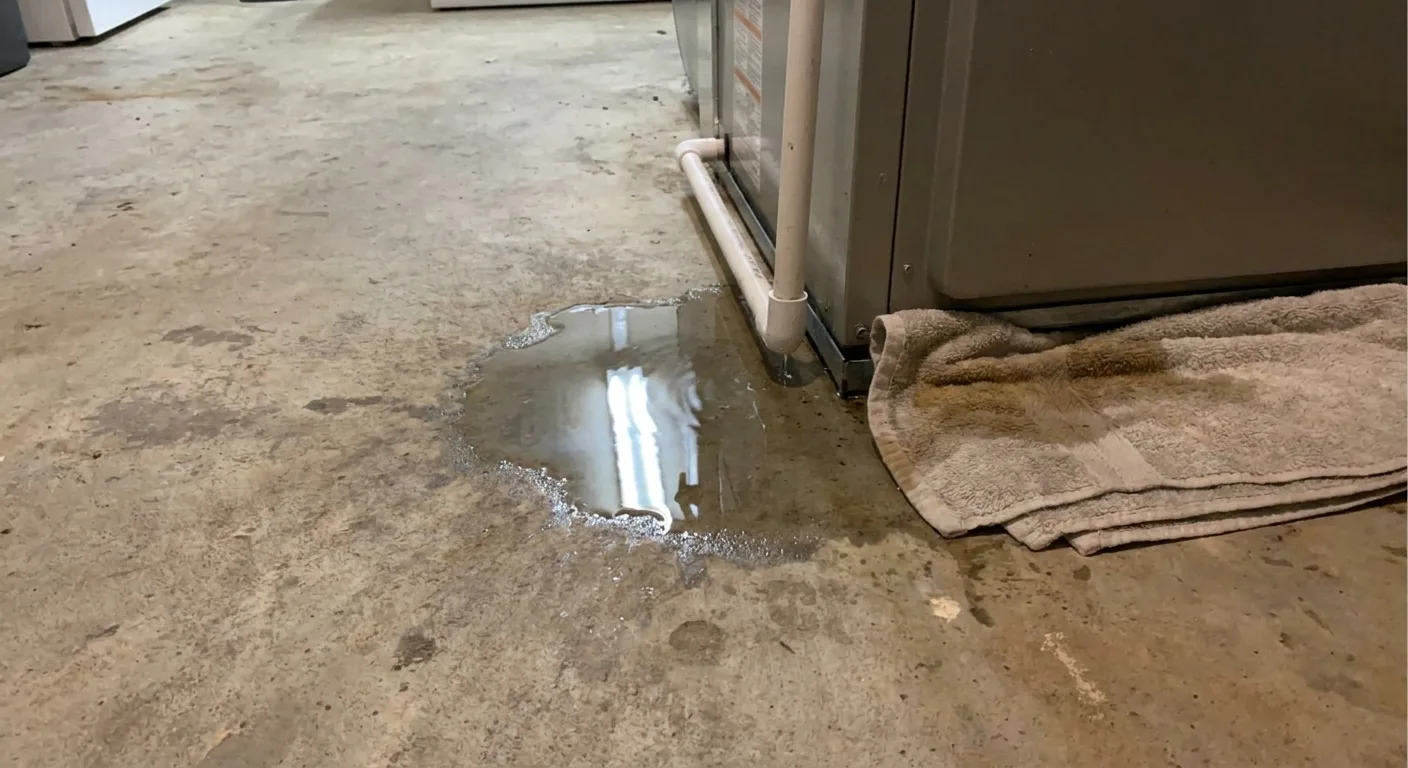
The first response is to shut the system off and soak up the water. A tripped float switch may already have shut off power to the air conditioner, and as Jackson & Sons notes, occupants quickly notice the system isn’t working, especially on a hot day.
Leave out drain-line cleaning recipes. Flushing advice varies by equipment, so point readers to manufacturer guidance.
4. Strange Smells and Sounds Coming From the System
Every odd noise or odor becomes its own search, so build one hub page. Each smell or sound gets a short answer and a clear “safe to wait” or “shut it off now” label. The labels below are samples, so have a licensed technician confirm each one before publishing.
| What you notice | What to do now |
|---|---|
| Musty or mildew smell | Safe to wait: book a coil and drain inspection soon |
| Burning electrical smell | Shut it off now: cut power at the thermostat and call a technician |
| Buzzing | Safe to wait briefly: schedule a visit and keep panels closed |
| Banging | Shut it off now: stop the system and call before running it again |
| Squealing | Safe to wait briefly: note when it happens and schedule a visit |
| Rapid clicking | Safe to wait: replace thermostat batteries, then call if it continues |
Describe odors plainly, and avoid speculating about chemical smells without technical review.
Separate thin posts on similar sounds can split attention. Grouping similar searches into clusters decides what belongs on the hub, so “AC buzzing” and “AC humming” land on one page.
Topics Sitting Right on Top of a Spending Decision
These readers are weighing a large expense and wondering whether a contractor will be straight with them or pad the bill.
Here, air conditioning blog topics win on transparency, not persuasion. Good HVAC content marketing here explains the factors behind a decision and lets the homeowner reach their own conclusion.
5. The Repair-or-Replace Call, Broken Into Honest Factors
Lay the decision out factor by factor so homeowners can apply it to their own system:
- System age
- Recent repair frequency
- The refrigerant type the system uses
- Rising energy bills
- Uneven comfort across rooms
Give readers a downloadable or on-page worksheet where they fill in their own numbers for each factor, turning a sales conversation into a shared one.
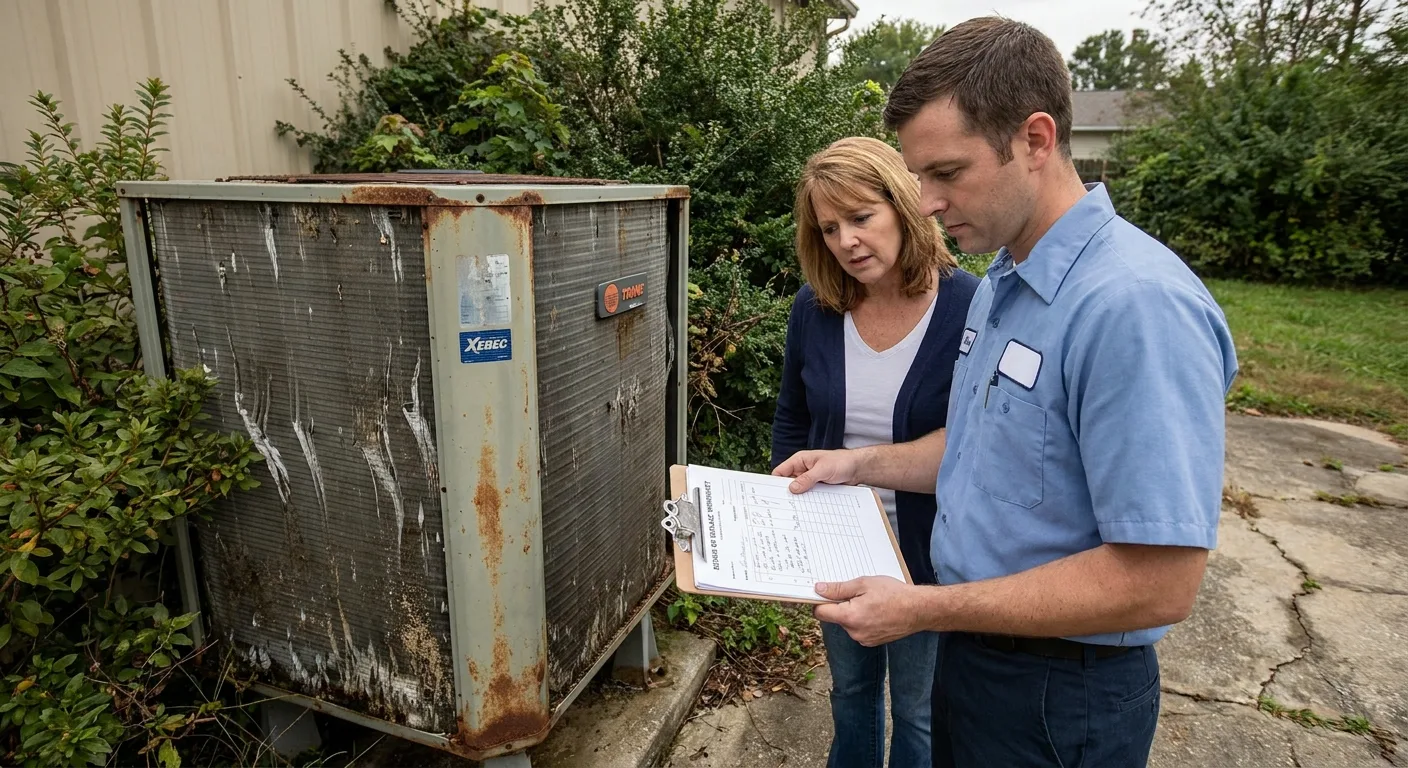
Skip cost rules of thumb you can’t source, and cite a dated official source for any refrigerant regulation.
The most persuasive move is the one that feels counterintuitive: say openly when repair is the smarter choice. A homeowner told to repair, not replace, is more likely to trust you when replacement does make sense.
6. What Goes Into an Installation Quote, Line by Line
Homeowners holding two or three bids often can’t tell why the totals differ, and a line-by-line breakdown helps them ask sharper questions.
| Quote component | What it covers | Question to ask every bidder |
|---|---|---|
| Load calculation (Manual J) | Sizing the system to the home’s actual cooling needs | Did you run a load calculation for my house? |
| Equipment | The outdoor unit, indoor coil or air handler, and model numbers | Which exact models are included? |
| Ductwork modifications | Changes needed so existing ducts match the new system | Does my ductwork need changes, and why? |
| Electrical work | Wiring, disconnects and any panel updates | Is any electrical work included or excluded? |
| Line set | The copper refrigerant lines between indoor and outdoor units | Are you replacing or reusing the line set? |
| Pad or mounting | The base or bracket the outdoor unit sits on | What will the outdoor unit sit on? |
| Permits | Local approvals for the installation | Who pulls the permit and schedules inspection? |
| Removal and disposal | Taking away and properly disposing of old equipment | Is removal of my old system included? |
| Warranty registration | Registering equipment so coverage applies | Will you register the warranty for me? |
Right below the table, add an annotated sample quote with each line item labeled, so readers can see where these components usually appear on paper.
Frame a missing load calculation as a follow-up question, not proof of corner-cutting. HVAC permitting is highly local, so send readers to their city or county building department to confirm requirements, as lahvaclc.com advises. Leave dollar figures out entirely, since local pricing shifts with equipment availability and season.
7. Whether a Maintenance Plan Earns Its Annual Fee
Maintenance agreements bring in predictable cash flow plus pull-through service or replacement work for many HVAC companies, according to thetradeagent.com, so lead with candor and itemize a typical visit:
- Coil cleaning
- Drain line clearing
- Electrical connection checks
- Capacitor testing
- Refrigerant pressure readings
- Airflow and filter review

Name who benefits most: households with pets, allergy sufferers, owners of older systems, and homes in dusty or coastal areas. Then name who may not need a plan, such as a homeowner with a brand-new system already covered by the installer’s included visits; that admission builds trust.
One of the most practical AC maintenance blog ideas is publishing the exact checklist your techs follow, so readers see what the fee covers.
Some manufacturer warranties carry maintenance conditions (Carrier’s, for example, requires that care and maintenance be normal and follow the instructions in the Owner’s Manual, according to thisoldhouse.com), so tell readers to check their own warranty terms and avoid blanket claims.
Topics Shaped by Local Climate and the Houses People Live In
Climate, humidity and housing age shape which comfort problems a service area faces, and local versions of air conditioning blog topics are hard for national sites to copy. Weave in humidity patterns, common construction eras, attic conditions and typical duct setups.
Ask your technicians which complaints cluster in which neighborhoods, then run local keyword analysis to see how homeowners phrase them.
8. Cool but Clammy: Why the House Still Feels Sticky
Homeowners in humid areas often report a house that hits the setpoint yet still feels damp. Validate the confusion first. Many don’t know an AC removes moisture as well as heat.
Humidity control was part of the job from the start. Willis Haviland Carrier’s 1902 system for a printing company regulated humidity as well as temperature, according to Lake Region Energy’s history of air conditioning. A system that runs in short bursts may shut off before it pulls much moisture out of the air, which leaves indoor humidity high even at the “right” temperature.
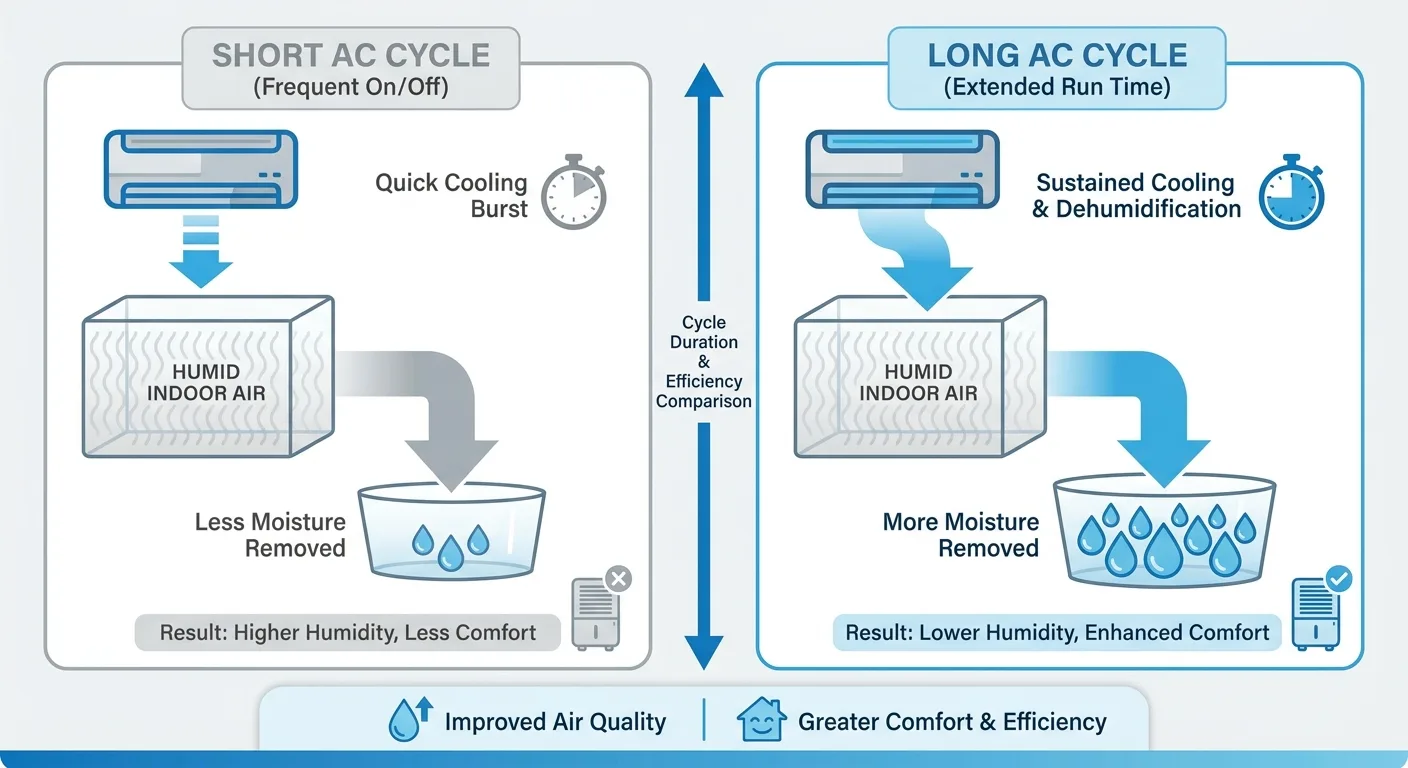
Possible causes include an oversized unit, a fan set to “On” instead of “Auto,” or leaky ducts drawing in humid attic air. Fixes worth mentioning:
- Switching the fan setting (free)
- Variable-speed equipment
- A whole-home dehumidifier
- Duct sealing
Suggest an inexpensive hygrometer in a main living area so homeowners can track humidity themselves. Leave out specific humidity targets unless you source them from a recognized health or building authority at publication.
9. Cooling Older Homes That Have No Ductwork
Many older houses rely on radiators or window units, and their owners often assume central air means tearing open walls. Lay out the realistic options:
- Ductless mini-splits, with indoor heads mounted on walls or ceilings
- Small-duct high-velocity systems, which route flexible tubing through tight spaces
- New ducts run through attic or closet chases
Describe what installation looks like for each: wall penetrations, line set routing and where indoor heads go. Add a real project photo of a mini-split head in an older local home, used with homeowner permission. Readers need to see equipment in a house built when theirs was.
Historic district commissions generally expect exterior mechanical equipment to sit on secondary facades with limited street visibility, according to legalclarity.org, so readers should check local regulations. Electrical panel capacity in older homes may also need evaluation before any installation. Present the options neutrally and let the home’s layout drive the recommendation.
10. The Upstairs Bedroom That Never Cools Off
Uneven temperatures between floors are a common complaint in two-story homes. Owners often blame the equipment when the real issue sits in the ducts, the insulation or the thermostat location. Walk through causes in order of how easy they are to check.
Start with closed or blocked supply registers, blocked returns and a dirty filter. Deeper causes include undersized or leaky ductwork, poor attic insulation, or a single thermostat on the main floor. Ducts running through a hot attic add to the problem.
Solutions to mention: duct sealing and balancing, added returns, zoning with dampers and attic insulation improvements.
Give readers a task before the visit: hold a hand up to each upstairs register, feel the airflow and note the weak ones.

Name the trade-off: sending more cold air upstairs may reduce comfort downstairs, and balancing means deciding where the compromise lands.
Topics Written as Plain Answers AI Search Can Quote
Home improvement searches are among those that trigger AI-generated summaries most often, according to SeoProfy, so clear definition pages are a natural source for those answers. Definitions buried in long sales copy give answer engine optimization little to work with.
Use one structure for every entry here: a one- to two-sentence direct answer at the top, then context, then a short FAQ. No structure guarantees a citation, so tracking your AI visibility over time shows which definition pages get quoted.
11. What a SEER2 Rating Means for a Homeowner’s Bill
Efficiency ratings appear on most quotes and yellow energy labels, yet few homeowners can explain them. Open with the answer: a SEER2 rating reflects cooling efficiency over a season under an updated test procedure, and a higher number generally means less electricity for the same cooling.

Explain the “2.” Because the test procedure changed, SEER and SEER2 numbers aren’t directly interchangeable, which matters when a homeowner compares an old spec sheet to a new quote.
Tie the number to local climate. In areas with long cooling seasons, efficiency shows up most clearly on the monthly bill.
Regional minimums differ and change over time, so cite any minimum or savings percentage only with a dated official source.
12. How a Heat Pump Cools a House in Summer
A common belief is that a heat pump only heats. Clear that up in the first lines with the direct answer on how a heat pump cools: in cooling mode, it releases indoor heat outdoors, and according to Beacon, cooling mode is essentially the same process as any central AC system.
The reversing valve deserves one plain explanation. According to Bryant, it changes the direction of refrigerant flow, so a single heat pump can both warm a home in winter and cool it in summer.
Who should consider one? Homeowners replacing an AC and an aging furnace at the same time, along with homes that lack gas service.
Cold-climate performance depends on the specific model, so recommend a professional assessment over a blanket claim. Rebate programs are frequently revised, so link current official program pages and leave amounts out.
13. A Living Glossary of Terms Homeowners Hear in Quotes
Quotes and service reports are full of unexplained jargon, and one reference page fixes that. Terms to include:
- Tonnage
- BTU
- MERV
- SEER2
- Refrigerant
- Line set
- Condenser
- Evaporator coil
- Air handler
- Manual J
- Short cycling
- Zoning
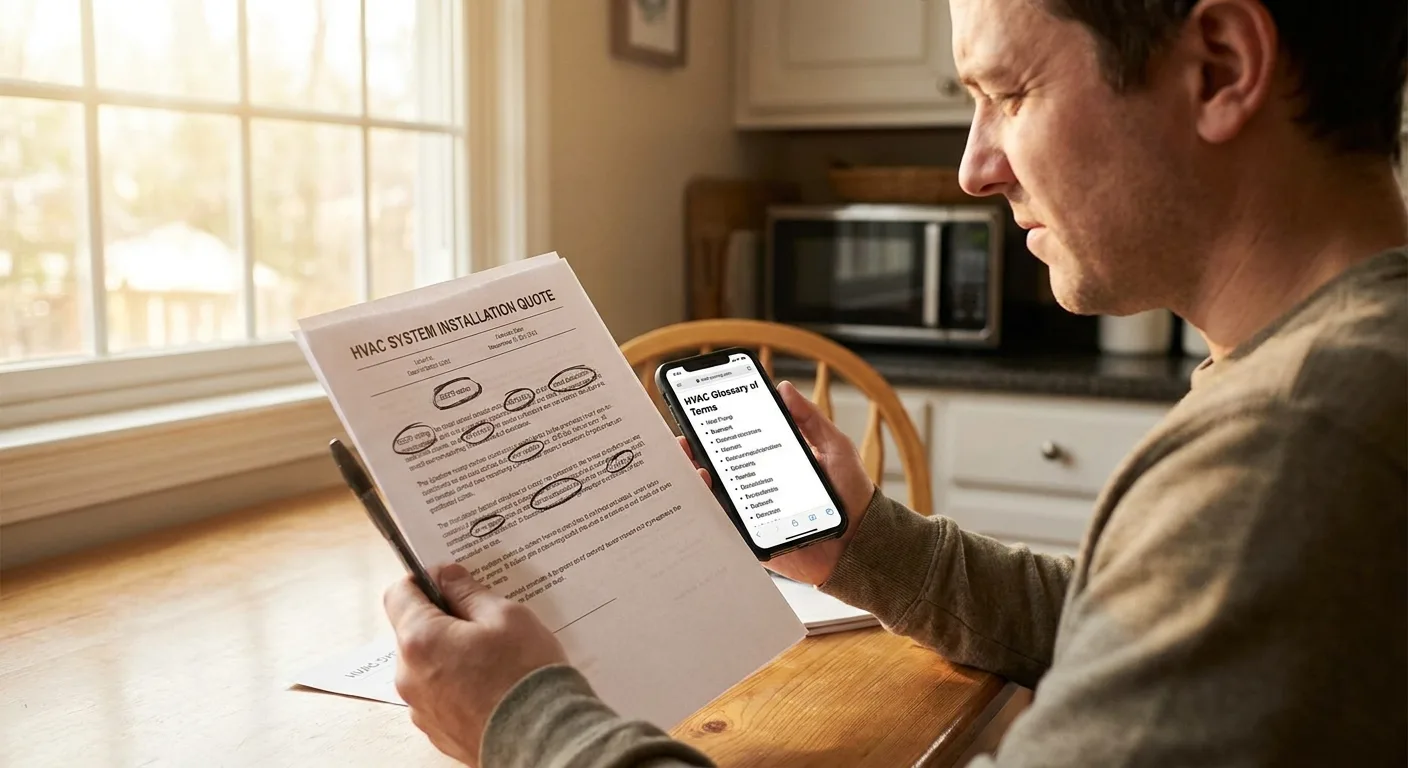
Format the HVAC glossary with a one- to two-sentence definition per term, followed by a link to the deeper post on your site where one exists. Put an alphabetical jump bar directly below the page’s introduction so readers reach a term in one tap. Add a visible “last reviewed” date and revisit the page on a regular schedule, especially after regulatory changes.
The glossary also doubles as your internal linking hub. An internal linking tool flags glossary terms that still lack a destination page. Favor accuracy over cleverness, and have a licensed technician review the page before publishing.
Frequently Asked Questions
Should HVAC companies still publish seasonal content?
Yes, HVAC companies should still publish seasonal content, but as one regularly refreshed page per season, not a new near-duplicate each year. Update the same page annually with current details. Link it to your symptom posts so a reader planning a spring tune-up can reach the right troubleshooting page when something breaks.
How can I tell if two of my blog posts are competing for the same search?
Two posts are competing when Google Search Console shows both of your pages for the same query and rankings swap back and forth between them. A keyword cannibalization checker surfaces page pairs fighting over one query. Merge the weaker page into the stronger one, redirect the old URL and update internal links.
Can I use AI to draft air conditioning blog posts?
Yes, AI can draft air conditioning blog posts, but only as a starting point a person verifies. Check every claim about safety, regulations, efficiency or cost against a current source, and have a licensed technician review troubleshooting advice. A simple habit of fact-checking every AI-drafted claim against its cited page catches errors before a homeowner acts on them.
Turning This List Into a Content Plan
A topic list is only a start, because you still need to confirm local demand, avoid overlapping posts and verify every claim before it goes live.
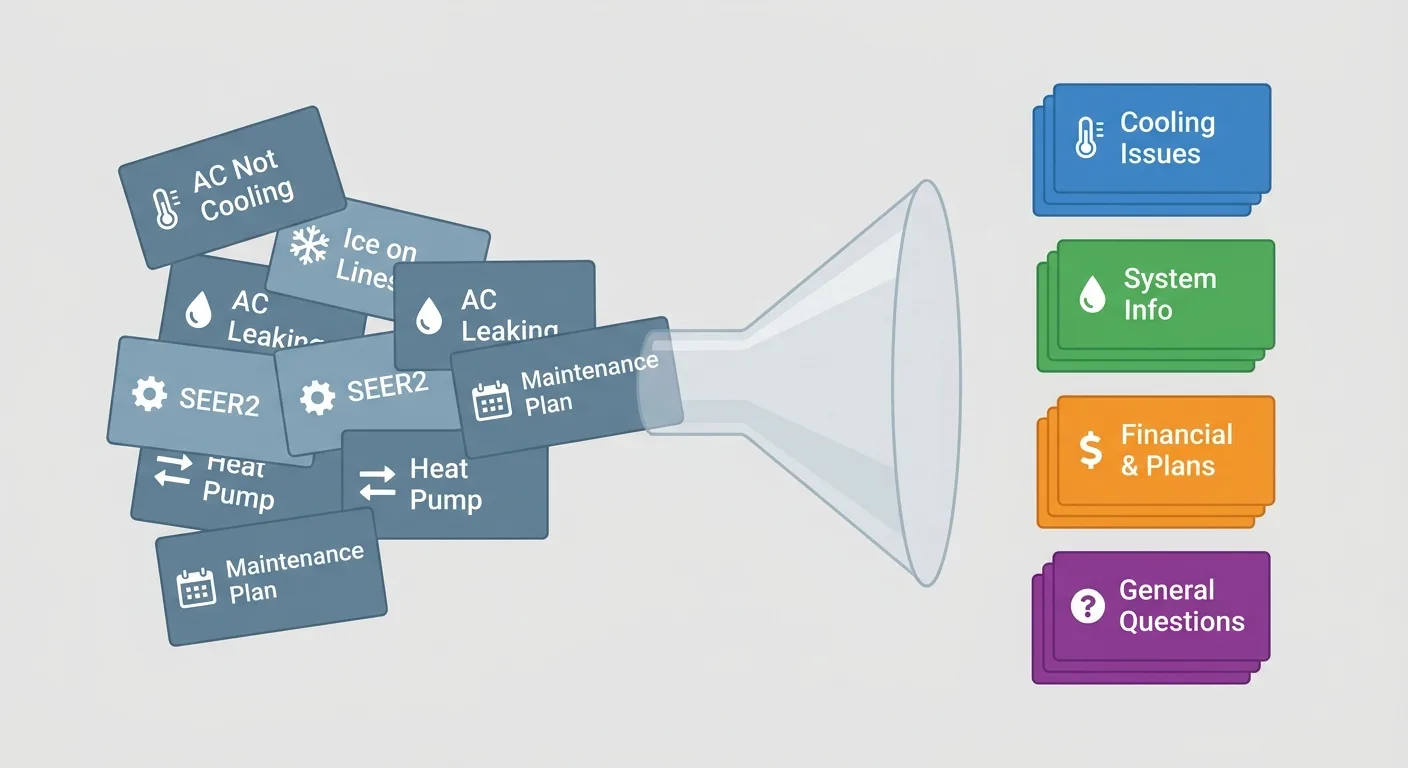
We built Vee3.ai’s SEO workspace for that work: one workspace to crawl, research, plan, write, fact-check, publish and measure. Use it to plan clusters that don’t collide and check claims before they go live. Map your air conditioning blog topics into a working roadmap.
Final Thoughts
Start with one post. Look at your most frequent service call and treat the symptom behind it as the first of your air conditioning blog topics to publish, then build outward from there.
Pick the symptom, write the page, and put the call button where the reader needs it.