
A stakeholder forwards a URL and asks a simple question: why does this page exist? The room goes quiet. Teams can keep adding enterprise SEO software to their stack and still freeze on that exact question, especially when the person who built the page has moved teams.
This guide argues that programs stall less from page volume, budget, or tooling than from page decisions losing their evidence somewhere between the roadmap and the publish button. It traces where that happens and how to keep the evidence attached.

Being accountable for pages you never chose is exhausting. You inherit the traffic and the risk, but none of the reasoning.
TL;DR
What Enterprise SEO Means Once You Stop Counting Pages
The short answer to what is enterprise SEO is search work on a site too large for any one person to hold in their head. Size only gets you halfway, though. The useful part of the definition is the sheer number of decisions made by different people, in different systems, over years.
Three traits define enterprise SEO in day-to-day work:
- Many contributors. Content, product, engineering, legal, and regional teams all touch the site.
- Long site histories. Migrations, redesigns, and old campaigns leave layers of pages behind.
- Decisions that outlive the people who made them. Pages keep ranking after their owners, briefs, and reasons have moved on.
A regional marketing team launches a localized landing page for a seasonal campaign. The campaign ends and the team gets reorganized, yet the page keeps ranking and drawing visits. The current team can’t confirm whether its offer terms still apply, who is allowed to edit it, or whether a global page now targets the same searches.

That gap has a name. We call the missing piece decision provenance: the recorded reason a page exists, the evidence behind it, and who owns it now. It’s a lightweight record of a few fields per page, not an approval gate. Healthy enterprise SEO keeps that record attached to every URL.
Here’s a quick test: could your team explain your ten highest-traffic pages without opening Slack history?
Enterprise SEO optimization becomes the work of protecting and extending decisions you can defend. Adding pages is the easy part. You’ll find more enterprise SEO guides covering the operating side of running large programs.
Three Spots Where Page Decisions Lose Their Evidence
Evidence tends to disappear in the same three places across enterprise SEO programs, right where work changes hands between teams.
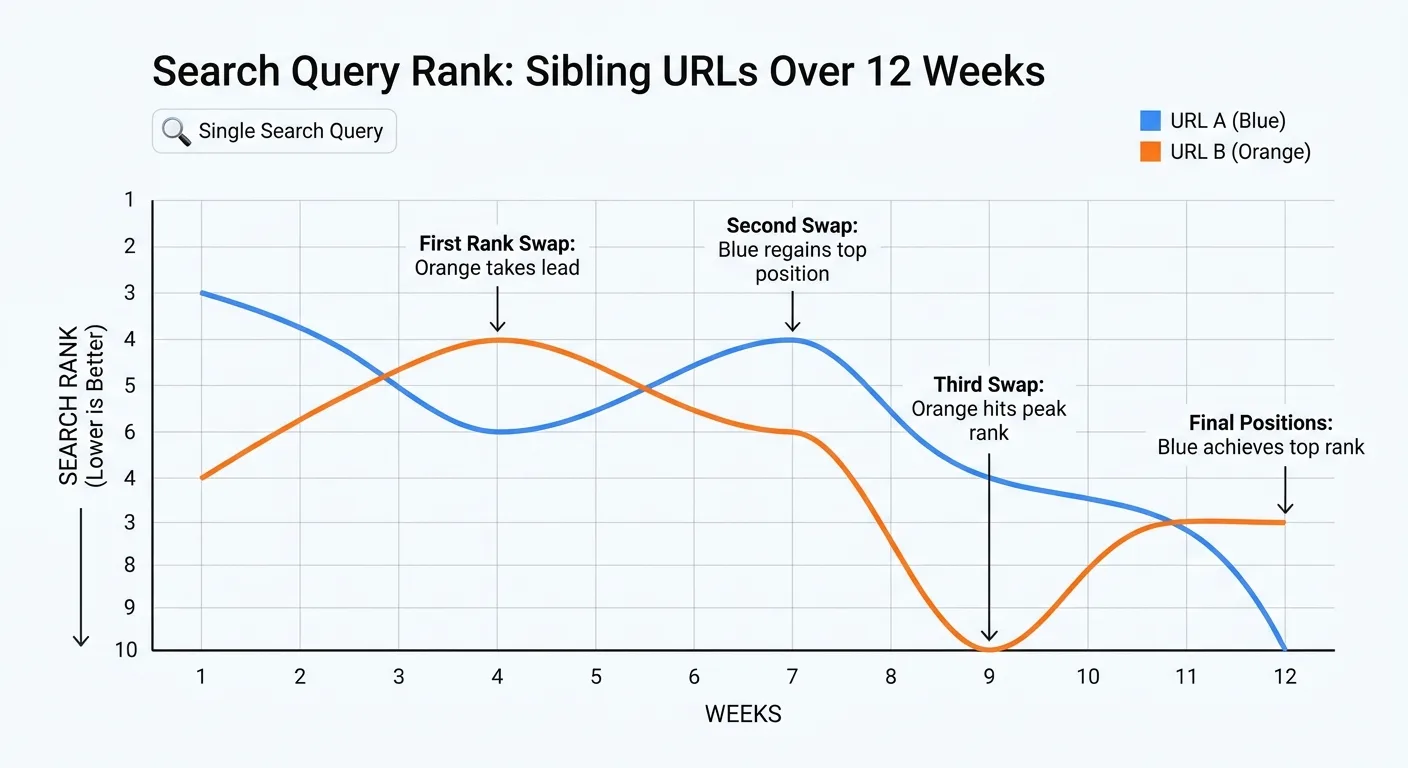
- Roadmap collisions. Two teams plan pages for overlapping intents. Each page makes sense on its own roadmap, and no one records which one owns which search. Search engines then pick between them and may alternate the ranking URL (Arimetrics).
-
Internal link counts that mislead. A page can look well supported with zero editorial links pointing at it, which is why any automated internal linking approach should count editorial links separately from navigation. The editorial decision to support a page is the part worth recording, and template links record nothing about it.
-
Unverified AI drafts. A draft cites a figure. It reads well, so it sails through a review focused on tone and structure. The origin of that number vanishes the moment the page goes live, and it can’t be reconstructed later.
| Failure spot | Symptom you’ll see | Why standard audits miss it | Diagnostic to run this week |
|---|---|---|---|
| Roadmap collisions | Rankings rotate between sibling URLs for the same query | Audits review pages one at a time and never record which page owns a search | Export the queries for one cluster and check whether two URLs trade positions |
| Misleading internal link counts | Pages show healthy link totals while no editorial link points to them | Totals include menu, footer, and sidebar links | Filter out links found on most templates, then recount |
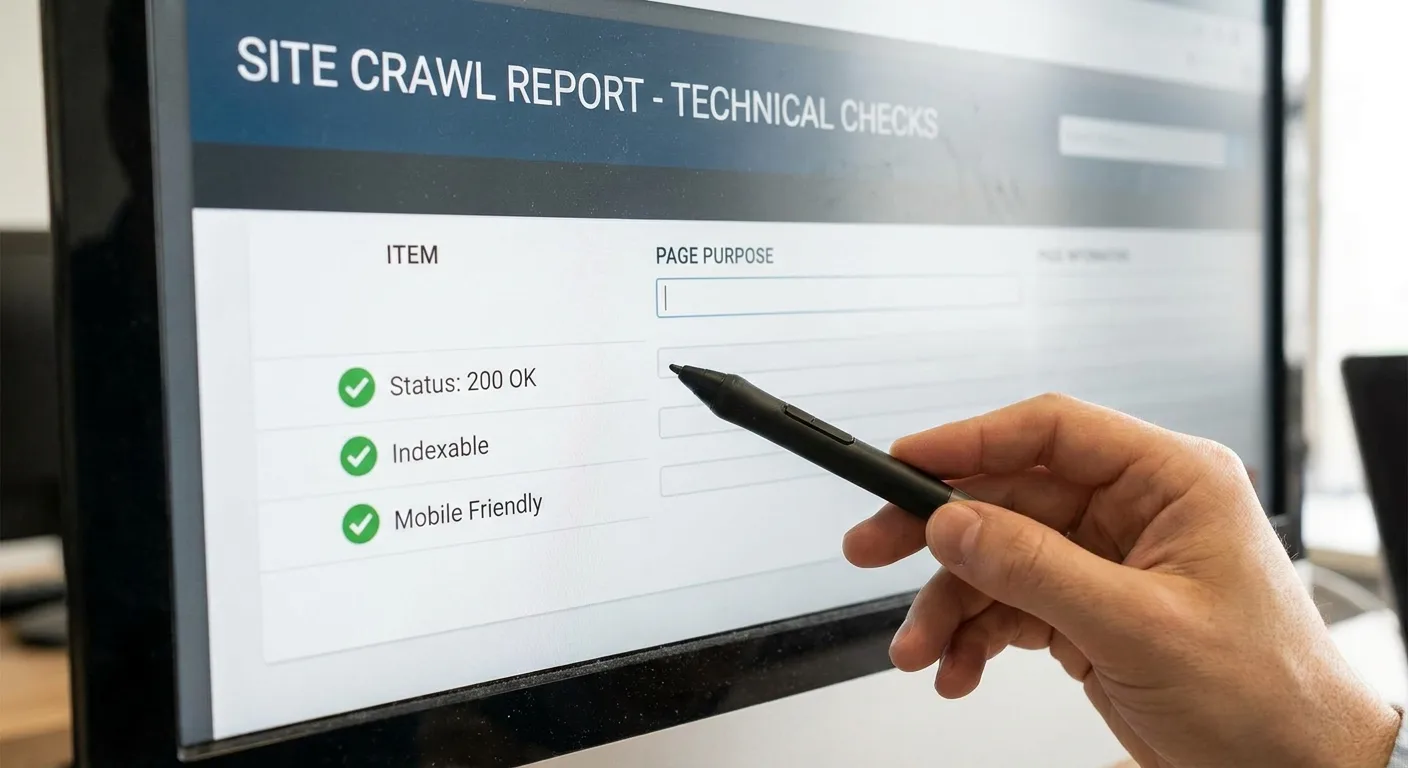
| Unverified AI drafts | Legal or subject-matter reviewers can’t sign off | Crawls check markup and status codes, not where a figure came from | Sample five recent AI-assisted pages and trace every number to its original source |
A standard SEO checker does a great job flagging broken links, missing tags, and slow templates. Page purpose sits outside its scope. No single enterprise SEO tool records why a page exists on its own, because that reason lives in someone’s head until it gets written down.
A simple record keeps these problems from coming back.
Building a Decision Log Your Whole Org Can Audit
A page decision log has to work at enterprise SEO scale without becoming a second job. Six steps get you there.
-
Pick one home for the log. Tie it to your URL inventory so every row maps to a live page. Parallel spreadsheets drift apart fast, and then neither is trusted.
-
Keep the fields to a minimum. The template below covers what you need (every extra field is one more reason people skip the log).
| URL | Target search intent | Demand evidence | Owner | Claims verified (Y/N + source links) | Linking role | Review trigger |
|---|---|---|---|---|---|---|
| /example-product-a/specs | Compare Product A specifications | Search Console query export (export date logged) | Product content lead, Product A cluster | Y, link to spec sheet | Supporting | Product spec change |
| /guides/example-topic | Learn how the example topic works | Keyword research sheet, notes from review of competing results | SEO lead, Guides cluster | N, pending subject-matter review | Hub | Ranking drop or page swap |
| /legacy/example-page | History unknown | None recorded | Unassigned | N | Standalone | Backfill queue |
-
Assign owners by cluster. Chasing an owner for each of thousands of URLs never ends. One owner per page cluster keeps accountability realistic. Clusters only work as ownership units when they’re built deliberately, so it’s worth choosing keyword clustering tools that export cluster IDs straight into the log.
-
Record evidence at creation. Capture it while the work is fresh:
- the search demand data
- the competing results reviewed
- the sources behind each claim
Keep that evidence usable. Store links to dated exports instead of pasted numbers, note who reviewed the competing results, and pair each claim with its source at the sentence or figure level, so a reviewer can check one number without rereading the whole page.
-
Set review triggers tied to events. A ranking drop, a page swap, a product change, or a regulatory update should each prompt a review. Calendar-based audits can arrive long after the change that mattered. A triggered review checks four things: that demand still exists, that the owner is still correct, that claims still match their sources, and that no sibling URL now targets the same intent. Log the outcome and the date in the row.
Consider a manufacturer that discontinues an accessory. That product change is a review trigger, so the cluster owner filters the log for every row whose verified claims cite the accessory’s spec sheet. All affected pages get updated in one pass, the same week, with no wait for a scheduled audit.

-
Backfill legacy pages in priority order. Start with the pages earning the most traffic or revenue. Flag the rest as “history unknown” and let them wait their turn. When a flagged page comes up, choose one of three paths:
- Re-justify it with fresh demand evidence and assign an owner.
- Merge it into the page that owns the intent.
- Retire it with a redirect.
Record which path you chose, so the next person doesn’t repeat the investigation.
Once rows are filled in, the log also changes how you report. Compare each page’s performance to its logged intent and linking role instead of judging every URL by raw traffic. A supporting page is judged by the hub it feeds, not by its own visits. A hub is judged by whether it ranks for the intent it owns. Review results by cluster, not single URLs, because a cluster’s pages succeed or fail together.
The log only helps if your publishing workflow writes to it automatically. Manual logs decay as soon as deadlines stack up. Good enterprise SEO tools capture evidence as the work happens, and the vetting questions below test for that.
One field now carries extra weight: verified claims.
AI Answers Quote You, So Every Claim Needs a Source
Answer engines raised the stakes for enterprise SEO. Google’s AI Overviews and chat assistants can pull sentences and figures from your pages and present them alongside your brand or URL. An unverified number can travel far beyond your site.
If you’re still mapping how AI visibility works, start by checking which of your pages already get quoted. Run the questions your priority pages answer in the assistants your audience uses. Note which URL and wording are cited, plus the date you checked. Results vary by session and over time, so treat them as a sample, not a measurement.
Pages built for clean extraction share four building blocks:
- A direct answer near the top
- A key-facts block where every fact has a source
- FAQs that each answer a distinct question
- Structured data that matches the visible content
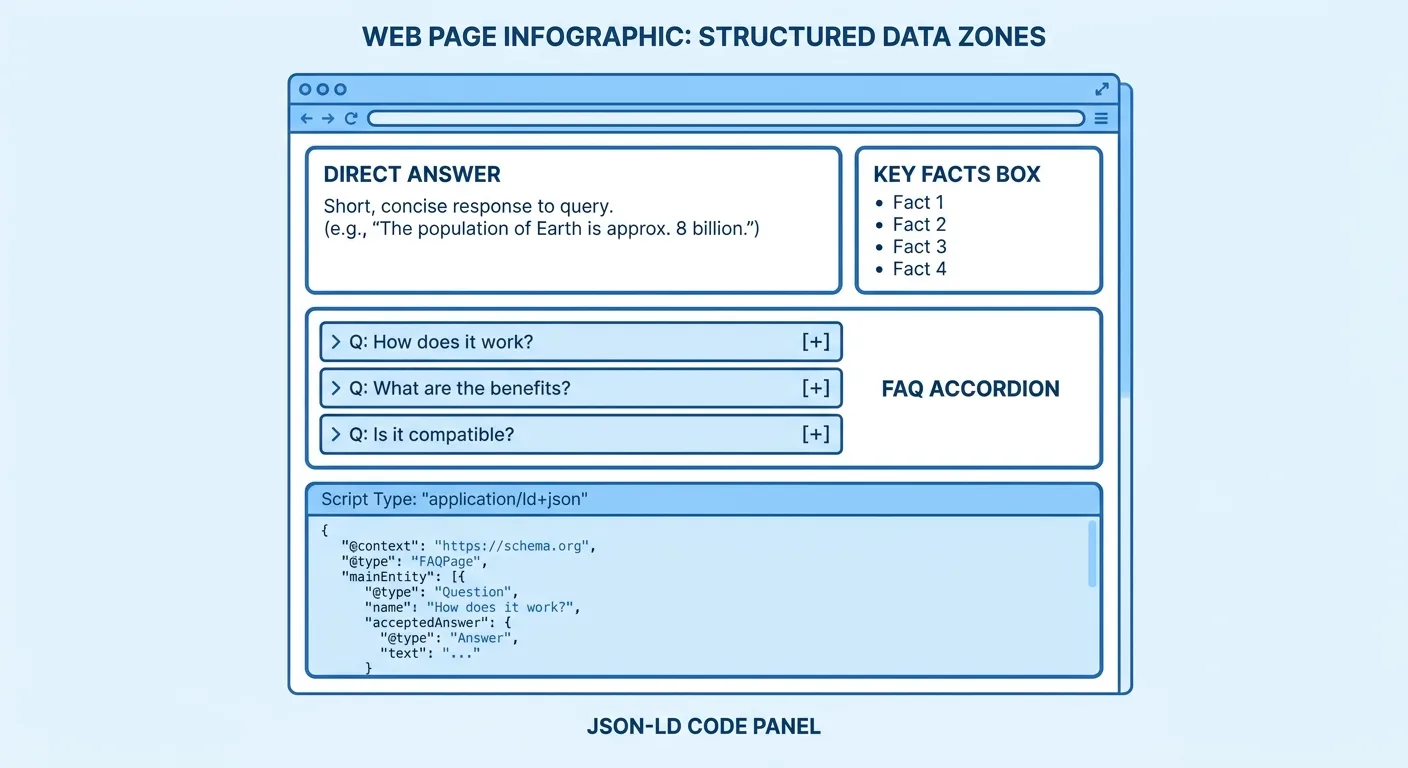
Schema deserves extra care. Structured data that contradicts the visible copy creates its own trust problem, so generate it from the page and skip writing it by hand.
An online retailer updates a product’s compatibility list after a manufacturer firmware change. The visible description gets edited. The FAQ block and the hand-written Product schema still list the old compatibility, so an assistant reading the page could surface either version.
Ecommerce teams feel this sharply, since specs, prices, and compatibility claims go stale quickly. For ecommerce SEO agencies, spec accuracy is part of the SEO job. Regulated categories face the same pressure, usually with a compliance team watching closely.
No site controls what AI engines cite. These structures improve the odds of accurate extraction, and they guarantee nothing beyond that.
So which page on your site would you least want an AI assistant quoting today?
Questions to Put to Any Agency or Platform Before You Sign
If you bring in outside help for part of your enterprise SEO work, ask for evidence, not just output. A roundup of the best enterprise SEO agencies shows reputation, not provenance, and a polished deck from an AI SEO vendor shows output, which says little about evidence. Run the numbers with an enterprise SEO ROI calculator before comparing quotes, so every partner’s cost sits beside a realistic expected return.
Vetting an Agency, Firm, or Consultant
Searches for the best enterprise SEO agency return reputations. These questions test how an enterprise SEO agency works day to day.
- How do you document why each recommended page should exist? Strong answer: each recommendation arrives with its demand evidence and target intent attached.
- How do you verify figures in content you deliver? Strong answer: every figure links to its original source, and someone other than the writer checks it.
- Who owns the decision log, and do we keep it if we part ways? Strong answer: you do, in a system you control.
- How do you stop new pages from competing with existing ones? Strong answer: they check the existing URL inventory and record which page owns each search before anything is drafted.
- What do your enterprise SEO services include for AI answer visibility? Strong answer: direct answers, sourced key facts, and schema generated from the page, with no promised citations.
- How do you report results by page purpose, beyond total traffic? Strong answer: reporting that measures each page against its recorded intent, which is what enterprise SEO optimization services should deliver.
Enterprise SEO firms can meet this bar. So can a solo enterprise SEO consultant. Headcount has no bearing on rigor.
Request a sample deliverable with its sources visible, then compare it against a sound fact-checking process instead of a case study slide.

Vetting Software and Platforms
Lists of the best enterprise SEO software focus on feature counts. Traceability is the test that matters for any enterprise SEO software you shortlist. Put these questions to enterprise SEO platforms during the demo (ask to see a real workspace, not a polished sample):
- Does the platform keep the source behind every keyword, cluster, and claim?
- Can it separate editorial links from template links?
- Does it check drafted figures against their cited pages?
- Can it publish to our CMS without overwriting human edits?
- Can stakeholders see the evidence without seat-heavy licensing?
Many SEO platforms serve one-off checks well. The cheapest SEO tools, built for those one-off checks, may not keep history, so weigh the cost of rebuilding lost evidence. If a narrow job is all you need, our broader SEO tools guide sorts options by task.

Choose an enterprise SEO platform that keeps the record and leaves the decisions with you.
If Your Page Evidence Lives in Scattered Exports
Some teams start an enterprise SEO decision log and watch it fall apart. The log itself works fine. The data behind it lives in crawler exports, keyword sheets, Search Console, GA4, and CMS drafts, and none of them talk to each other.

We built the Vee3.ai SEO workspace for SEOs. It runs crawl, research, planning, writing, fact-checking, publishing, and measurement in one workspace, so each log row can start from the same evidence. Decisions stay with your team.
When you’re ready to start building, map your site in Vee3.ai and test the log on one cluster first.
Frequently Asked Questions
Do mid-size sites need a page decision log too?
Yes, in a lighter form. A decision log isn’t only for very large sites. Start with revenue-driving pages and the clusters you plan to build next. The habit costs little to start before the site grows. Building it early means you never face a full backfill project, and a trimmed field set still prevents collisions.
Who should own the decision log in a large organization?
One SEO lead should own the log as a system, with cluster owners in content or product keeping their page records current. Shared ownership with no named lead tends to decay. Outside enterprise SEO companies can contribute but shouldn’t own the system, and a retained consultant can audit it. Legal or subject-matter reviewers sign off on claims fields.

Can an enterprise SEO company run this for us?
Partly. A capable enterprise SEO firm can build and maintain the log, but the records need to live in systems you control. Write log ownership into any enterprise SEO service agreement so your access survives the engagement. Keep internal approvers in-house too, since sign-off on claims depends on people who know your products and obligations firsthand.
Does a decision log replace a technical SEO audit?
No. Audits check how pages are built and crawled, while the log records why each page exists and what supports it. Run both. Use audit findings, such as a broken template or a conflicting canonical tag, as review triggers, so the cluster owner confirms whether the page’s demand, claims, and linking role still hold.
Final Thoughts
Enterprise SEO gets easier once every page can explain itself.
Pick your highest-revenue cluster this week. Trace every page back to its demand evidence, owner, and verified claims, and if you want a format to share findings, borrow the structure of a sample SEO audit report.
Treat every gap you find as progress, not blame. Even the best SEO platform can’t explain a page your team never recorded, so start with one cluster and build from there.